Coloring tips: How to color A Group Of Three Eggs coloring page well?
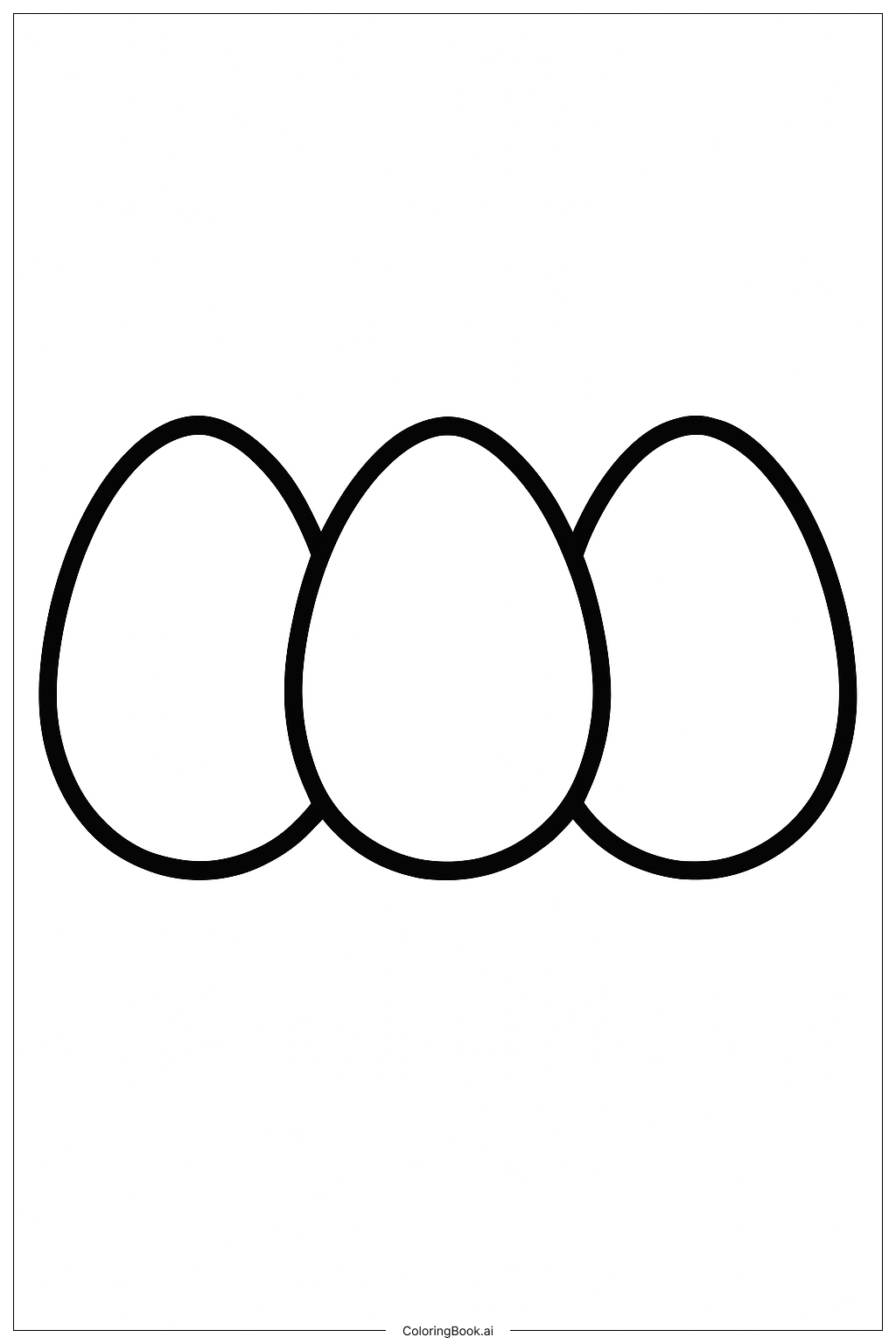
When coloring A Group Of Three Eggs, try using soft colors like white, cream, light yellow, or pale brown to give the eggs a natural look. You can also add light shading by gently blending a light gray or beige near the edges to show depth. For extra creativity, add small patterns such as dots or stripes on one or two eggs to make them stand out. Remember, this is your chance to experiment with pastel shades or bright colors if you want something more fun and playful. Use smooth strokes to keep the eggs looking smooth and round.
Coloring challenges: Which parts are difficult to color and need attention for A Group Of Three Eggs coloring page?
• Smooth Curves: The eggs have very smooth and rounded shapes that can be tricky to color evenly without going outside the lines or creating uneven areas. Staying consistent with your strokes helps maintain their shape. • Shading and Depth: Showing the three-dimensional shape of eggs often means adding subtle shading and highlights. Beginners may find it hard to blend colors gently to create a realistic round effect. • Overlapping Eggs: Since the eggs are placed close together, coloring the areas where they overlap or touch can be difficult without mixing the colors or muddying the borders. Careful attention is needed there. • Limited Details: The simplicity of the eggs means the challenge is in adding color variety and interest without losing the natural egg appearance. It can be easy either to overdo or underdo it. • Maintaining Clean Lines: Because the eggs are so clean and simple, any coloring mistakes or uneven lines can be very apparent, so steady hands and patience are important.
Benefits of coloring books: Advantages of drawing A Group Of Three Eggs coloring page
Coloring A Group Of Three Eggs helps improve fine motor skills as children practice controlling pencils or crayons within smooth curved outlines. It encourages observation and creativity by allowing kids to explore color blending and shading techniques to create depth and roundness. Working on simple but delicate shapes like eggs also builds focus and concentration, as attention to detail is needed to keep coloring neat. Additionally, this image can spark curiosity about nature, animals, and life cycles, making it both a relaxing and educational activity. Finally, it supports self-expression as children decide whether to color the eggs realistically or invent playful designs.