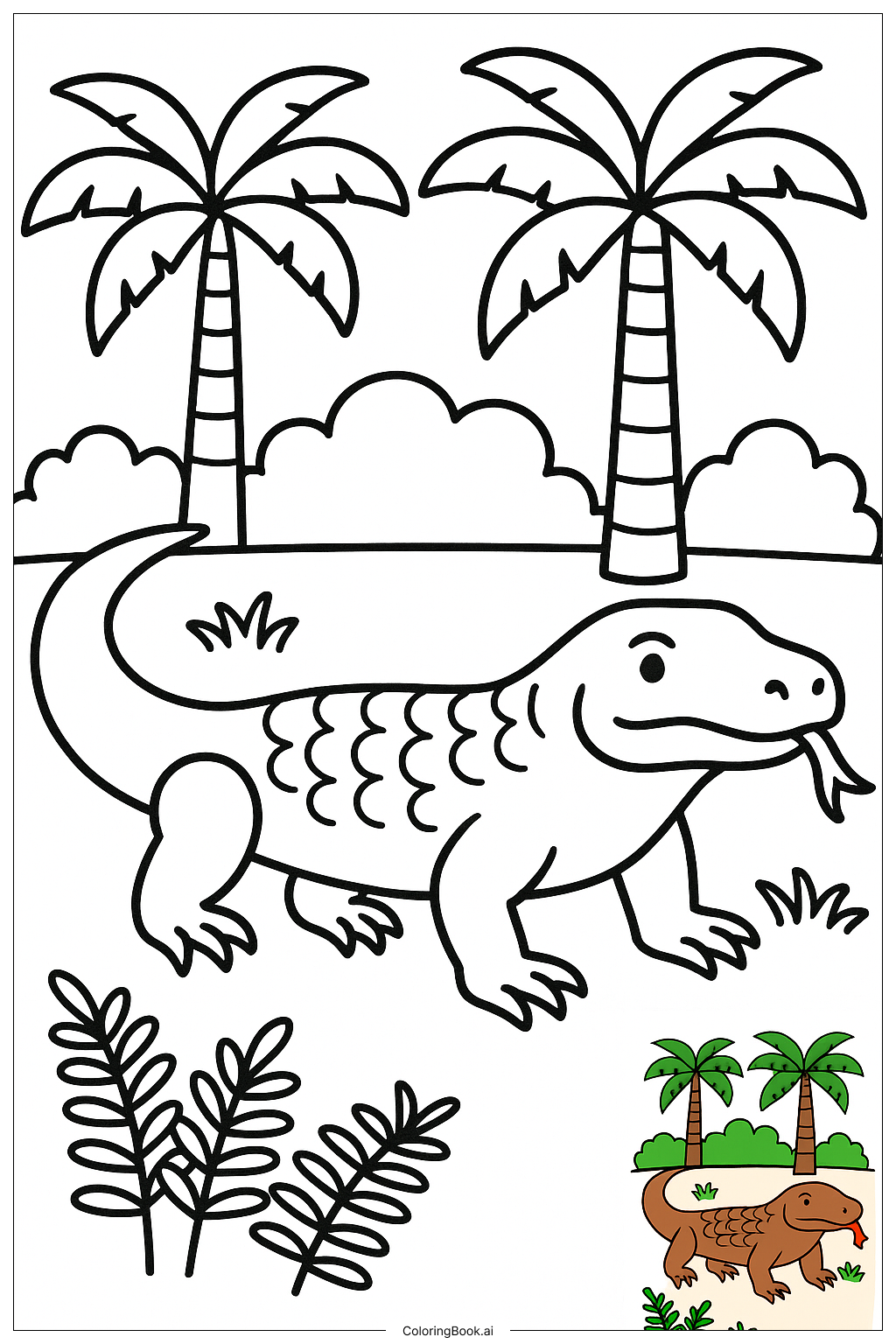
Coloring tips: How to color Komodo Dragon In Jungle Habitat coloring page well?
Start with the Komodo dragon's body using earthy tones like olive green, dark gray, tan, and brown. Mix these colors to give the scales depth and a realistic texture. Use darker shades along the spine and lighter tones on the belly. The long tongue can be colored in a bright yellow or pale pink. For the jungle background, use many shades of green — from lime to deep forest green — to fill in the leaves and vines. Tree trunks and roots look great in warm browns and grays. Scattered rocks can be cool gray or stone blue. Add patches of golden light filtering through the canopy to give the scene warmth and life. Younger colorists can keep it simple with flat colors, while older kids and teens can try blending and shading to make the dragon look three-dimensional and powerful.
Coloring challenges: Which parts are difficult to color and need attention for Komodo Dragon In Jungle Habitat coloring page?
• Scale Texture Complexity: The Komodo dragon's body is covered in hundreds of small, overlapping scales. Each scale has its own shape and shadow. Coloring them one by one takes patience and a steady hand. Using the tip of a colored pencil or a fine marker will help you stay inside each tiny shape without smudging nearby scales.
• Consistent Color Blending: To make the dragon look real, you need to blend several colors together smoothly — olive green, brown, dark gray, and tan all work together on the skin. Switching between these tones without creating harsh lines is tricky. Try layering light colors first, then slowly adding darker shades on top to build up depth gradually.
• Dense Jungle Background: The background is filled with overlapping leaves, tangled vines, and layered plants. Each leaf shape is slightly different, and they stack on top of each other. Keeping track of which leaf belongs to which layer — and coloring them in different shades of green — helps the scene look full and natural without becoming a muddy mess.
• Foreground vs. Background Contrast: Making the dragon stand out from the jungle behind it requires careful contrast. If the dragon and the plants are too similar in color, the image loses depth. Using slightly warmer or lighter tones on the dragon compared to the cooler, deeper greens in the background helps separate the two layers effectively.
• Claw and Tongue Details: The claws are small but important details. They curve sharply and taper to fine points. Using a sharp pencil or thin marker keeps these areas clean. The tongue, though small, is a standout feature — coloring it in a vivid contrasting color like bright yellow or soft pink makes it pop against the dragon's earthy body tones.
Benefits of coloring books: Advantages of drawing Komodo Dragon In Jungle Habitat coloring page
Coloring this Komodo dragon scene offers a wonderful mix of fun and learning. As you fill in the dragon's detailed scales, you practice fine motor control and hand-eye coordination. Staying inside small, intricate shapes trains your hands to move carefully and precisely — a skill that helps with writing, drawing, and other detailed tasks.
This image also sparks curiosity about the natural world. Komodo dragons are real animals, the largest lizards on Earth, and they actually live in tropical habitats just like the jungle shown here. Coloring the scene encourages kids to ask questions about reptiles, ecosystems, and wildlife conservation.
Choosing colors for the scales, leaves, and forest floor builds creative thinking. There is no single right answer — every colorist can make their own version of the jungle. This freedom boosts confidence and self-expression.
Spending focused time on a detailed image like this also encourages patience and concentration. It is a calm, screen-free activity that helps kids slow down and stay present. Finishing the page gives a real sense of accomplishment, which builds pride and motivation to try more challenging artwork.
For older kids and teens, the complexity of the scales and layered jungle background makes this a satisfying artistic challenge that develops shading and blending skills that carry over into more advanced drawing and painting.