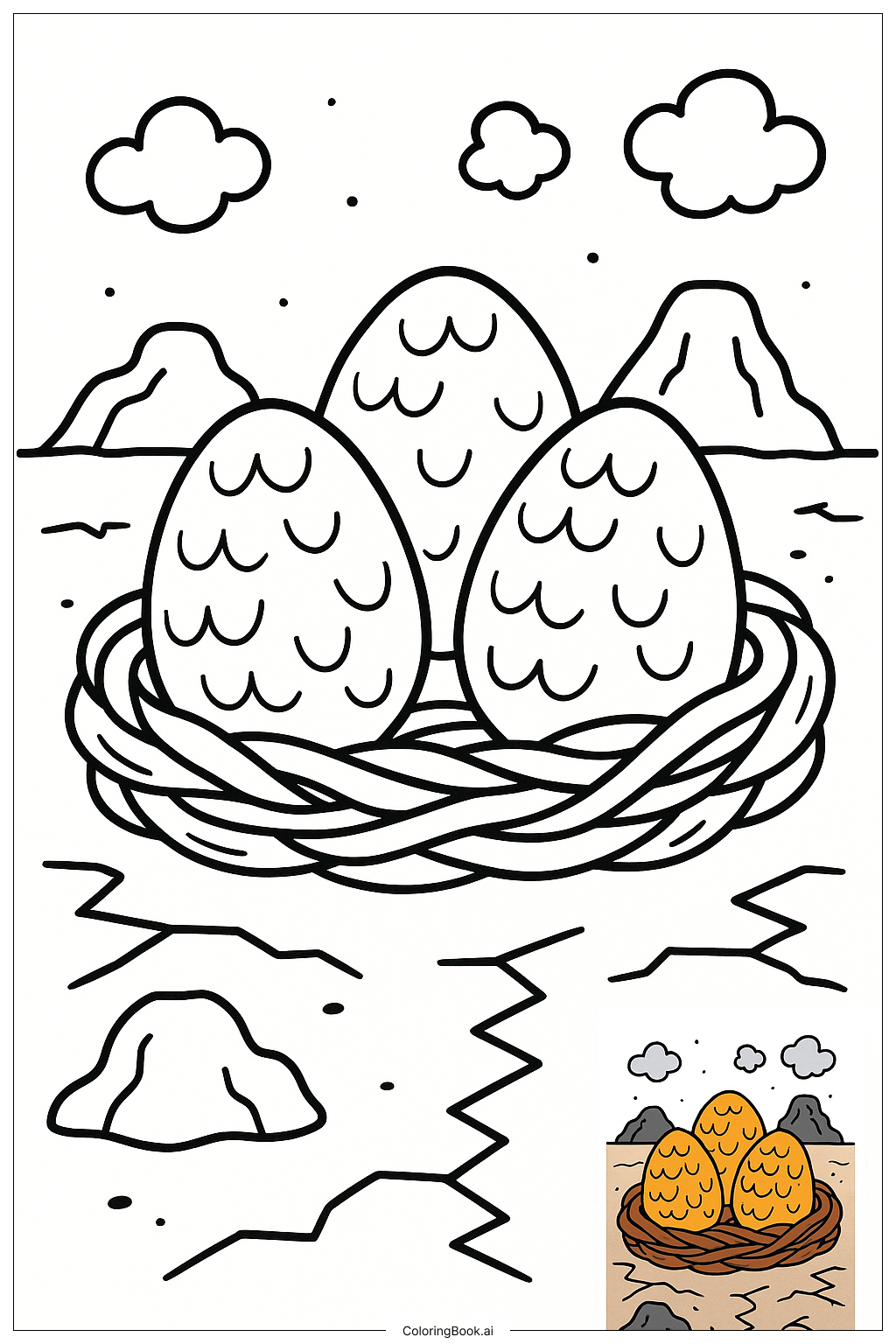
Coloring tips: How to color Dragon Egg Nest In Volcanic Ash coloring page well?
Start with the eggs and give each one a different color to make the scene more exciting. Try deep reds, burnt oranges, or dark purples for a fiery, volcanic feel. You can add yellow or gold along the cracks to show heat glowing from inside. For the volcanic ash and rocks around the nest, use shades of gray, charcoal, and dark brown. Add a hint of orange or red near the base to suggest glowing embers still burning beneath the surface. The smoke wisps can be done in light gray or pale blue to create contrast. Use darker tones on the edges of the rocks to give the scene depth and shadow. If you want the nest to feel warm and alive, blend warm colors like amber and rust into the ash. Take your time with the egg textures — adding lighter highlights on top and darker shades underneath will make them look round and three-dimensional. Have fun making this volcanic world your own!
Coloring challenges: Which parts are difficult to color and need attention for Dragon Egg Nest In Volcanic Ash coloring page?
• Egg Surface Texture: Each egg is covered in overlapping scales and ridged patterns. Staying within these small, curved shapes while building up color takes patience. To make the eggs look realistic, you need to vary the shade across each scale — lighter at the top and darker at the edges. This level of detail can be tricky, especially for younger colorists using thicker tools like crayons.
• Glowing Cracks and Light Effects: Some eggs show cracks with light radiating from inside. Recreating this glowing effect requires careful blending, starting with bright yellow or white at the center and gradually deepening into orange, then red toward the outer edges. Achieving a convincing glow without flat, solid color is one of the hardest parts of this image.
• Volcanic Ash and Rock Shading: The ash and rock surfaces surrounding the nest have uneven, irregular textures. These areas need multiple layers of gray, brown, and black to look dimensional. Blending these tones smoothly while keeping the scene from looking muddy is a real challenge, particularly for those new to shading techniques.
• Smoke and Atmosphere: The wisps of smoke rising from the ash are soft and hazy by nature. Capturing that light, airy quality using pencils or markers — which naturally produce sharper lines — requires a gentle touch and careful blending with lighter shades or leaving white space intentionally.
• Color Harmony Across the Scene: With so many elements — glowing eggs, dark rocks, pale ash, and rising smoke — keeping a balanced color palette that feels unified is challenging. Picking colors that complement each other while still creating contrast between the warm eggs and the cool, ashy background takes thoughtful planning before you begin.
Benefits of coloring books: Advantages of drawing Dragon Egg Nest In Volcanic Ash coloring page
Coloring this dragon egg nest scene offers a wide range of benefits for kids and creative minds of all ages. First, the detailed egg textures and rocky surfaces help develop fine motor skills and hand control, as colorists must work carefully within small, intricate shapes. This kind of focused activity strengthens the precision needed for writing and other detailed tasks. Second, the scene encourages creative thinking. Since dragon eggs can be any color imaginable, children feel free to make bold, personal choices — building confidence in their own creativity. Third, working through the challenges of shading and blending in this image teaches basic color theory in a hands-on, enjoyable way. Kids learn how light and shadow work naturally, without it feeling like a lesson. Fourth, the fantasy setting sparks imagination and storytelling. Many children will invent stories about what dragon is inside each egg, turning a simple coloring session into an adventure. Finally, the calm, repetitive motion of coloring helps reduce stress and improve focus, making it a great quiet-time activity. This image truly combines fun, learning, and creativity all in one page.