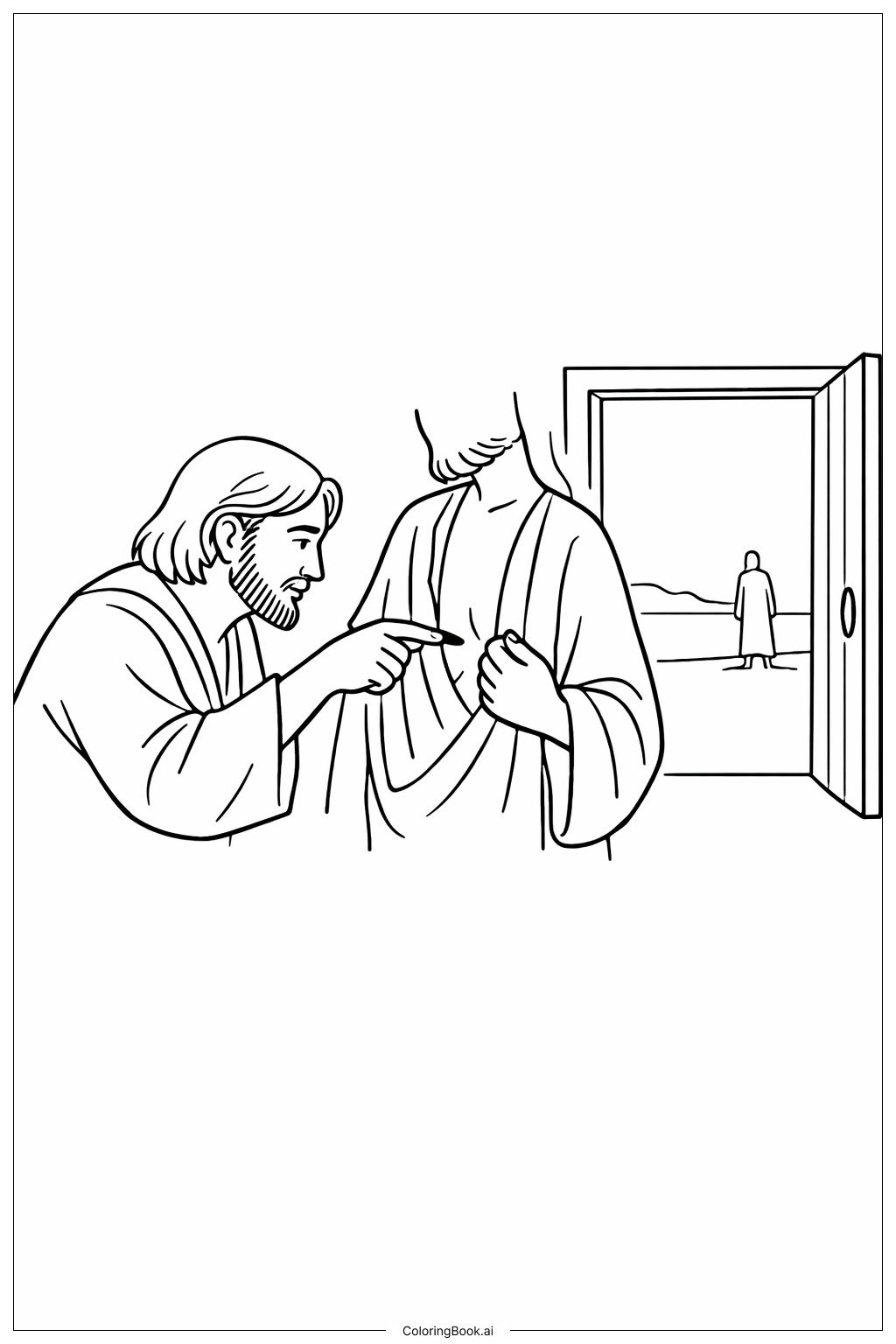
Coloring tips: How to color Doubting Thomas with Open Door coloring page well?
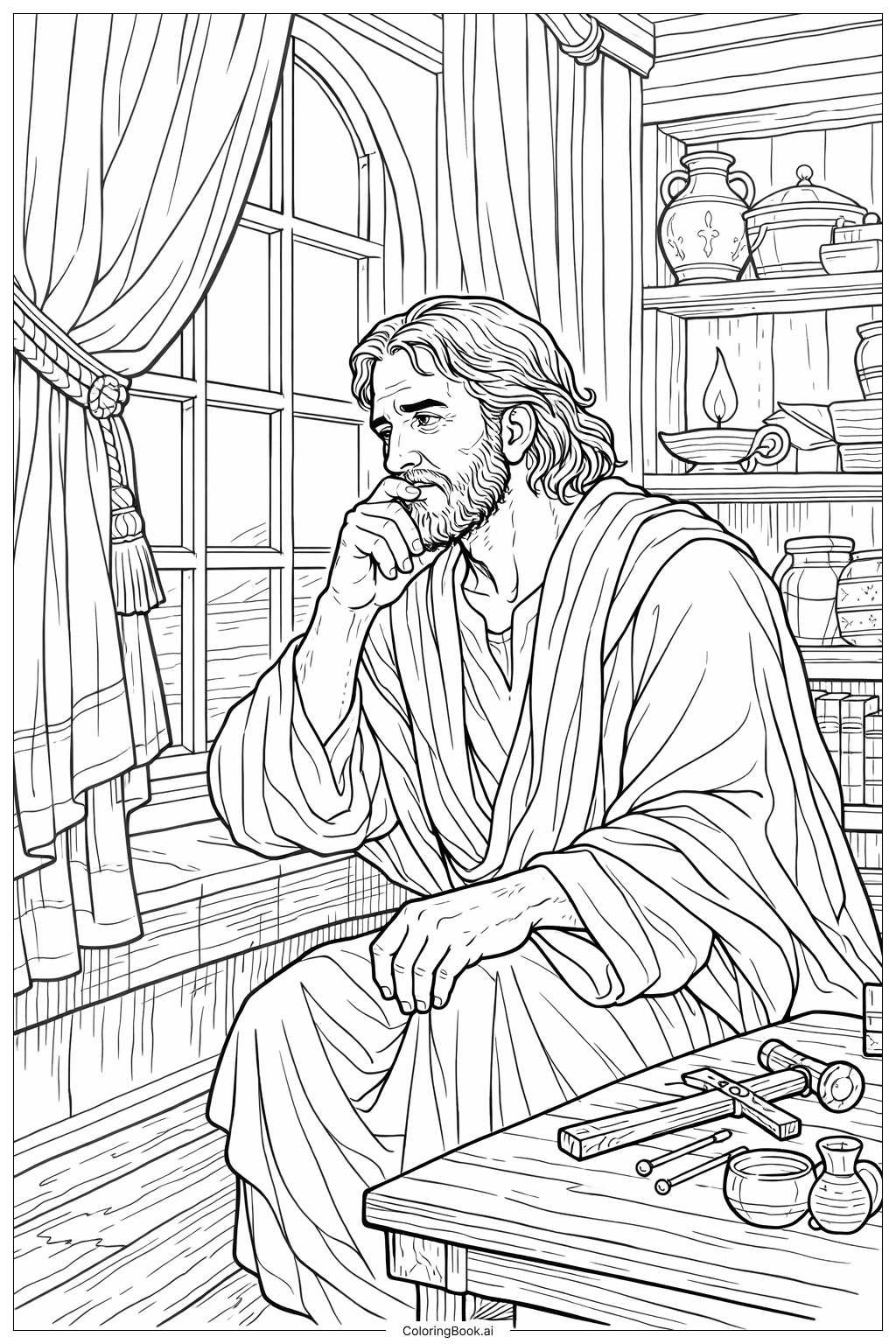
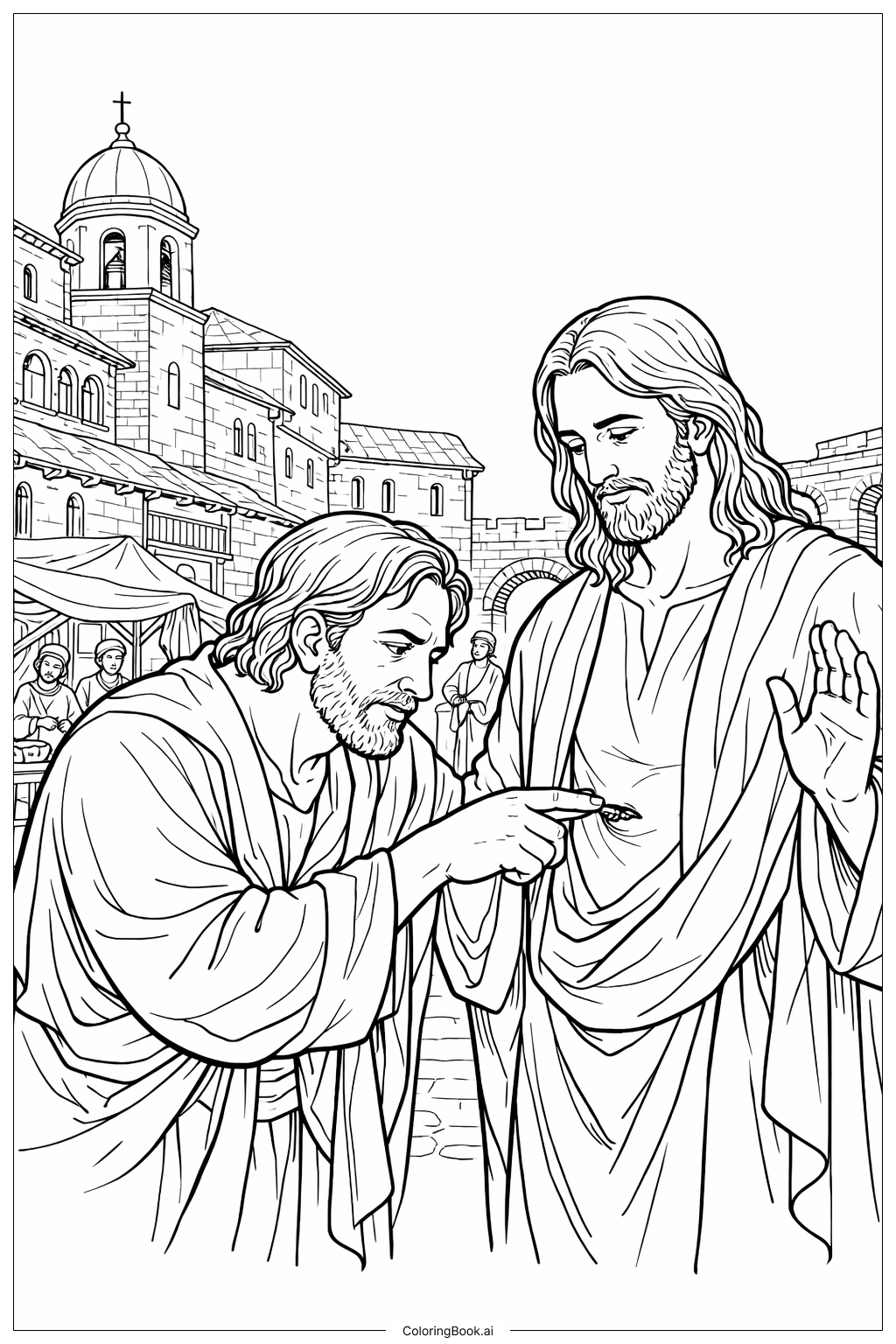
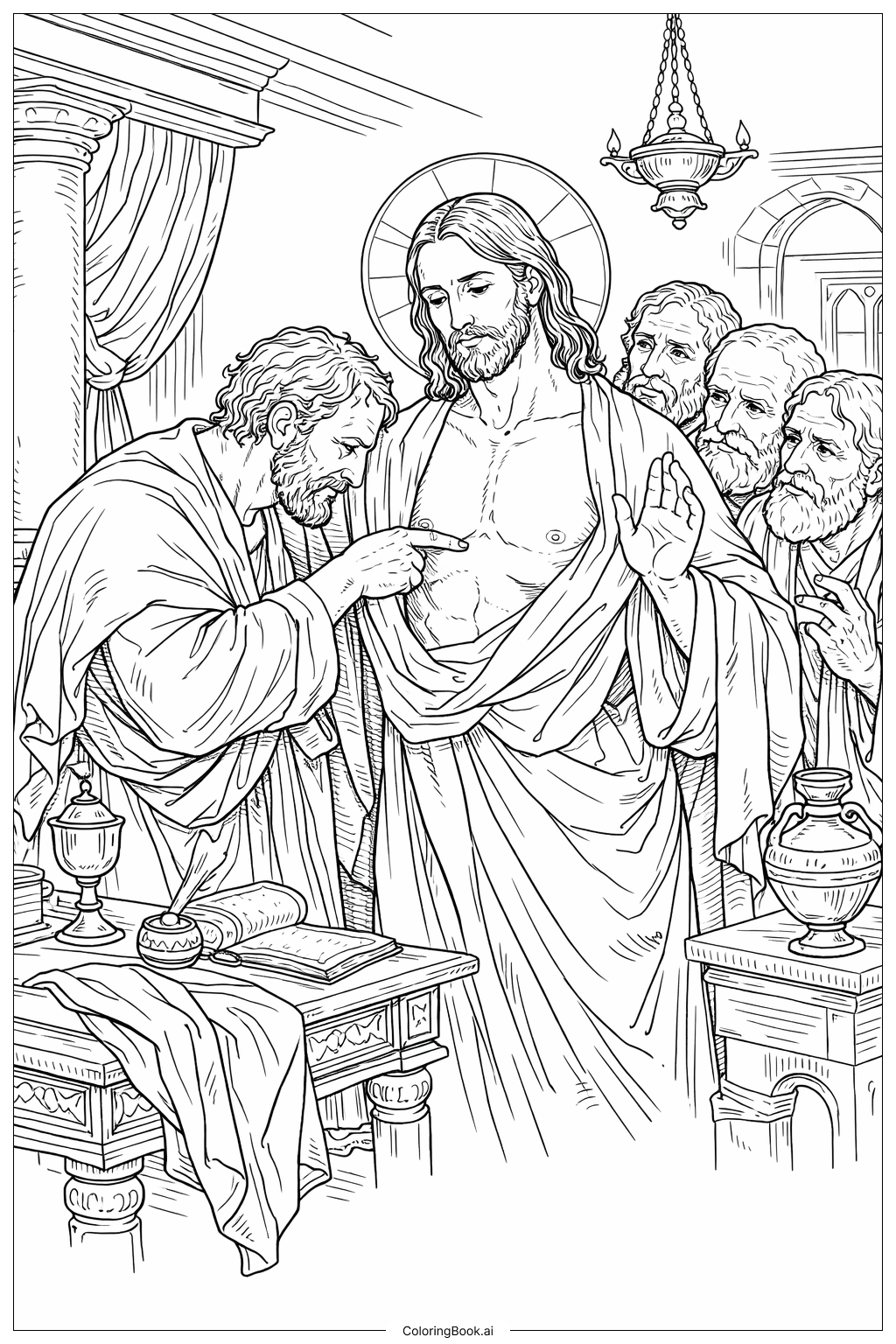
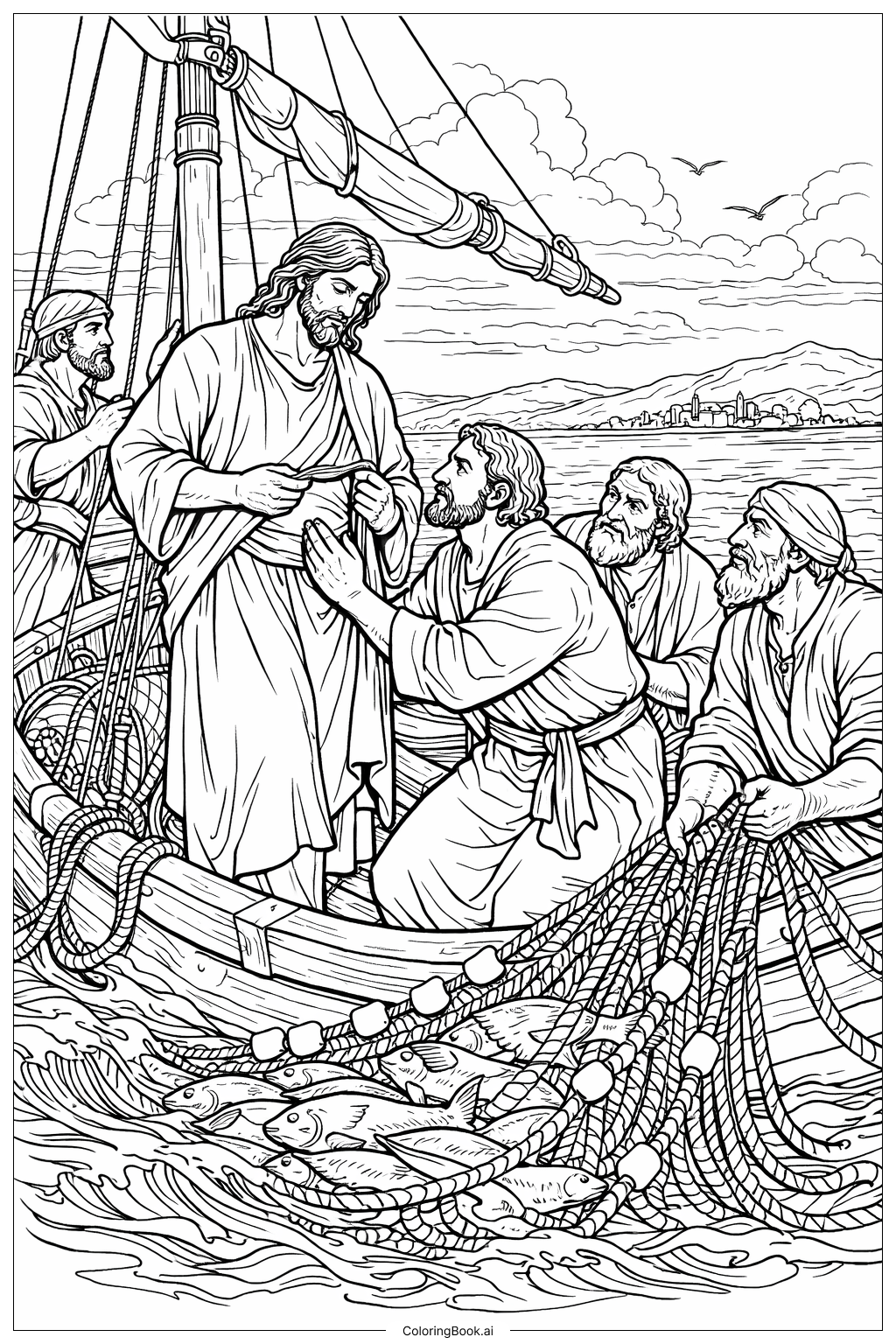
Use soft, warm colors for the clothing to reflect the gentle and hopeful mood. Brown or tan shades work well for the sandals and wooden door. For skin tones, choose natural shades with light rosy highlights to show warmth. The background can be painted in muted earth tones to keep the focus on the figures. Try blues or purples for Jesus’ robe to symbolize calm and trust. You can add some light shading around the door frame to make it look open and welcoming. Don’t be afraid to use bright colors for small details like hair or shadows to make the scene more lively and interesting.
Coloring challenges: Which parts are difficult to color and need attention for Doubting Thomas with Open Door coloring page?
• Fine Details on Hands: The image shows Thomas carefully touching the wounds on Jesus’ hands, so shading the small fingers and wounds can be tricky to color neatly without smudging or coloring outside the lines. • Facial Expressions: Capturing the gentle yet thoughtful expressions of both Thomas and Jesus requires careful use of subtle colors to show emotion without overpowering the scene. • Open Door Depth: The doorway behind Thomas adds perspective but demands attention to shadows and highlights so it looks three-dimensional and realistic. • Clothing Folds: The robes have many folds and creases. Coloring these with shades and highlights takes patience to create a natural look rather than flat colors. • Contrast Between Characters and Background: Balancing colors so Thomas and Jesus stand out clearly from the door and wall background can be challenging, especially with subtle earth tones.
Benefits of coloring books: Advantages of drawing Doubting Thomas with Open Door coloring page
Coloring this image helps improve focus and attention to detail as kids work on the intricate hands and faces. It encourages careful observation of light, shadow, and texture seen in the clothing folds and open door. The story behind Doubting Thomas invites reflection on faith and curiosity, helping children connect emotionally with the scene. It also builds fine motor skills through the precise coloring of small areas. Finally, adding color to a meaningful story promotes creativity while making the biblical story memorable and enjoyable for learners of all ages.