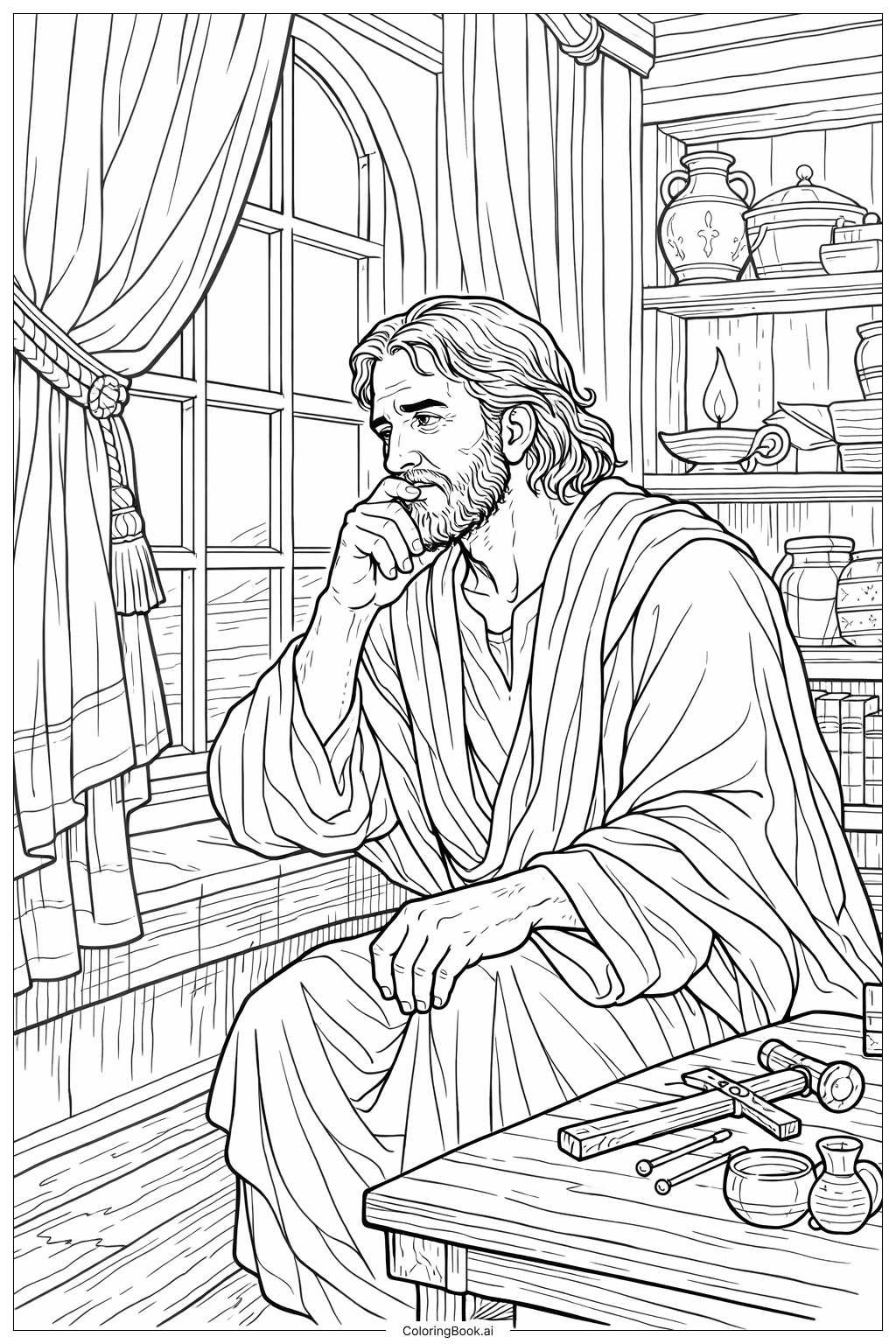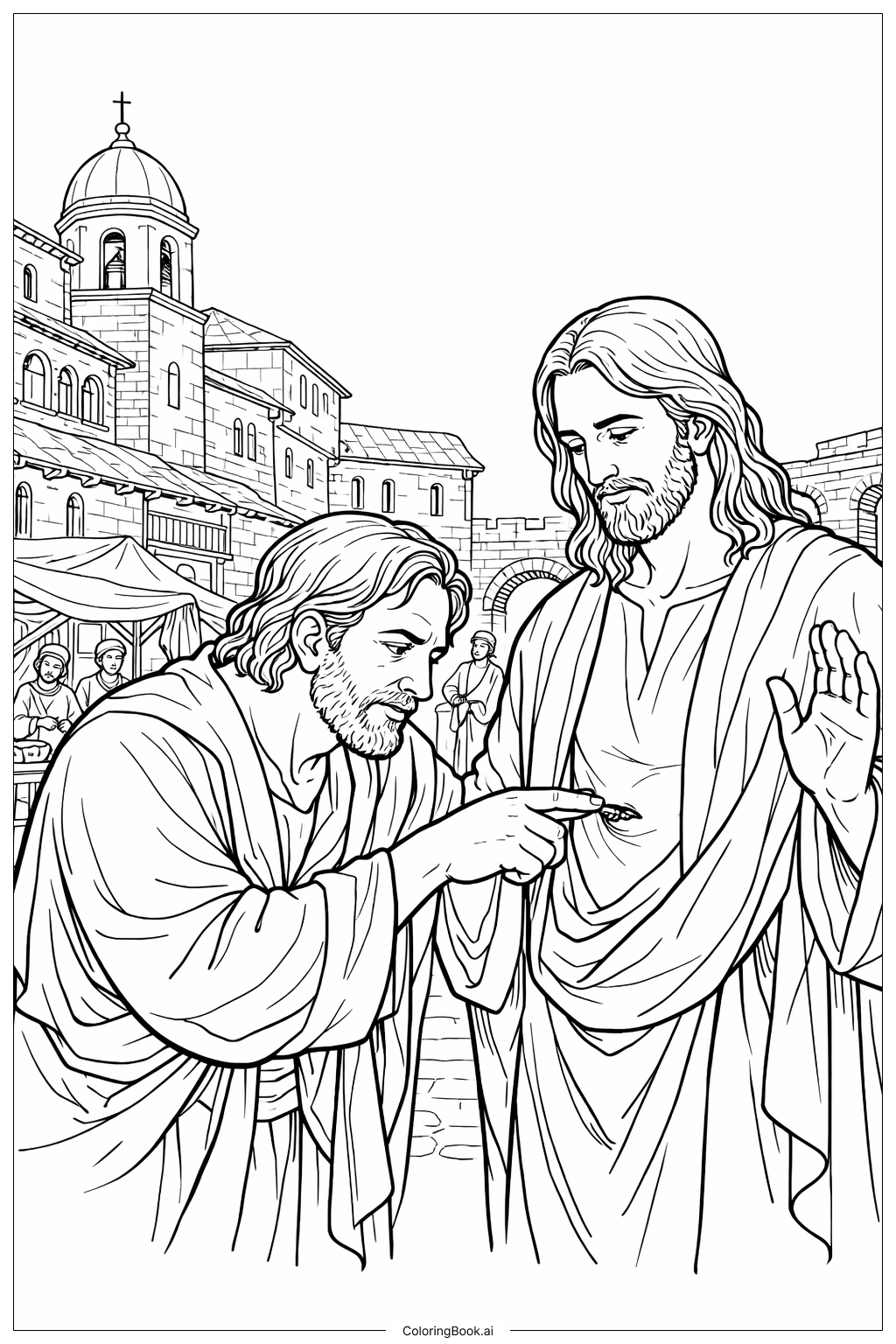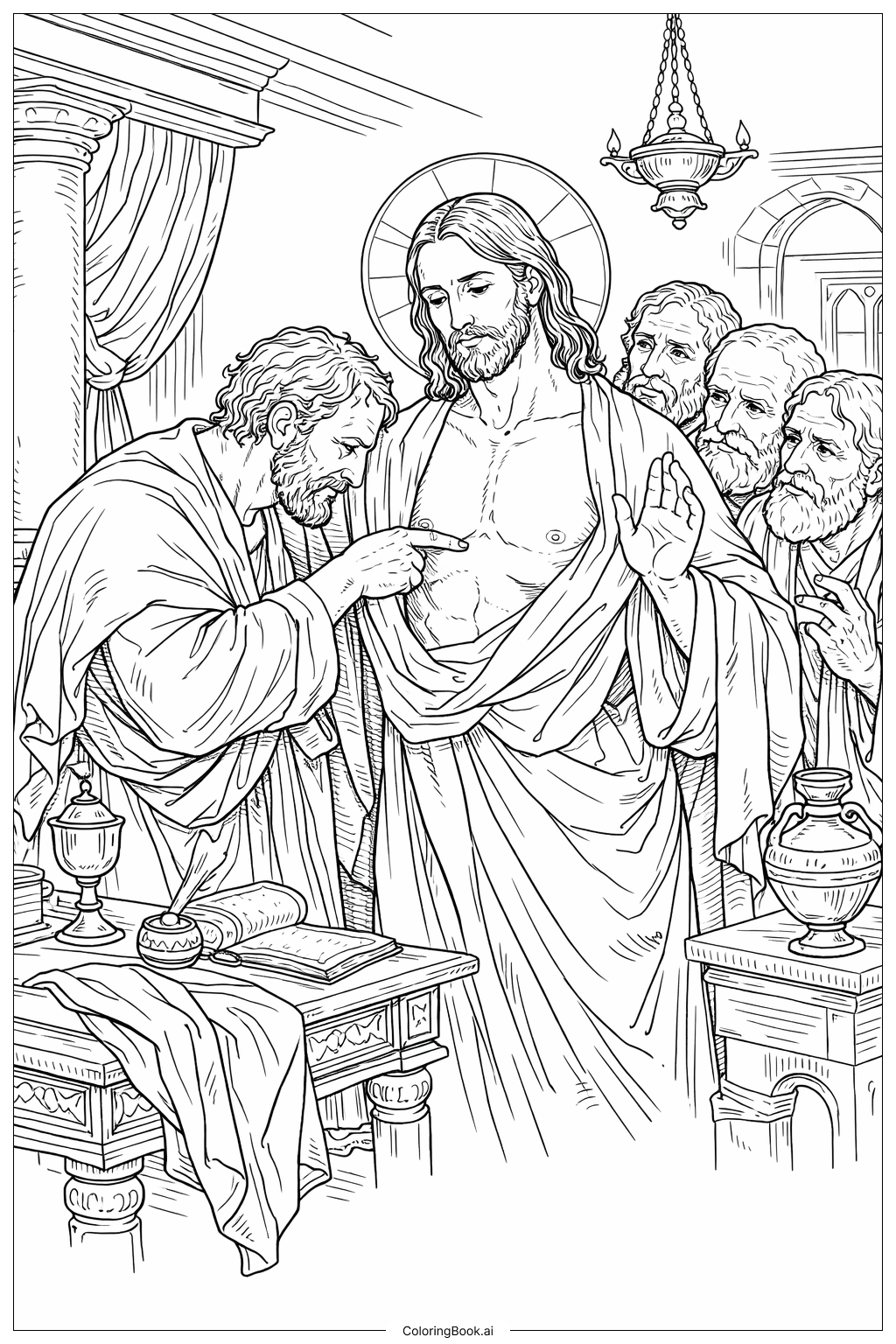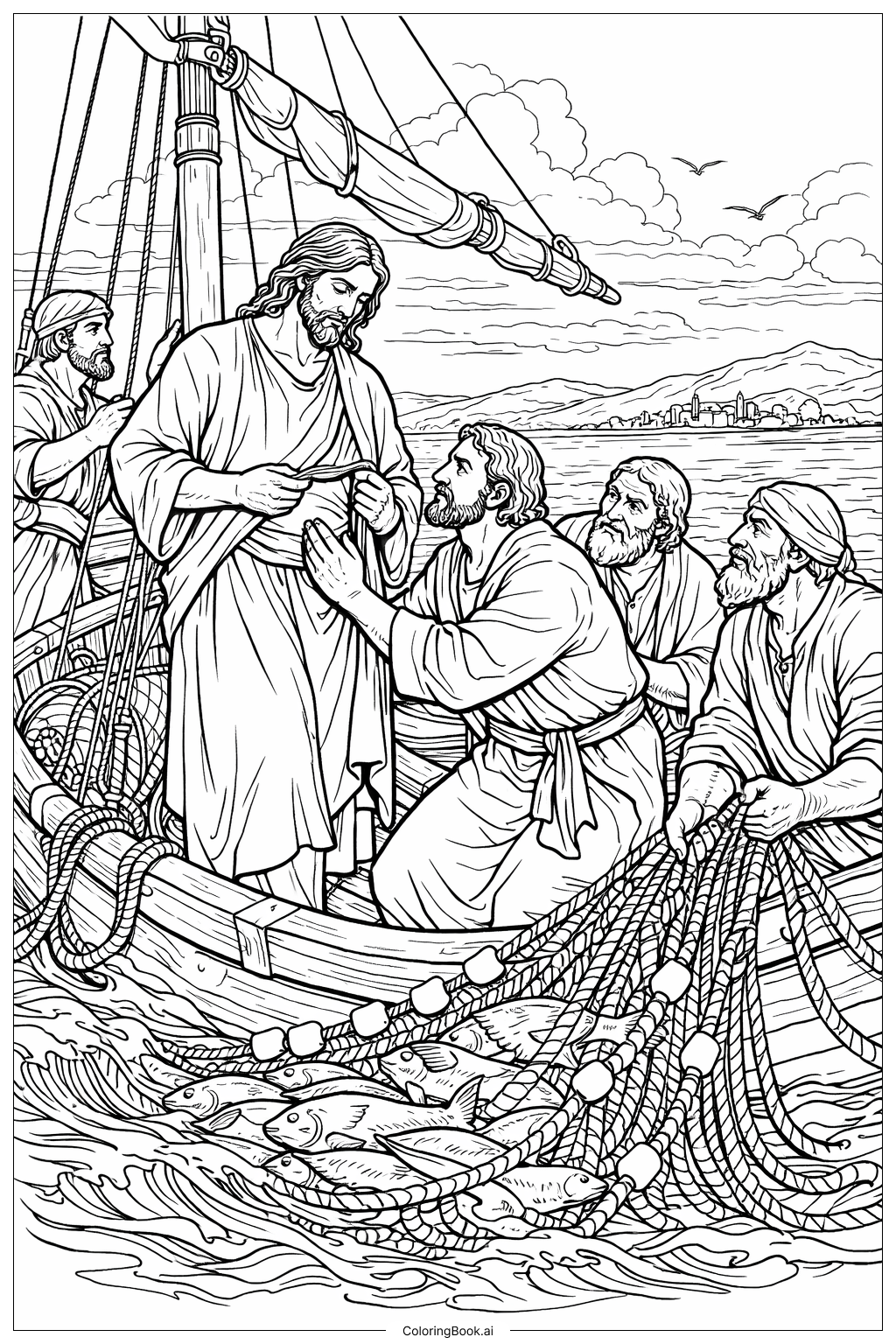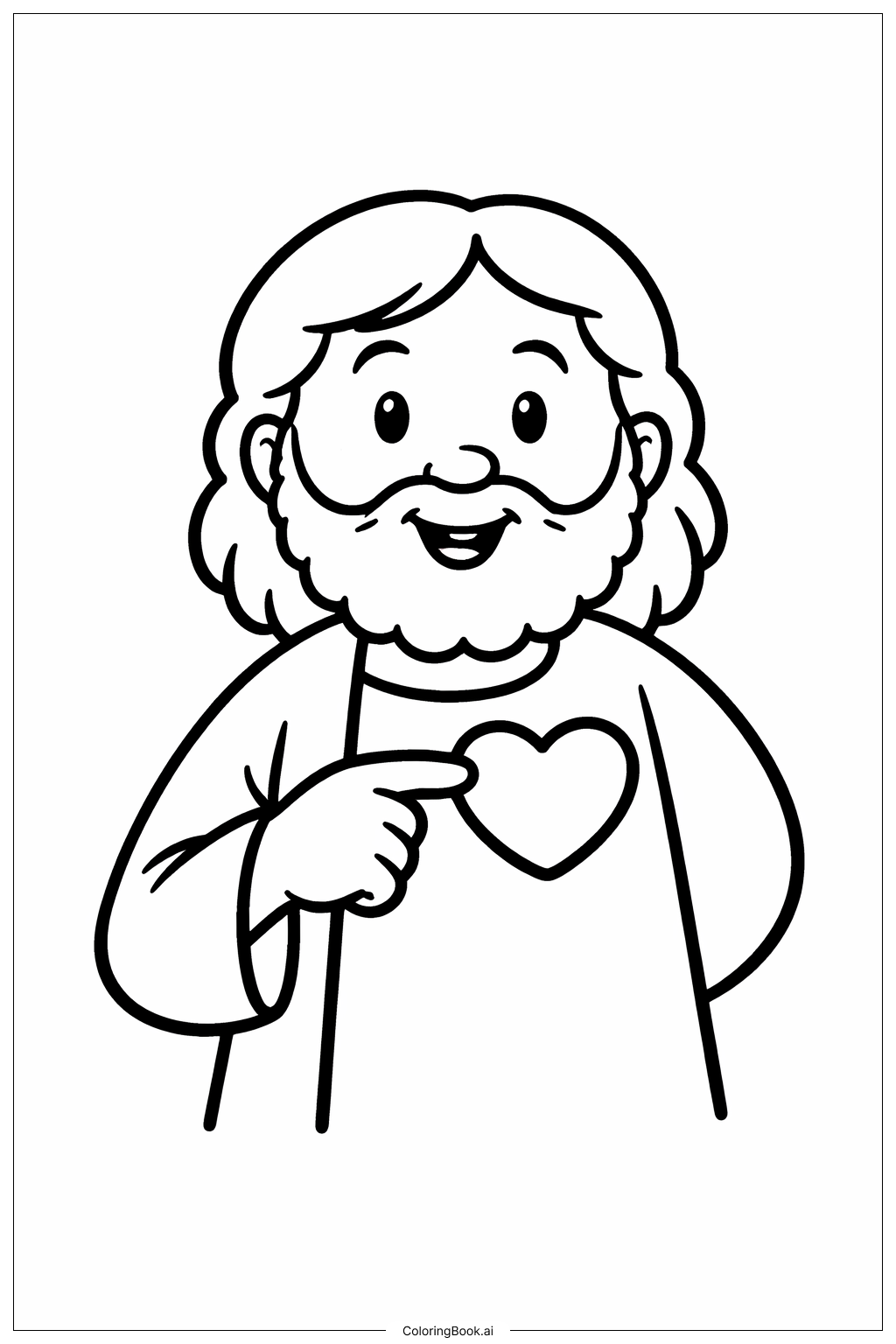
Coloring tips: How to color Doubting Thomas Pointing to Heart coloring page well?
Start with the skin tones on Thomas's face and hands. Use warm shades like peach, tan, or light brown to bring his skin to life. For his robes, try earthy tones such as sandy beige, olive green, or dusty brown — colors that feel natural for biblical clothing. You can add a slightly darker shade of the same color along the folds to show depth and shadow. The heart at the center of the scene is the most important element. Use a rich, warm red or deep crimson to make it stand out. Add a gentle glow around it using soft yellow or gold to give it a sacred, glowing feeling. The background can be kept simple with soft blues, pale gold, or light gray to keep the focus on Thomas and the heart. Use colored pencils or fine-tipped markers to stay inside the detailed lines of the robe folds and face. Take your time with the facial expression — it tells the whole story.
Coloring challenges: Which parts are difficult to color and need attention for Doubting Thomas Pointing to Heart coloring page?
• Facial Expression Details: Thomas's face carries a very specific emotion — a mix of awe, surprise, and dawning belief. Coloring the face requires careful shading around the eyes, brow, and mouth. Using the wrong tones or pressing too hard with a pencil can flatten the expression and lose its emotional depth. Gentle layering of skin tones works best here.
• Robe Folds and Drapery: The flowing robes have many overlapping folds and curved lines. Each fold creates a shadow that needs a slightly darker tone to look realistic. Keeping track of where the light source is and applying consistent highlights and shadows across all the fabric layers is a real challenge, especially for younger artists.
• The Heart as a Focal Point: The heart must stand out clearly from the rest of the image. Getting the right balance of color saturation — making it vivid without overpowering the surrounding elements — takes care and planning. A glow effect around the heart can be tricky to blend smoothly, especially with crayons or standard markers.
• Finger and Hand Proportions: The pointing hand and extended finger are small but central to the scene. Staying within the narrow lines of the fingers without smudging or going outside the outlines requires a fine-tipped tool and a steady hand.
• Background Balance: The background needs to feel spiritually meaningful without distracting from the figures. Choosing the right soft, muted tones and blending them evenly across a large open area can be difficult, particularly when trying to avoid streaks or uneven color coverage.
Benefits of coloring books: Advantages of drawing Doubting Thomas Pointing to Heart coloring page
Coloring this image of Doubting Thomas offers a wonderful mix of creative, emotional, and educational rewards. For children and adults alike, it is a chance to slow down and connect with a powerful story about faith, courage, and the journey from doubt to belief.
Working through the details of the robes and facial expression helps build fine motor skills and hand-eye coordination. Choosing colors and planning how to shade the folds encourages creative thinking and problem-solving.
For children learning about the Bible, this page brings the story to life in a hands-on way. It opens up conversations about feelings like doubt, wonder, and trust — emotions that everyone experiences, young or old.
For older students and adults, the image invites quiet reflection. The act of carefully coloring the heart and Thomas's reaching hand can feel meditative, offering a calming break from busy daily life.
The scene also builds focus and patience. Details like the drapery folds and the glowing heart require concentration and steady effort, which helps develop persistence and attention to detail over time.
Whether used in a Sunday school class, a homeschool lesson, or simply as a personal creative activity, this coloring page is both meaningful and enjoyable for a wide range of ages and skill levels.