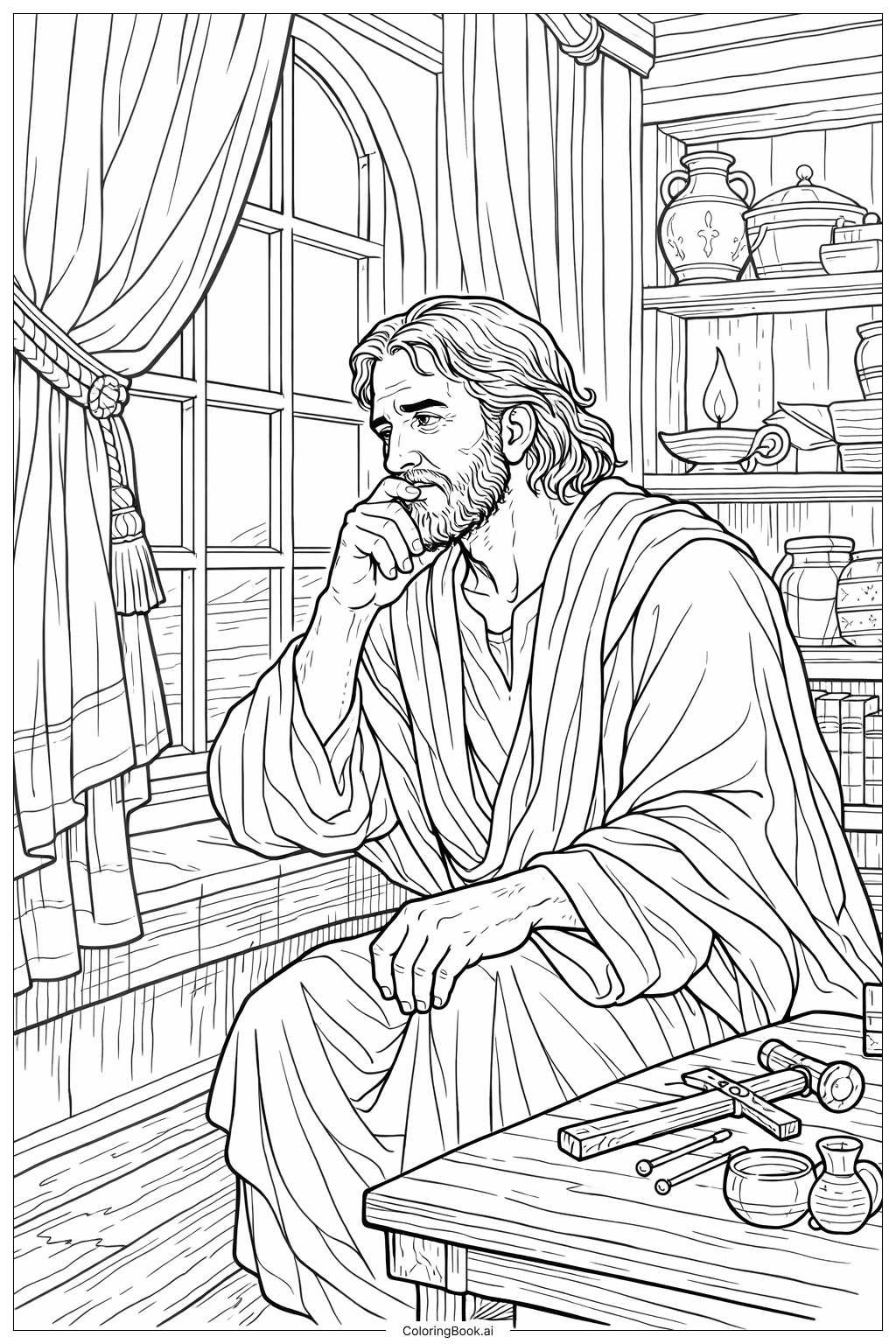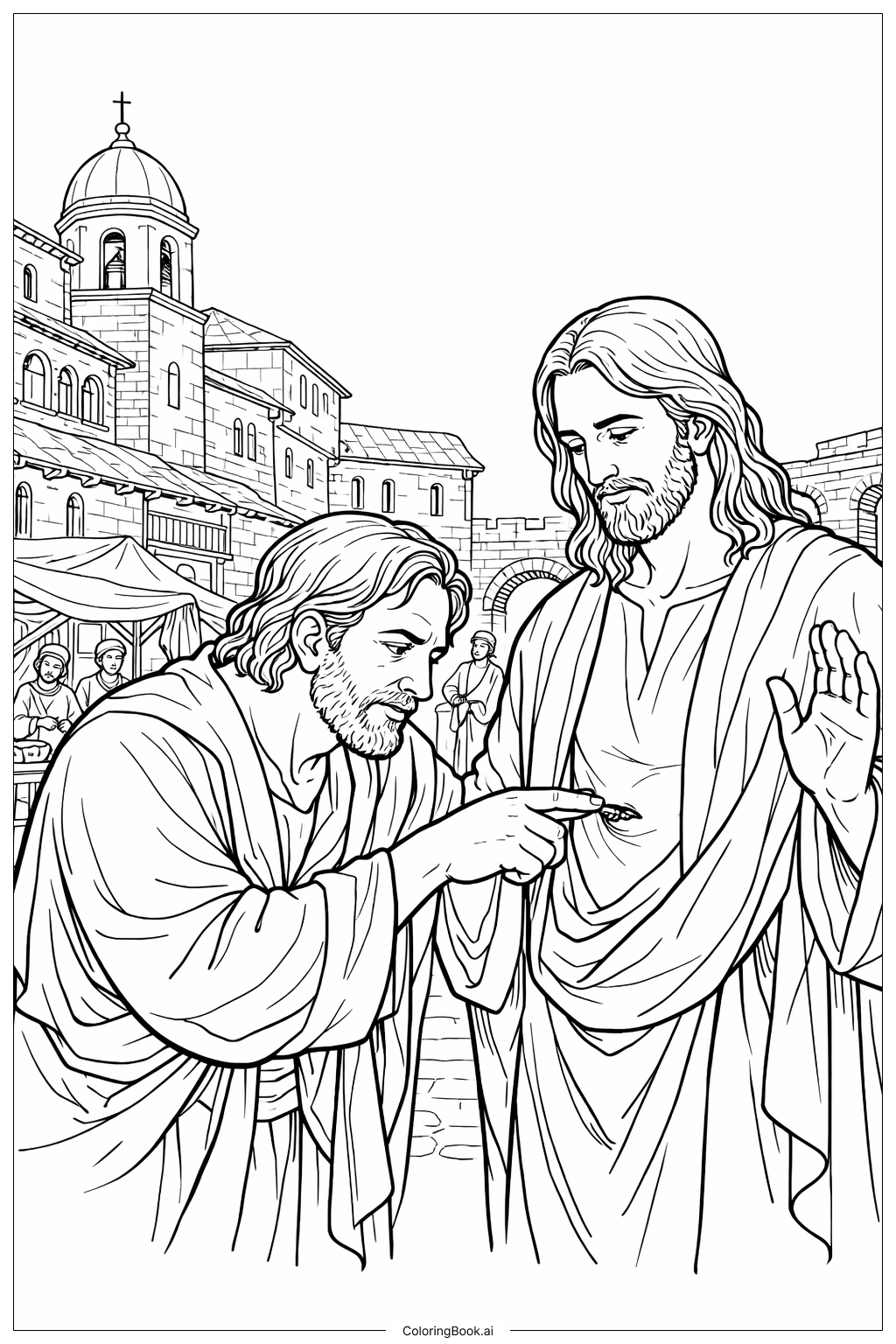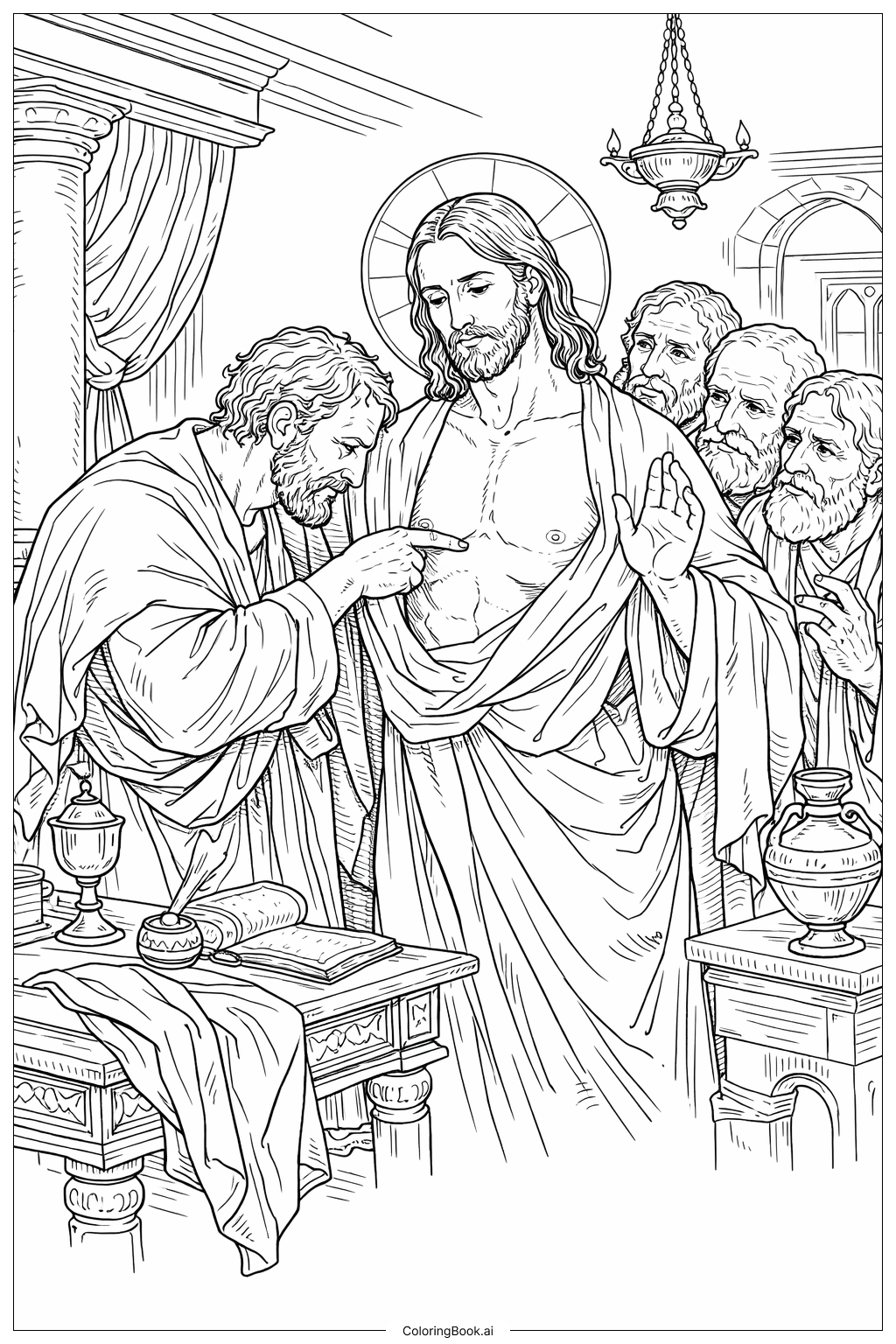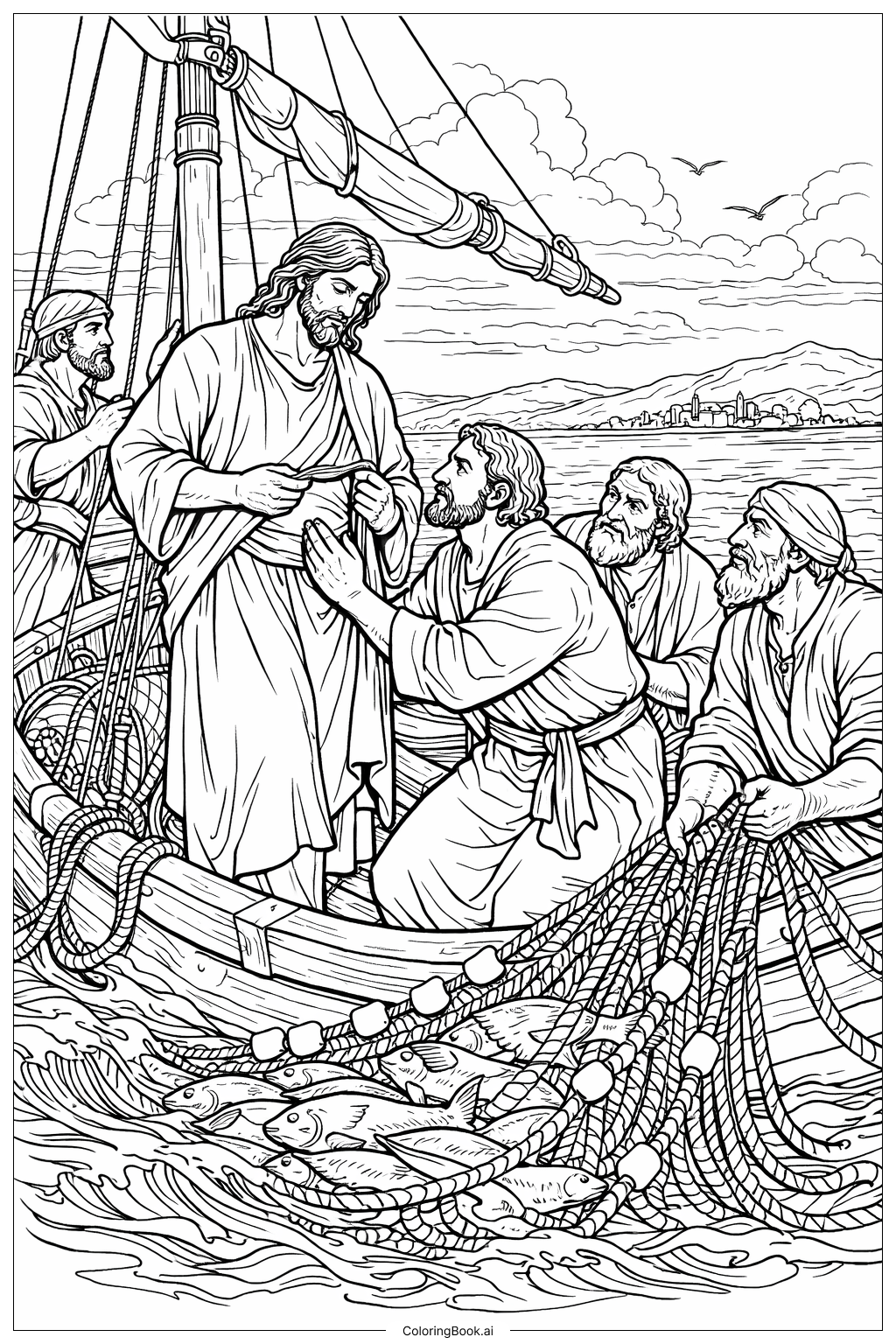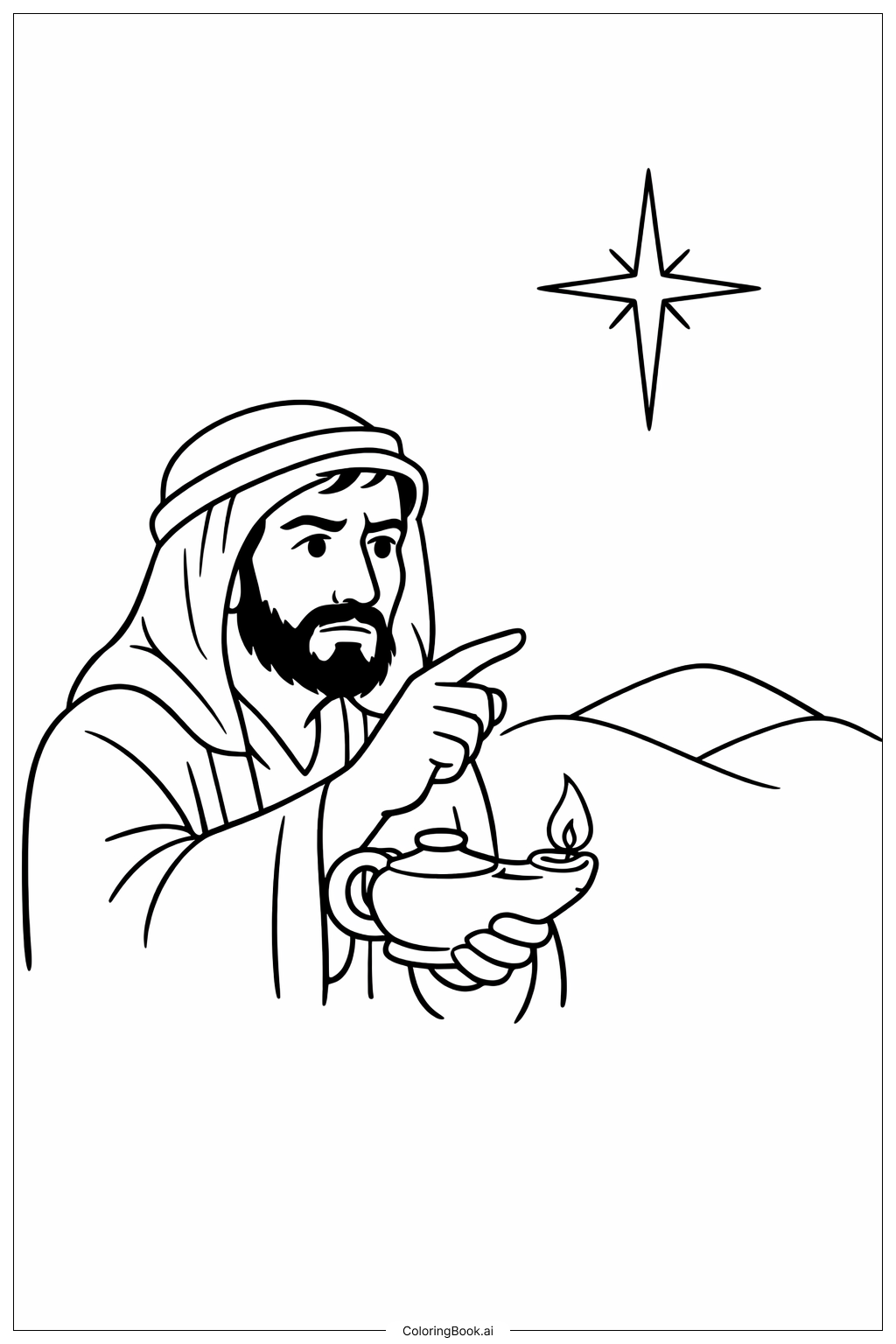
Coloring tips: How to color Doubting Thomas Holding Lamp at Night coloring page well?
For this image, using warm yellow and orange shades will bring the lamp's light to life. Try coloring the lantern's glow in soft yellows that fade outward for a natural light effect. The night sky can be filled with dark blues and purples to show the peaceful evening. For Doubting Thomas’s clothes, choose soft earth tones like browns and creams to keep the focus on his face and the lamp. You can add subtle greens and grays to the rocks and plants in the background to create depth. Remember to leave some white or very light areas around the lamp’s glow to show the brightness shining on Thomas and nearby objects.
Coloring challenges: Which parts are difficult to color and need attention for Doubting Thomas Holding Lamp at Night coloring page?
• Light Source Contrast: Coloring the lamp’s glow realistically is challenging because you need to create a bright light effect against a dark night background without making the contrast too harsh.
• Facial Expression Detail: Capturing Thomas’s thoughtful and curious look requires careful shading around his eyes and mouth to bring emotion to the image.
• Clothing Folds: The loose robes have many folds and curves that require attention to shading and highlights to make the fabric look natural and flowing.
• Background Elements: The rocks and trees in the dim light demand subtle color choices to prevent them from overpowering the main figure while still adding depth to the scene.
• Night Sky Texture: Filling the sky with stars and a smooth gradient from dark to light demands patience and gradual coloring blending to avoid unevenness.
Benefits of coloring books: Advantages of drawing Doubting Thomas Holding Lamp at Night coloring page
Coloring this image helps develop focus and attention to detail, especially in creating light effects and capturing emotion. It encourages creativity with color blending for the night sky and subtle shading on clothing. This page also promotes understanding of contrast and how light interacts with objects in darkness. For children aged 4–16, it supports fine motor skills as they carefully color small facial features, folds in fabric, and natural background elements. Beyond technique, the picture invites reflection on curiosity and belief, inspiring thoughtful engagement while coloring.