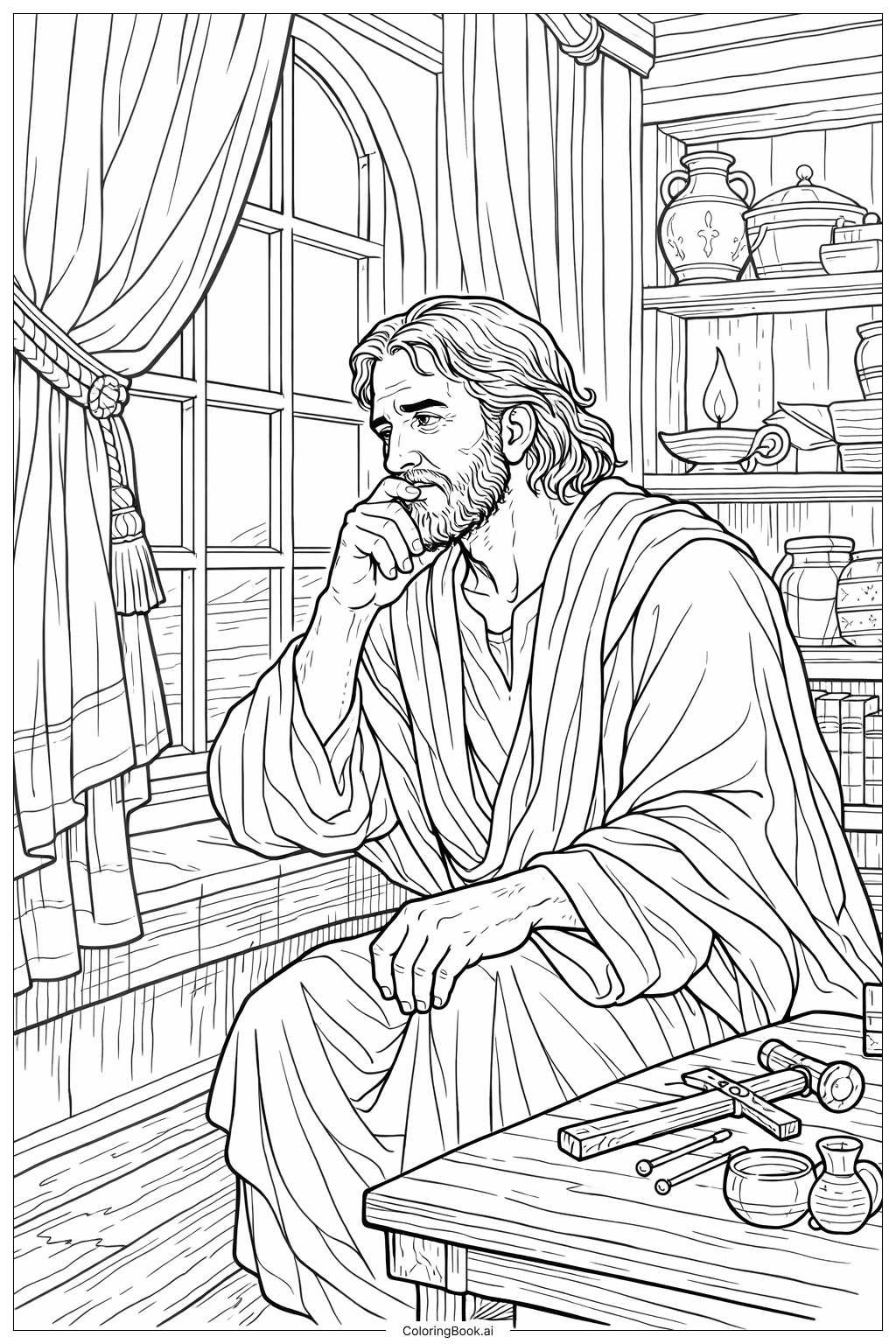
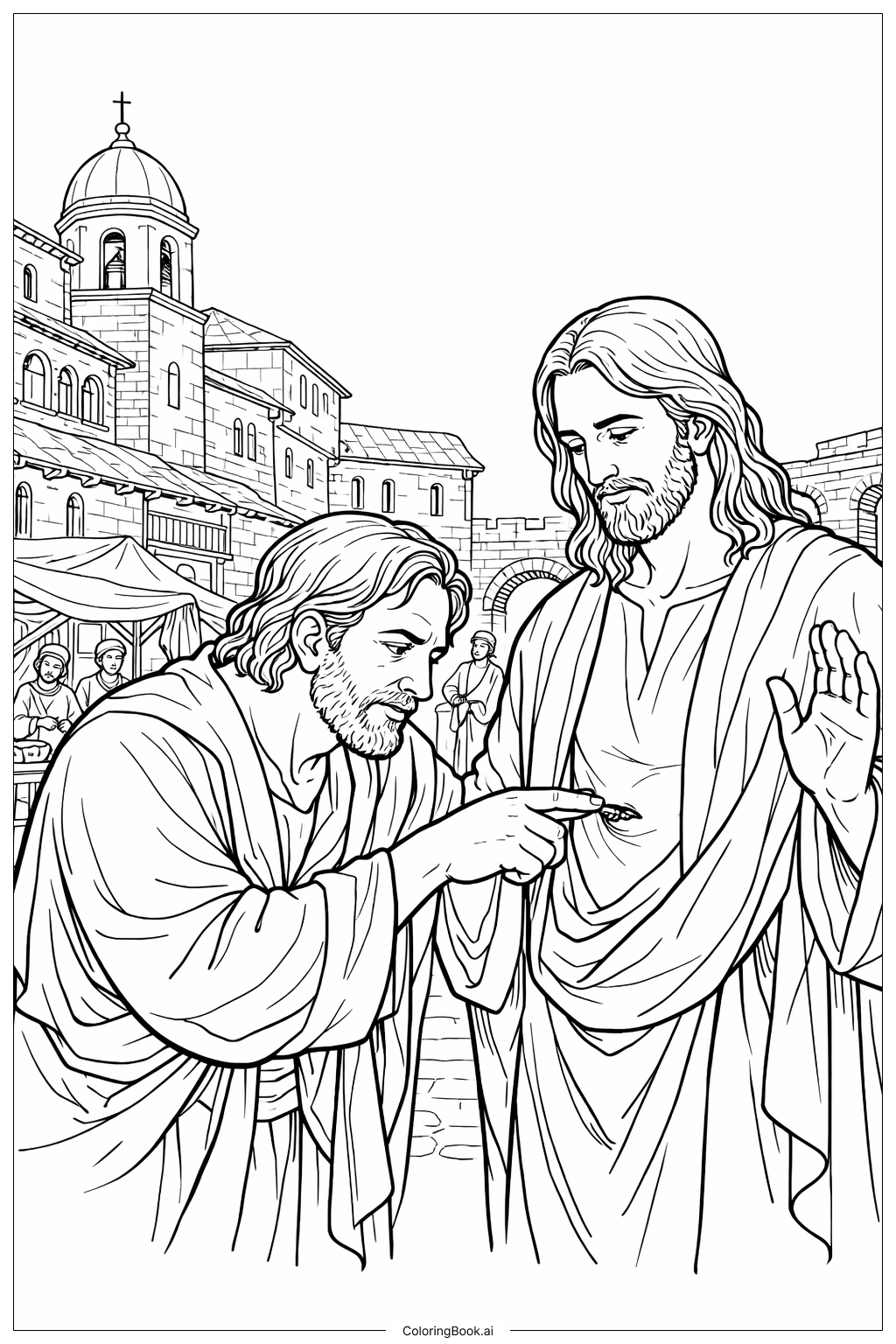
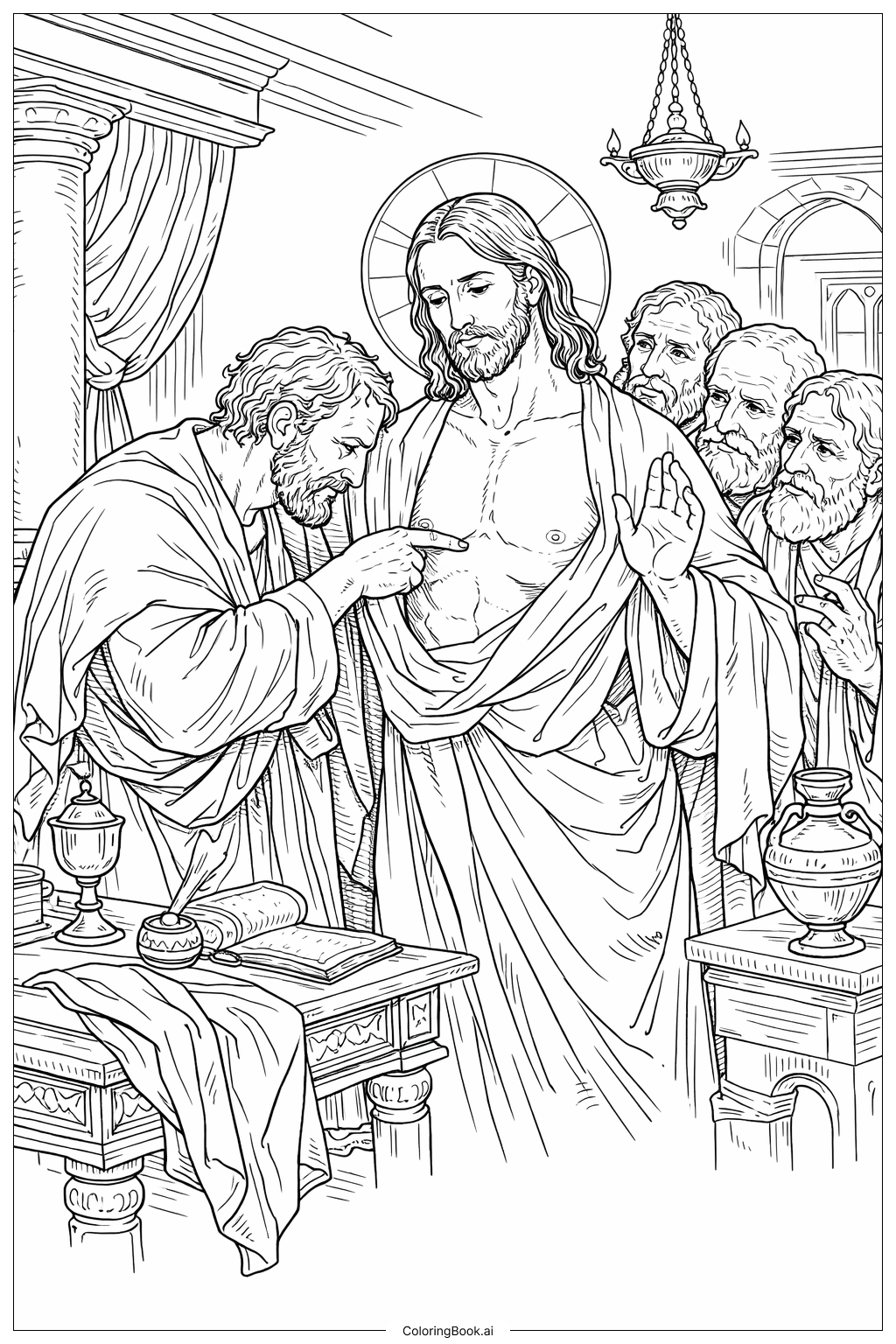
Coloring tips: How to color Doubting Thomas Examining Linen Cloth coloring page well?
For this image, start by choosing soft, natural colors for Thomas’ clothes, like light brown, beige, or cream. You can use warm tones such as light yellows or muted oranges to give a gentle feel to the fabric he is holding. The linen cloth itself can be colored white or light grey to look natural, but you could add subtle shadows with light blue or soft purple to show folds and texture. Thomas’ skin can be warm tan, and his hair can be shaded with browns to add depth. Use gentle shading to make his expression stand out and create a calm, thoughtful mood. Backgrounds can be left simple or colored in soft blues or greens to keep the focus on Thomas and the cloth.
Coloring challenges: Which parts are difficult to color and need attention for Doubting Thomas Examining Linen Cloth coloring page?
• Fine Details: The delicate wrinkles and folds in the linen cloth require careful coloring with light shading to show texture without overwhelming the image. • Facial Expression: Capturing Thomas’ thoughtful and curious expression needs careful attention to subtle shadows around his eyes and mouth. • Clothing Layers: Thomas’ robes have overlapping folds, which means using different shades of the same color to separate layers and create depth. • Hands and Fingers: The fingers holding the cloth are detailed and small, requiring accuracy to avoid coloring outside the lines and to show their gentle touch realistically. • Light and Shadow: Balancing light and shadow across the cloth and Thomas’ face is tricky but important to convey the three-dimensional feel of the scene.
Benefits of coloring books: Advantages of drawing Doubting Thomas Examining Linen Cloth coloring page
Coloring this image helps children develop fine motor skills through careful work on the detailed hands and fabric. It encourages observation skills as they notice the subtle folds and shadows in the linen cloth and clothing. The story of Doubting Thomas also opens a discussion about belief and curiosity, making the coloring experience both creative and meaningful. The calm mood of the image can inspire focus and patience while coloring. Overall, it provides a chance to practice shading techniques and experiment with natural colors, improving artistic confidence and understanding of light in art.