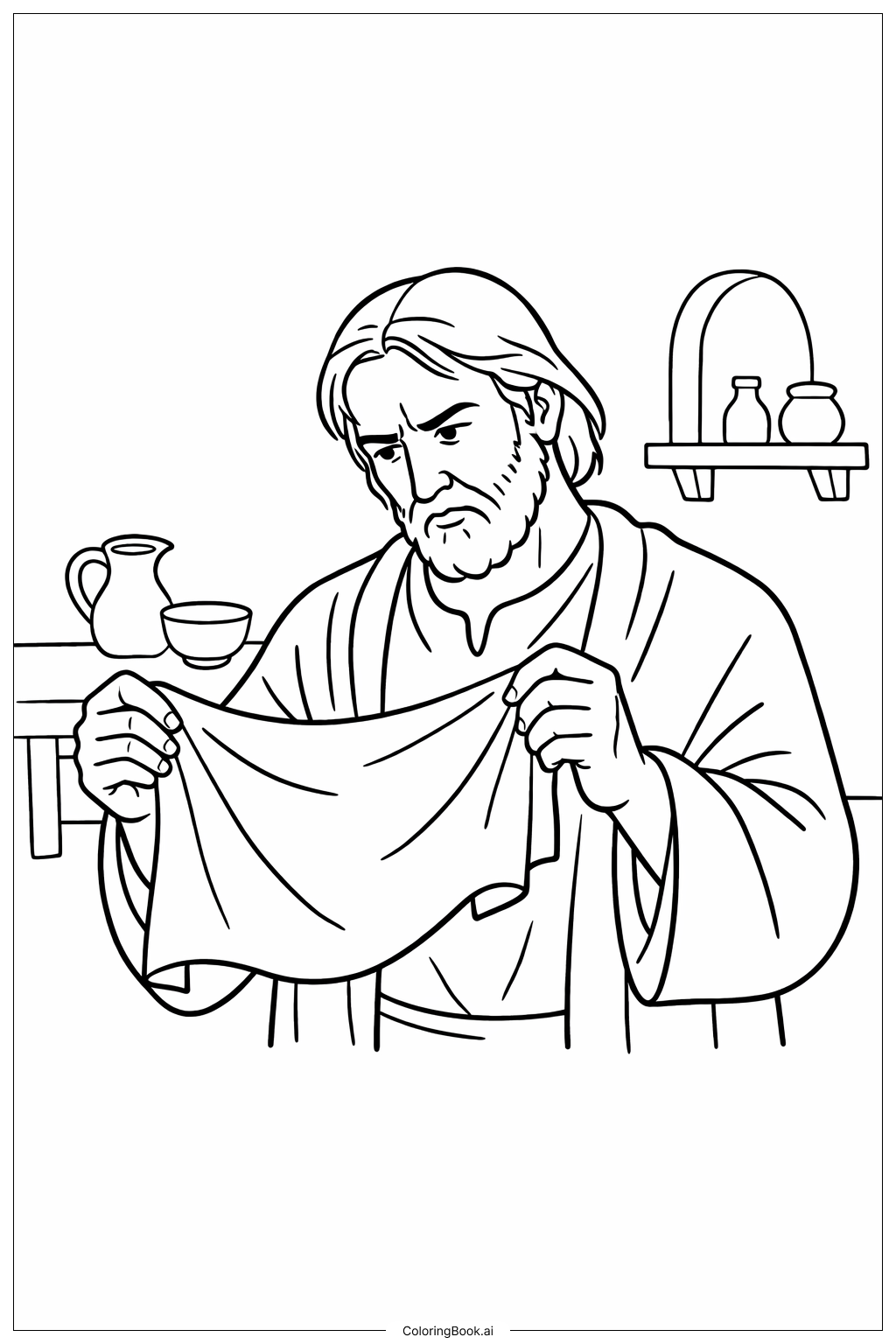
Coloring tips: How to color Doubting Thomas Examining Cloth coloring page well?
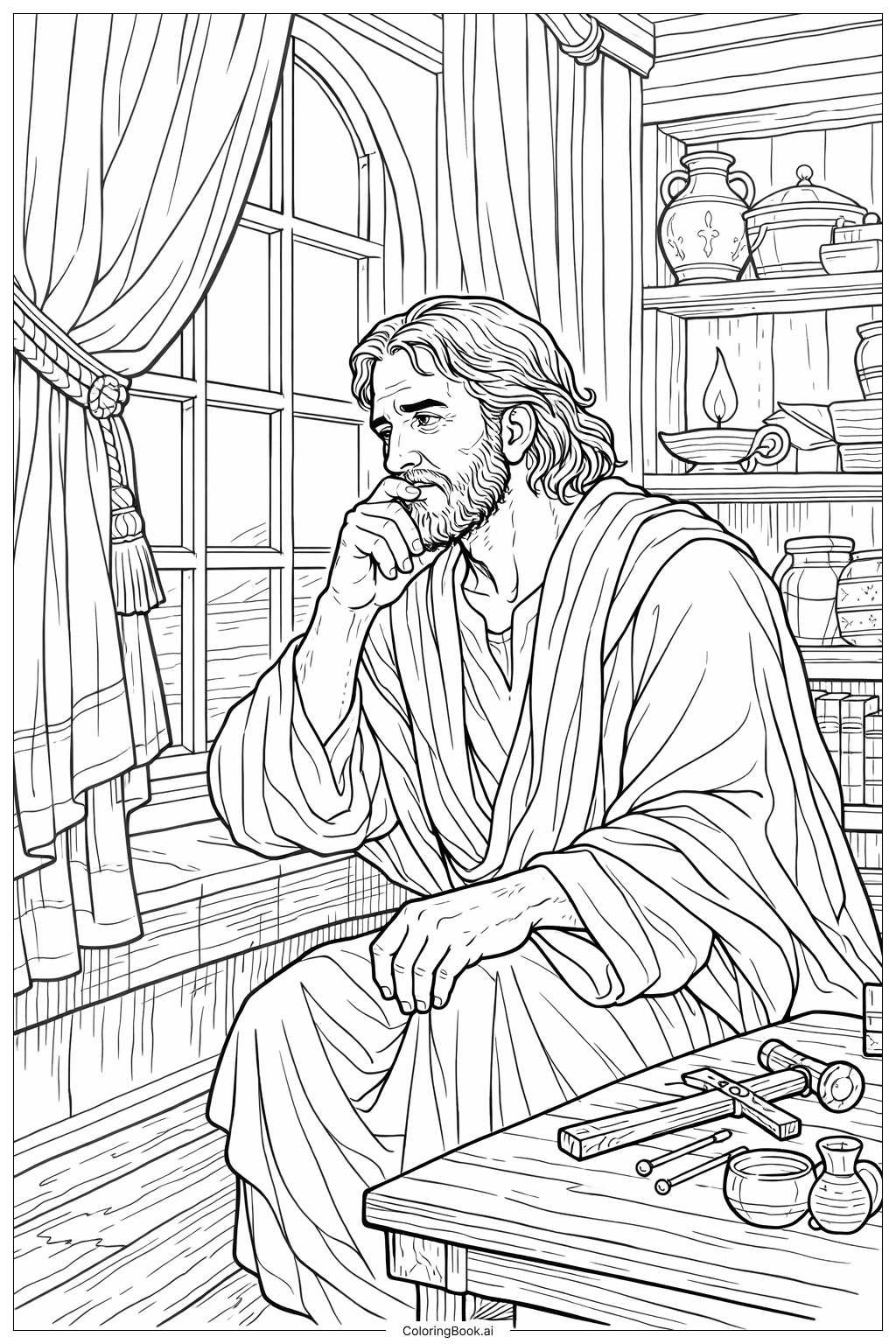
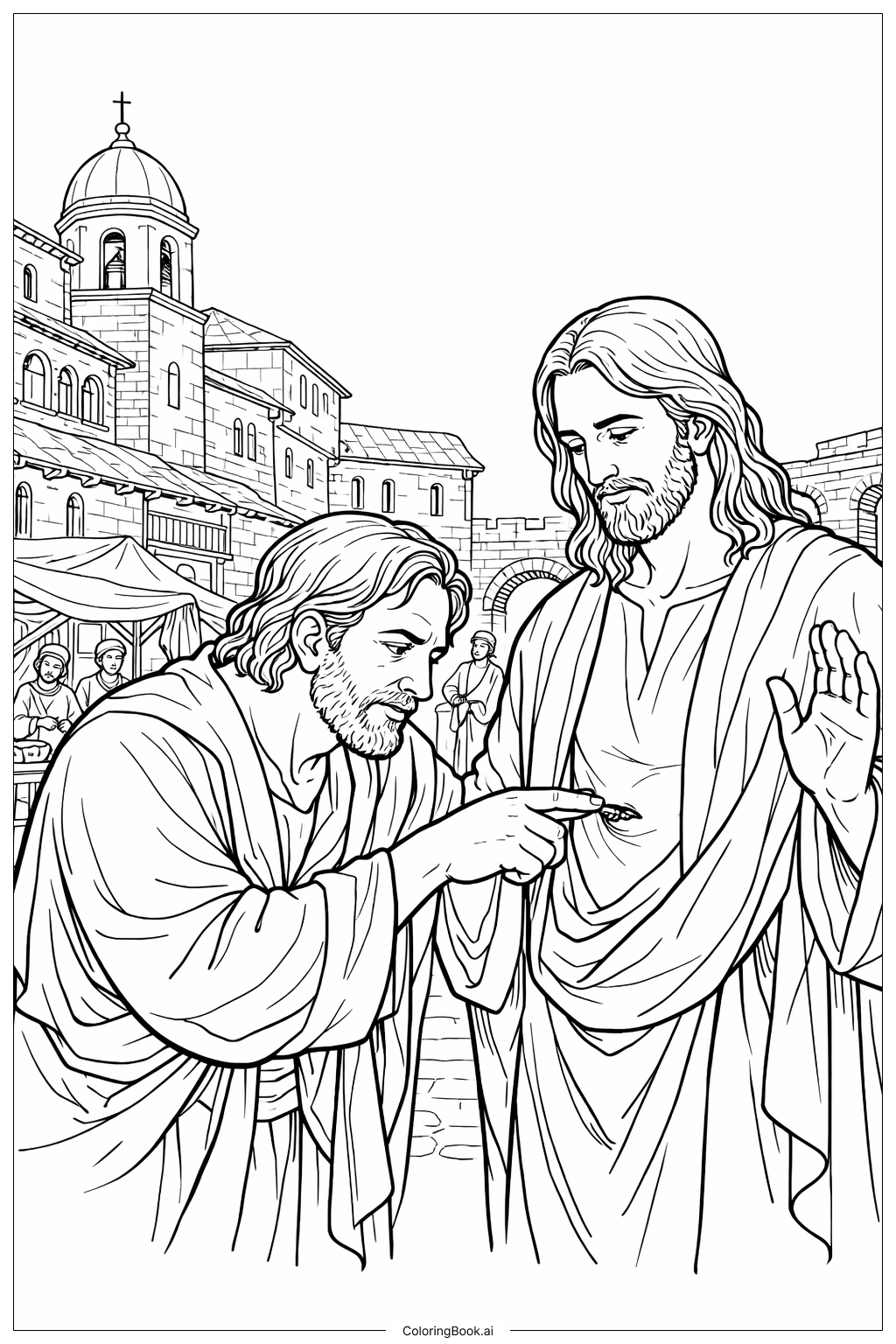
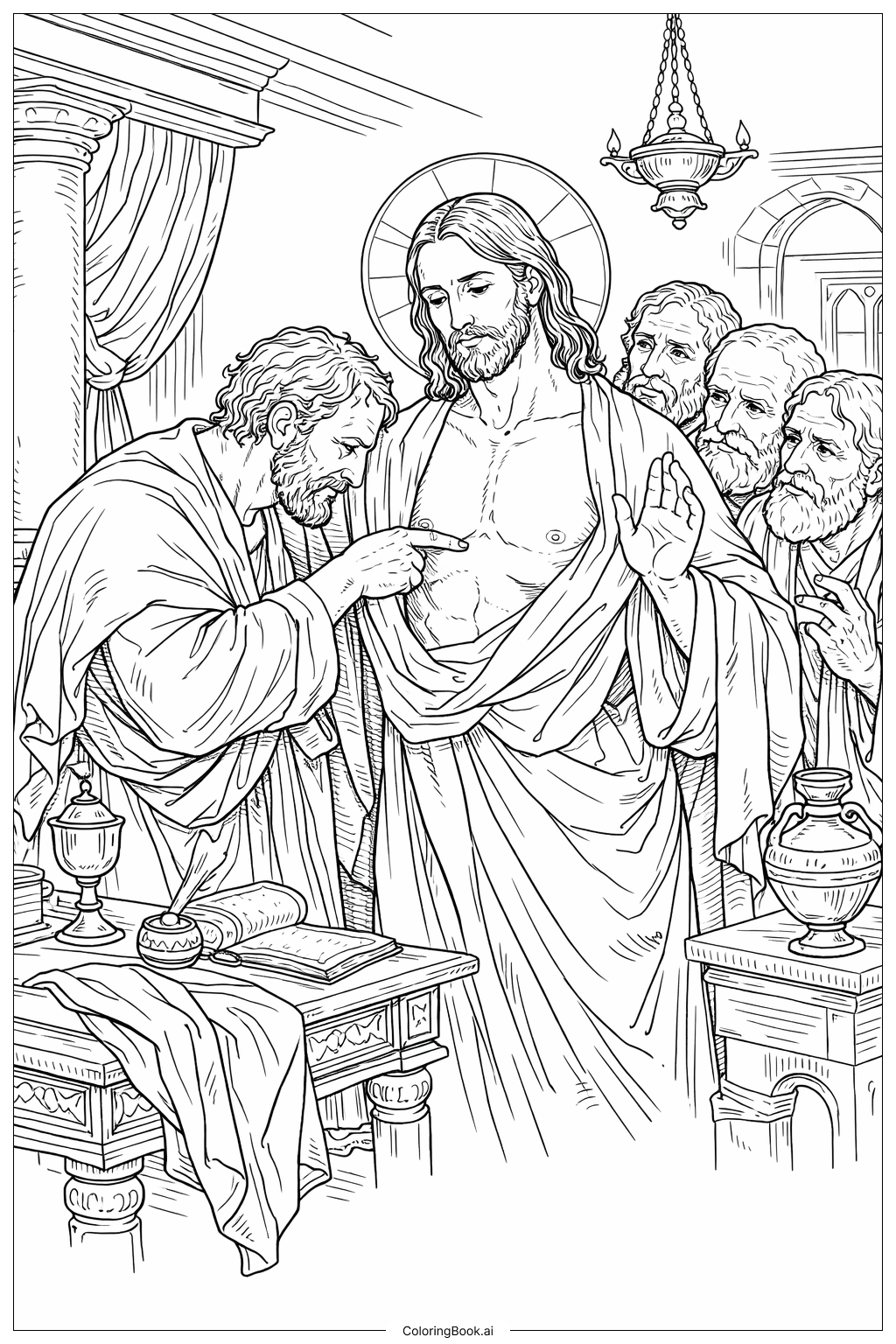
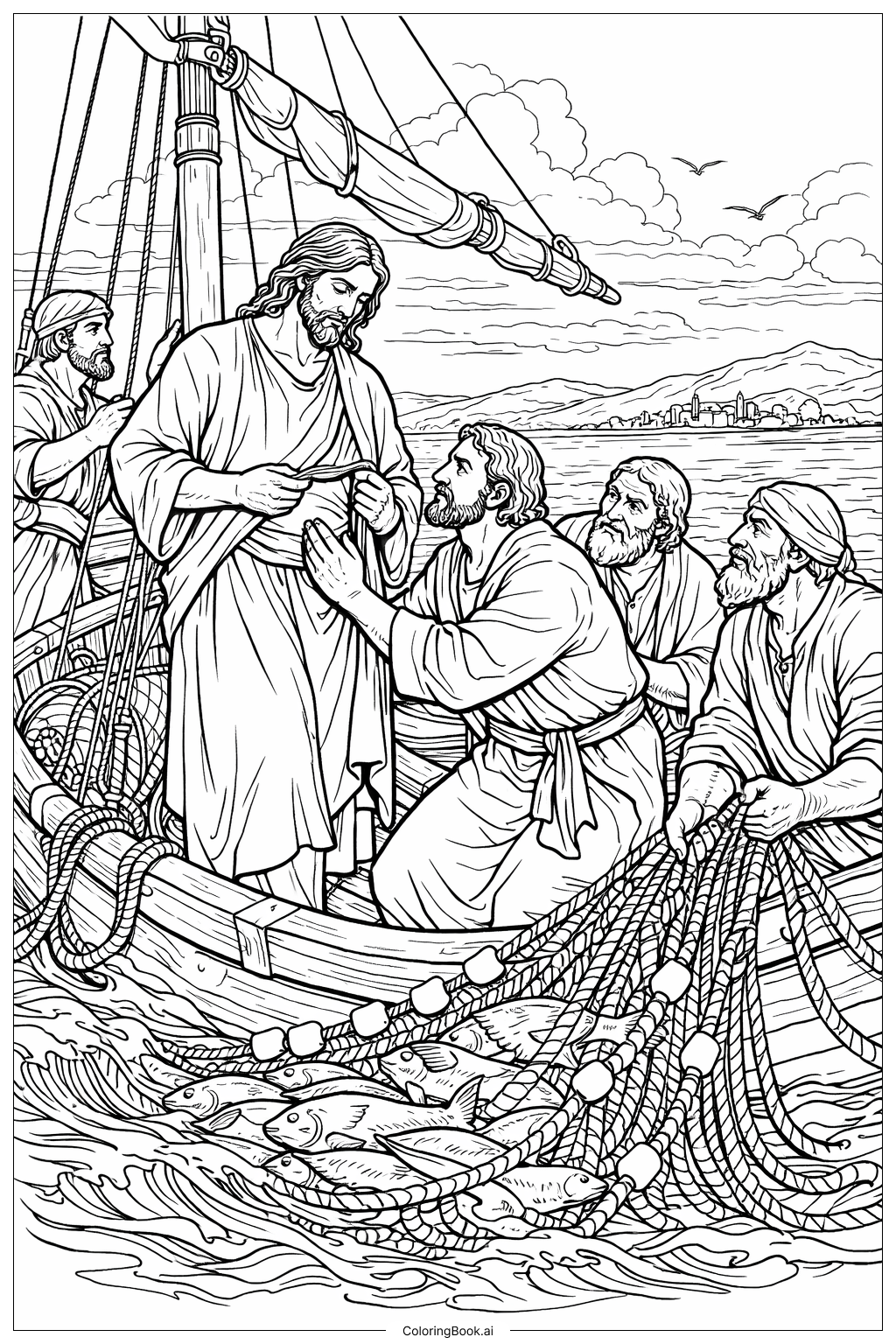
Use soft colors for the man's robes, such as light browns or beige, to keep the look natural. The cloth can be white or light gray, with gentle shading to show folds and texture. Background items like the pitcher, bowl, and jars can have earthy tones like terracotta, yellow, or soft browns. Use subtle colors for the table and shelf, avoiding very bright colors to keep the focus on the man. Skin tones can be warm and natural, with careful coloring around the hands and face to show details. Try gentle shading to add depth to the folds of the robe and cloth.
Coloring challenges: Which parts are difficult to color and need attention for Doubting Thomas Examining Cloth coloring page?
1. The cloth has delicate folds that need careful shading to look realistic.
2. Hands and fingers are detailed and require careful coloring inside small spaces.
3. The robes have overlapping layers and sleeves that might be tricky to color neatly.
4. The background contains small objects like jars and a pitcher that need attention to keep them distinct.
5. Adding shading to the fabric and skin without making it too dark can be challenging for beginners.
Benefits of coloring books: Advantages of drawing Doubting Thomas Examining Cloth coloring page
Coloring this picture helps develop fine motor skills because of the detailed parts like the hands and cloth folds. It encourages careful attention to detail and patience. The natural shapes of the robes and cloth foster creativity in shading and color blending. This page also invites kids to learn about an important story while having fun. Coloring the background objects can help with understanding spatial relationships and using different colors thoughtfully.