Coloring tips: How to color Children Swimming with Friendly Dolphins coloring page well?
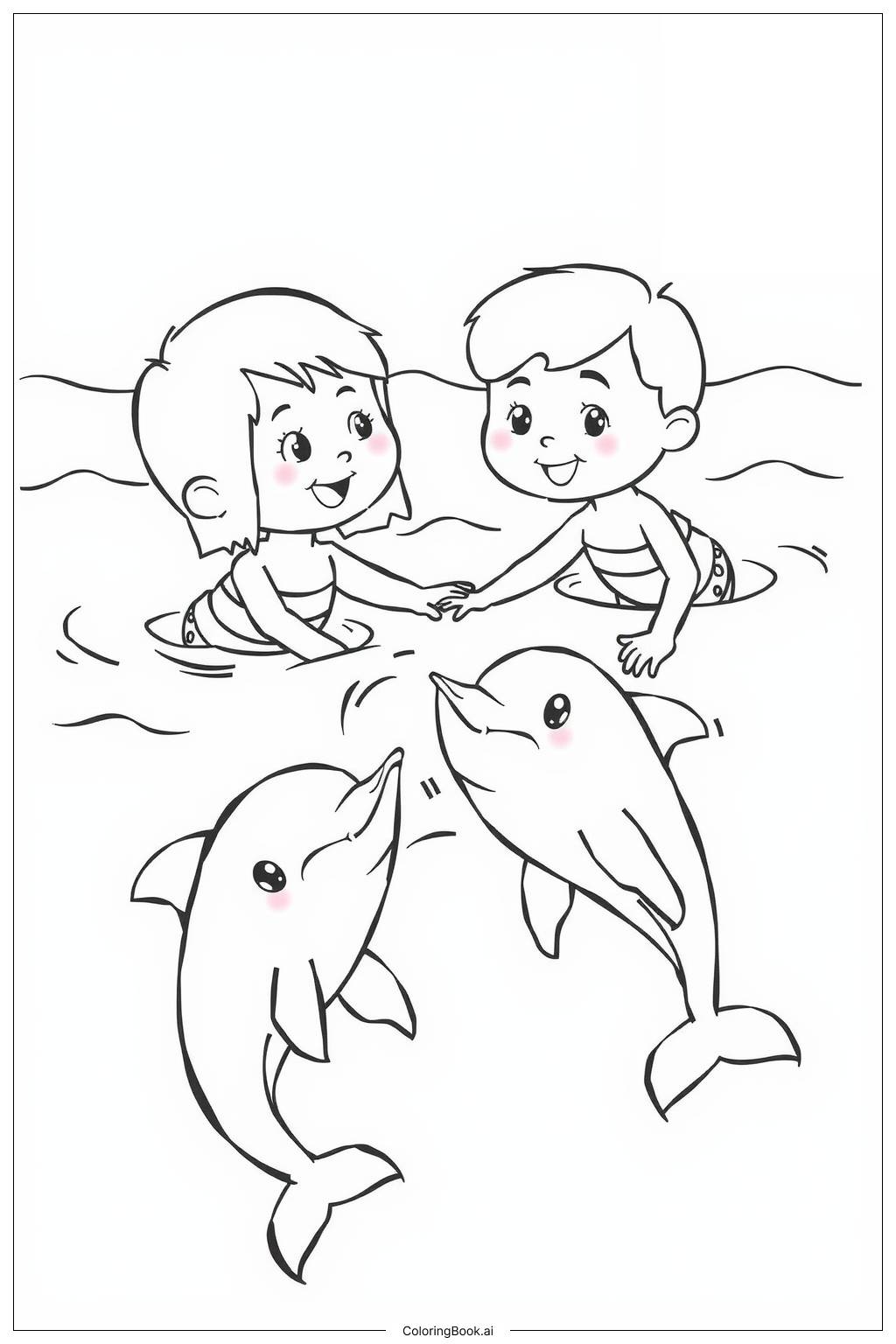
Start with the dolphins using shades of gray and blue. Add a lighter tone on their bellies to show a natural gradient. For the ocean, layer light blue and turquoise to create a sense of depth. Use darker blue near the bottom and lighter blue near the surface. Color the children's swimsuits in bright, fun colors like red, yellow, or orange to make them stand out. Use warm skin tones for the children's faces and arms. Add green for any seaweed and soft yellow for sunlight reflections on the water. Keep the bubbles white or very light blue. Use a mix of teal and navy for the waves in the background. Bright colors will make this scene feel lively and full of energy. Let kids choose their favorite colors freely — there are no wrong choices here!
Coloring challenges: Which parts are difficult to color and need attention for Children Swimming with Friendly Dolphins coloring page?
• Dolphin Skin Shading: Dolphins have a smooth, curved body that requires careful blending of gray and blue tones. Showing the rounded shape using light and shadow can be tricky, especially for younger children. Try using a lighter color on the belly and a darker shade on the back to give the dolphin a realistic, three-dimensional look.
• Water Texture and Depth: The ocean is one of the hardest things to color well. Water has layers — lighter near the surface and darker deeper down. Waves also reflect light in different ways. Using multiple shades of blue and leaving some areas lighter can help create the illusion of moving water without overcomplicating it.
• Children's Figures in Motion: The children are swimming and splashing, which means their bodies are in active, dynamic poses. Coloring figures in motion requires attention to the natural colors of skin, hair, and clothing while keeping the sense of movement alive. Swimsuits can be colored boldly to help the figures stand out against the water.
• Small Background Details: Elements like bubbles, small fish, and seaweed fill the background and can be time-consuming to color individually. These tiny details require a steady hand and a fine-tipped coloring tool. Skipping some details or coloring them in a single soft color is a good shortcut for younger kids.
• Balancing the Overall Color Palette: With so many elements — dolphins, children, waves, and sea life — it can be hard to keep the colors balanced and harmonious. Choosing a consistent color theme, such as cool ocean blues paired with warm human skin tones and bright swimsuit colors, will help the whole image look unified and pleasing.
Benefits of coloring books: Advantages of drawing Children Swimming with Friendly Dolphins coloring page
Coloring this image of children swimming with dolphins offers a wide range of benefits for kids. First, it helps build fine motor skills as children carefully color within the lines and handle small details like bubbles and waves. This strengthens hand-eye coordination and pencil control, which are important for writing and other tasks. Second, choosing colors for the ocean, dolphins, and swimsuits encourages creative thinking and self-expression. Kids learn that there are many ways to make a scene beautiful. Third, the ocean theme sparks curiosity about marine life and nature. Children may become interested in learning more about dolphins, the sea, and how we can protect ocean animals. Fourth, the joyful and peaceful scene — full of friendship between humans and animals — can have a calming, mood-lifting effect. Focusing on a fun activity like coloring helps children relax and feel happy. Finally, completing the page gives kids a sense of pride and accomplishment, building confidence and a love for creative activities.