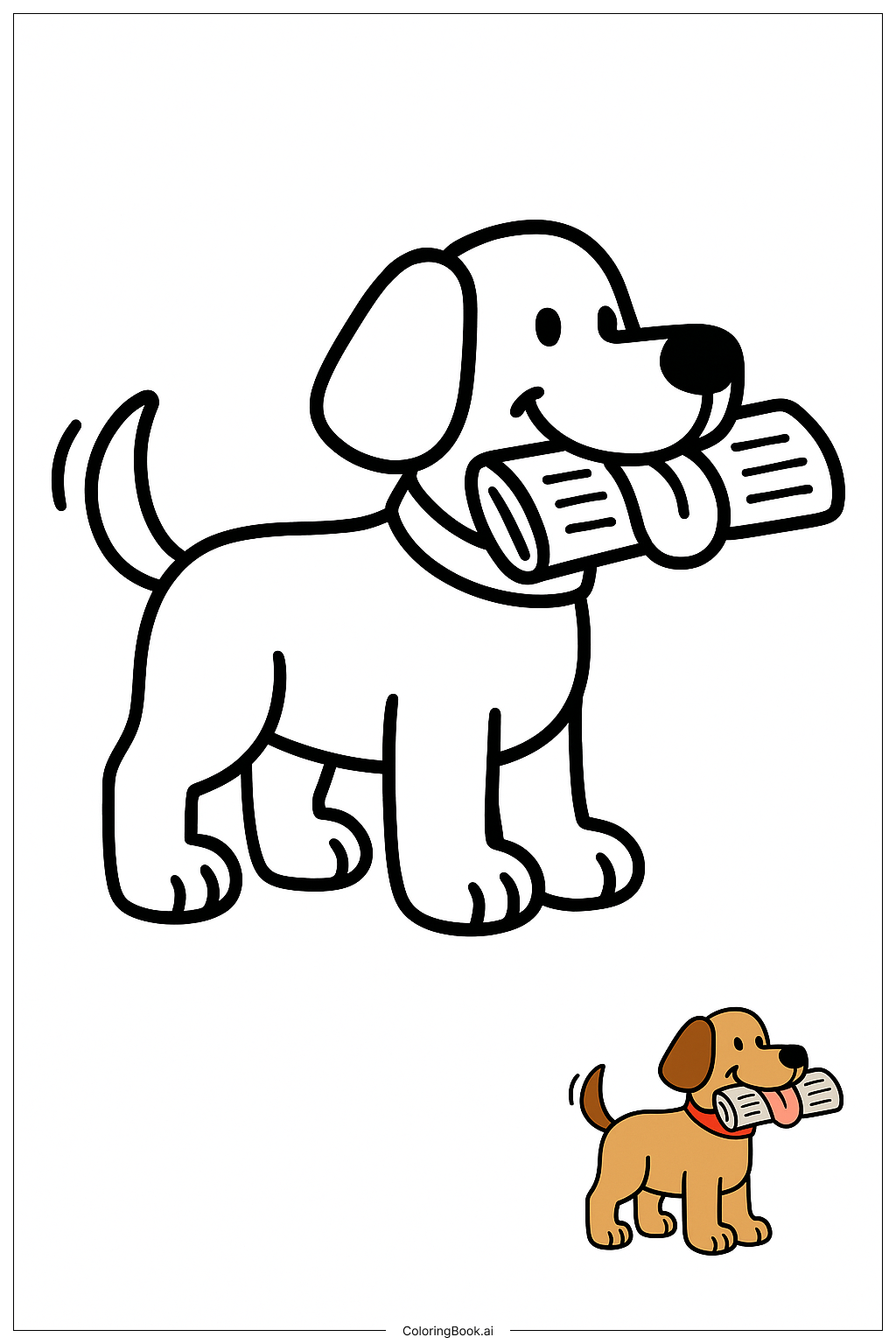
Coloring tips: How to color Dog Carrying Newspaper coloring page well?
Start with the dog's body. Choose a warm brown, golden yellow, black, or white for the fur — or mix patches of two colors for a spotted look. Use a slightly darker shade along the edges of the ears, paws, and tail to give the fur some depth and texture.
For the newspaper, go with an off-white or light gray as the base. Add soft gray lines across the paper to suggest printed text and fold marks. A touch of yellow or cream can make it look aged and realistic.
The dog's eyes can be colored dark brown or black, with a tiny white dot left uncolored to create a bright, lively sparkle. The nose works well in black or dark brown.
If there is a background, use light blue for sky or soft green for grass to keep the scene cheerful and easy on the eyes. Let the dog remain the brightest, most colorful element so it stays the center of attention. Take your time with the fur — small, short strokes in the direction of hair growth will make it look natural and fluffy.
Coloring challenges: Which parts are difficult to color and need attention for Dog Carrying Newspaper coloring page?
• Fur Texture and Shading: One of the biggest challenges is making the dog's fur look soft and realistic rather than flat. Fur requires layering multiple shades of the same color — a base tone, a midtone, and a darker shadow tone. Using short, directional strokes that follow the natural flow of the fur helps create depth. If the strokes go in random directions, the fur can look unnatural.
• Small Facial Features: The dog's face includes small details like eyes, nose, and mouth that are close together. Coloring these neatly without smudging or bleeding into neighboring areas takes a steady hand. The eyes especially benefit from careful work — leaving a tiny highlight dot uncolored can bring the whole face to life.
• Newspaper Details: The newspaper held in the dog's mouth has fold lines and implied text. Keeping this area light while still adding enough detail to make it look like real paper is tricky. Going too dark too quickly can make it look muddy. Building up color in thin, gentle layers works best here.
• Distinguishing the Mouth Area: The zone where the dog's mouth meets the newspaper can be confusing to color because two different elements overlap. Using clearly different colors or values for the dog's snout and the paper helps keep them visually separate and easy to read.
• Maintaining Overall Color Balance: With a single main subject and a possible background, keeping the colors balanced so the dog stands out without clashing with the surroundings takes some planning before picking up the first pencil or marker.
Benefits of coloring books: Advantages of drawing Dog Carrying Newspaper coloring page
Coloring this image of a dog carrying a newspaper is a wonderful activity for kids and beginners alike. It offers a fun way to practice important skills while enjoying a cute, relatable scene.
Focusing on staying inside the lines helps build hand control and fine motor skills. These are abilities that support everyday tasks like writing and drawing.
Choosing colors for the dog's fur and the newspaper encourages creative thinking. Kids get to make their own choices and see how different color combinations change the feel of the picture. This builds confidence and a sense of artistic ownership.
The image also has a mix of simple shapes and small details. Younger children can focus on the big fur areas, while older kids can challenge themselves with the face and newspaper folds. This makes the page useful for a wide range of skill levels.
Spending time coloring a friendly dog scene is naturally calming. It helps slow down busy minds, reduce stress, and improve focus — all without feeling like work.
Finally, completing the page gives a real sense of pride and achievement. Finishing a coloring project, no matter how simple, teaches kids the value of patience and following through on a task. It is a small win that feels great.