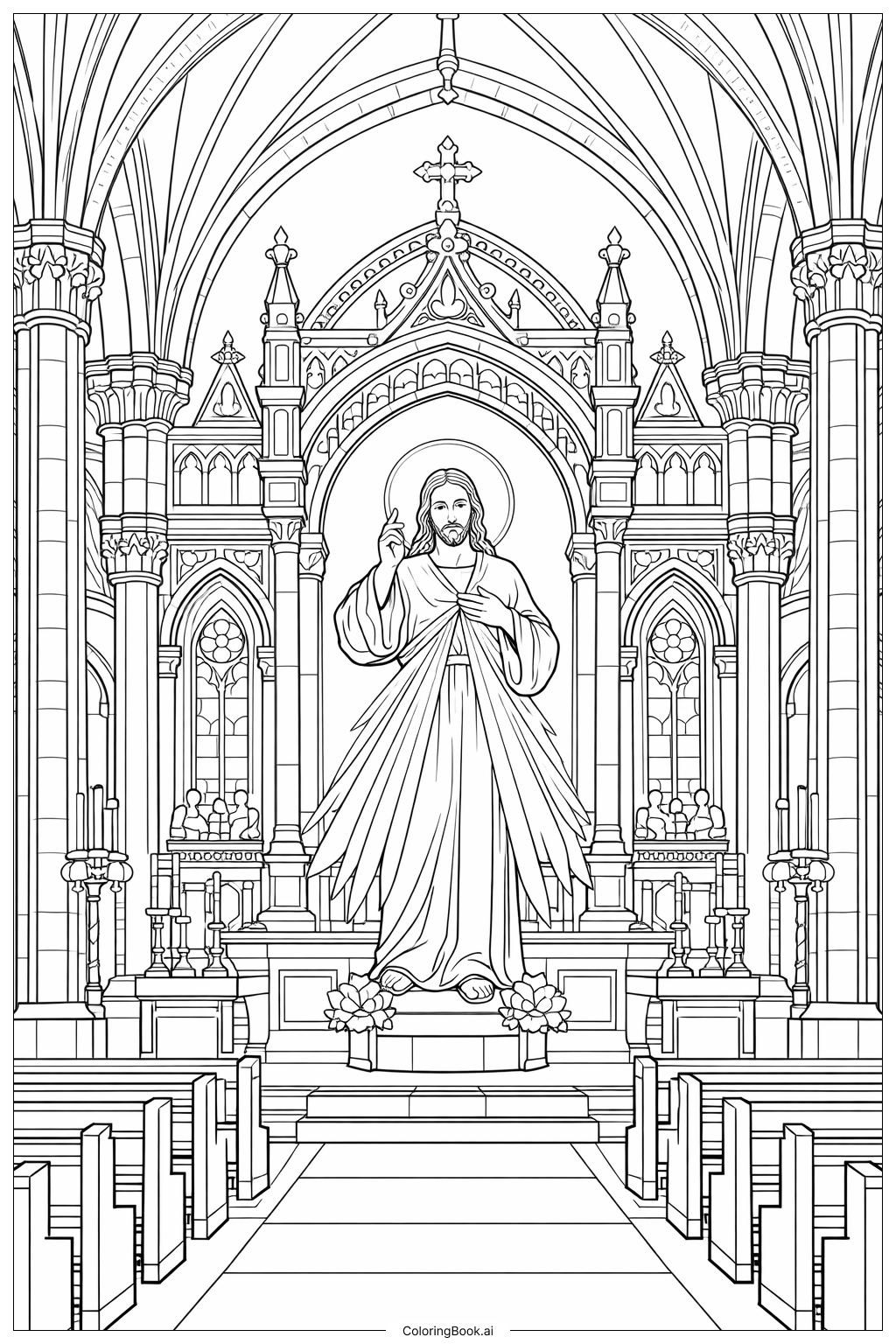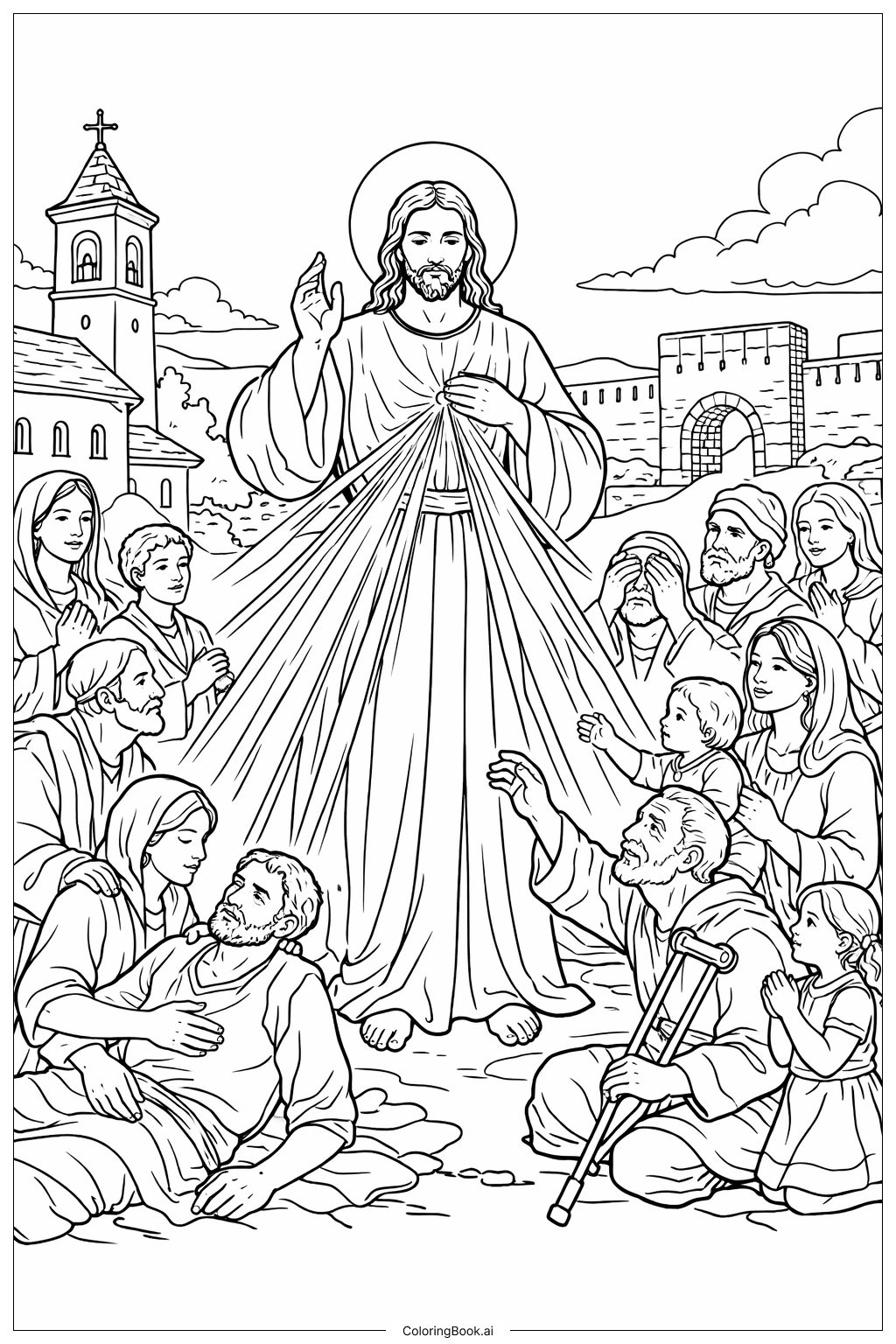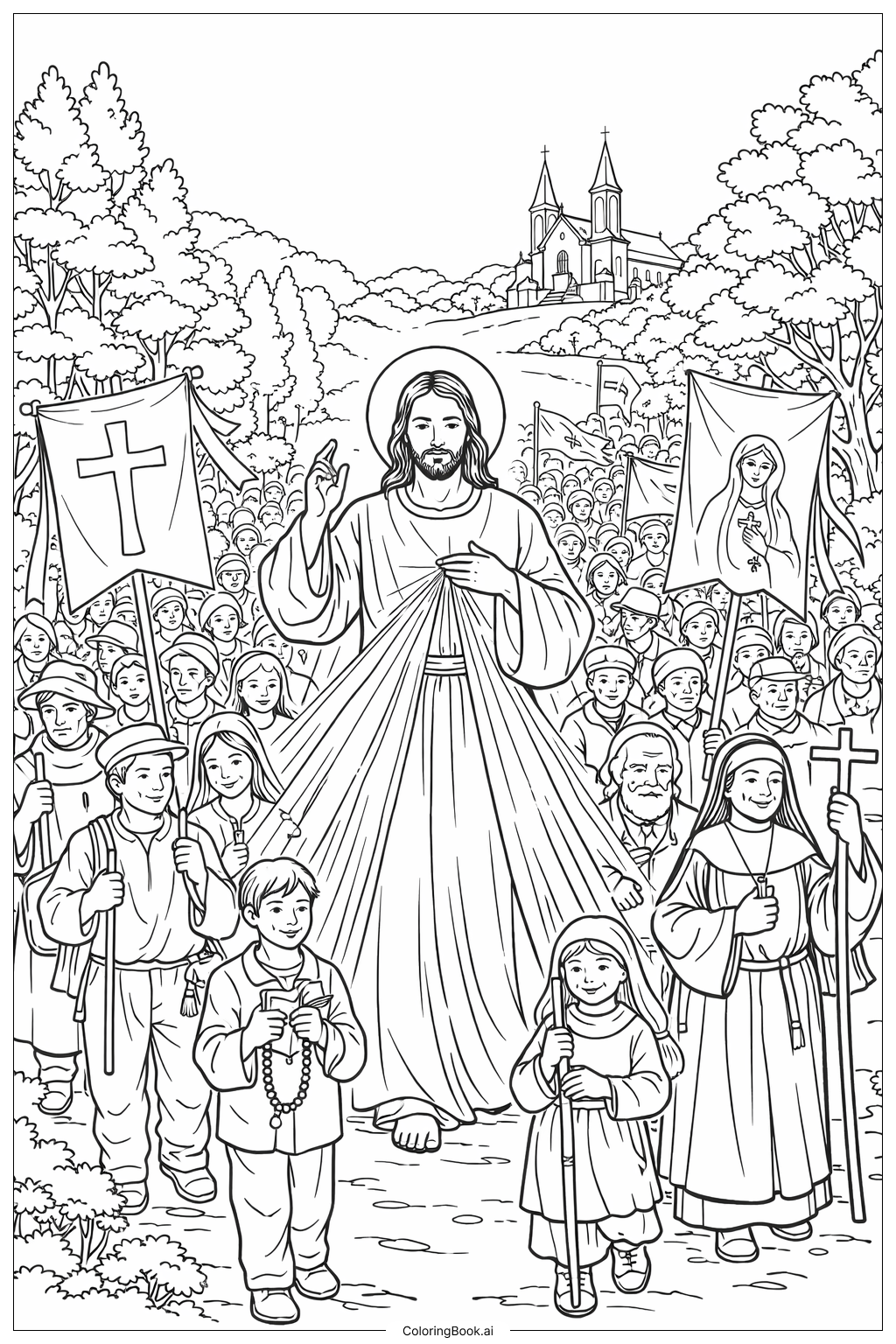
Coloring tips: How to color Divine Mercy Stained Glass Panel coloring page well?
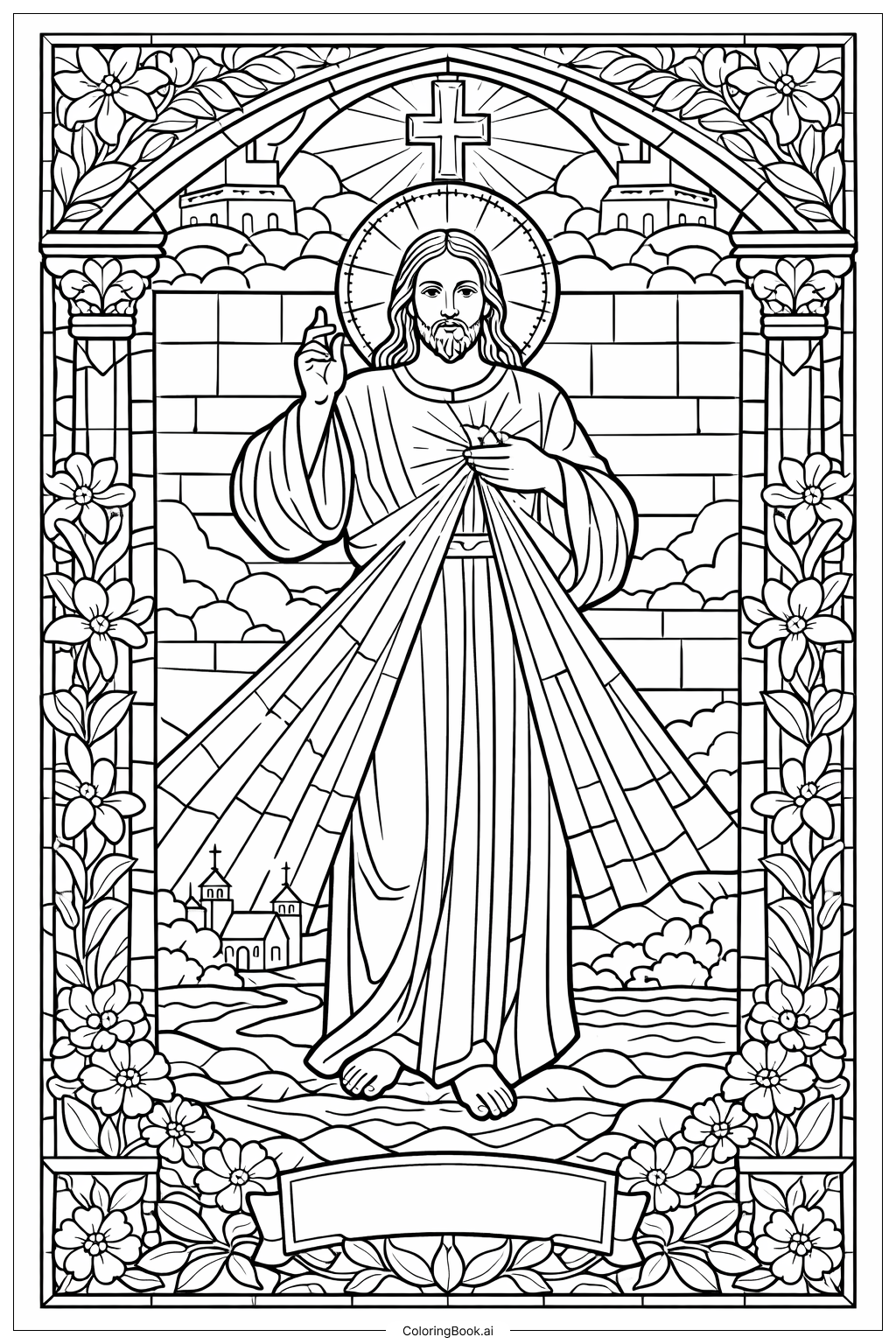
For this Divine Mercy Stained Glass Panel, you can use soft and bright colors to bring life to the image. Try using reds to show the blood ray and light blues for the water ray, making them glow with gentle shading. Jesus’ robes can be colored in white or light beige with soft shadows to highlight the folds. The background patterns offer a chance to use greens, purples, and yellows for a rich and vibrant look like stained glass windows in churches. Feel free to add glitter or metallic crayons on the rays to make them stand out. You can also try blending colors in each section to create depth and a glowing effect, just like real glass.
Coloring challenges: Which parts are difficult to color and need attention for Divine Mercy Stained Glass Panel coloring page?
• Fine Details: The panel has many small sections, especially in the background patterns and the rays of light, which can be tricky to color neatly. Careful hand control is needed to stay inside thin lines. • Light and Shadow: Showing the folds of Jesus’ robes with soft shading can be challenging for younger colorers who are still learning about light. Balancing brighter and darker tones takes practice. • Color Choices: Choosing colors that represent the symbolic meaning, like the red and pale blue rays, requires some understanding of the imagery. It also takes thought to select complementary colors for the busy background so the main figure stands out. • Blending: To create the look of stained glass, some blending of colors is ideal. This technique may be difficult for beginners and requires patience to practice light layering. • Symmetry and Pattern Repetition: The stained glass style has repeating shapes and geometric symmetry. Keeping colors consistent on both sides challenges concentration and precision.
Benefits of coloring books: Advantages of drawing Divine Mercy Stained Glass Panel coloring page
Coloring this Divine Mercy Stained Glass Panel encourages focus and concentration as you work within the detailed outlines. It helps develop fine motor skills through careful coloring of small spaces. Choosing colors and blending them teaches creativity and introduces the idea of light and shadow effects. The image also offers a chance to learn about symbols related to kindness and forgiveness, connecting art with deeper meanings. For children and teens, this experience can promote patience and a sense of calm while expressing personal interpretation in a sacred theme. Coloring a stained glass design also nurtures appreciation for religious art and cultural heritage.