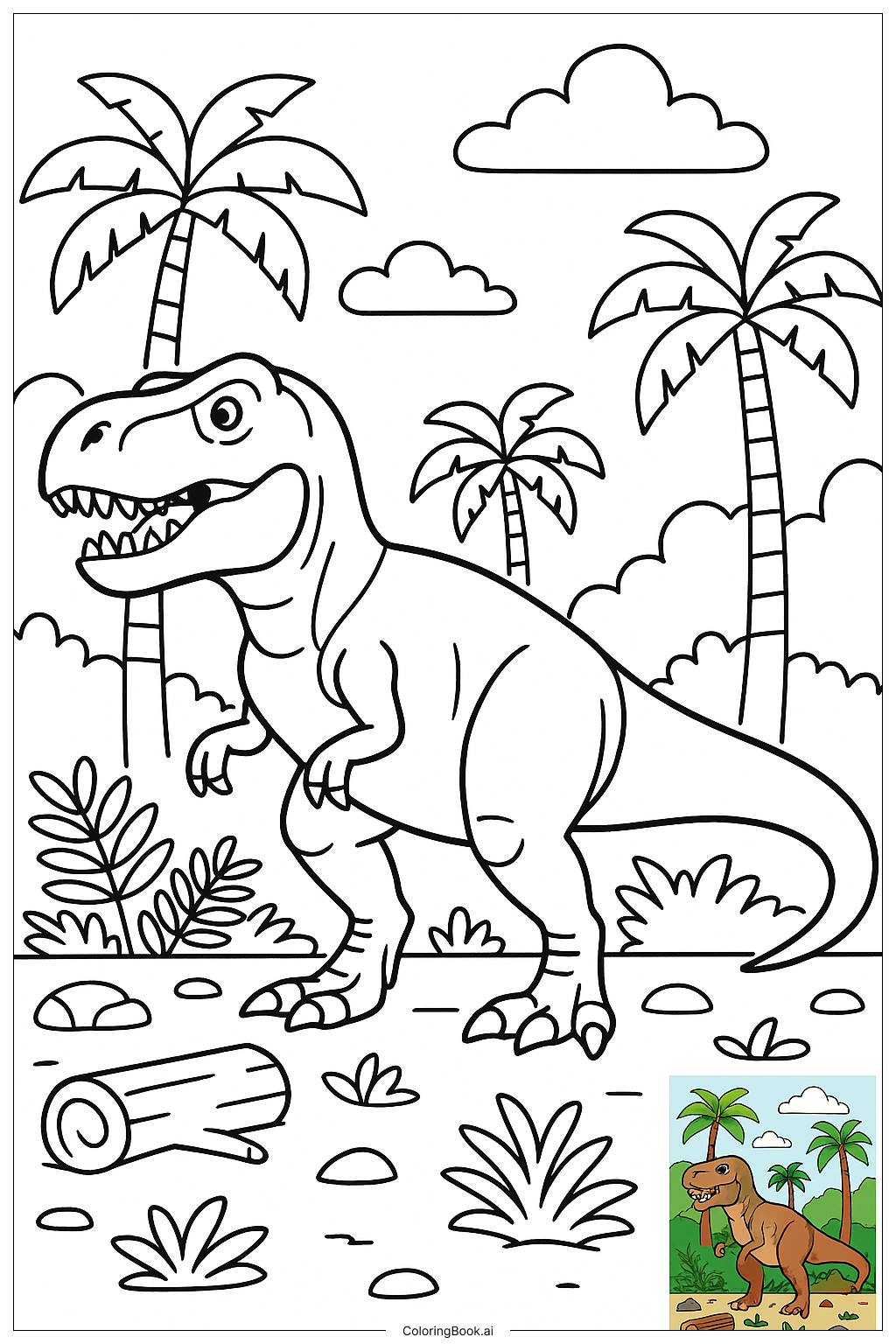
Coloring tips: How to color Realistic Dinosaur In Jungle coloring page well?
Start with the dinosaur's body before moving to the background. Use deep greens and earthy browns for the dinosaur's scales to give it a realistic look. Add dark green or olive tones along the back and lighter shades on the belly. For extra depth, try layering colors — press lightly first, then build up darker shades in the folds and creases of the skin. Use bright greens for the jungle leaves and ferns. Mix in yellow-green for sunlit areas and dark forest green for shadowed spots. The tree trunks can be brown and gray with hints of moss. Try soft orange or red inside the dinosaur's open mouth for a dramatic touch. Keep the ground earthy with browns and dark greens. Take your time with each section, and don't be afraid to experiment with shading to make the scene feel three-dimensional and alive.
Coloring challenges: Which parts are difficult to color and need attention for Realistic Dinosaur In Jungle coloring page?
• Scale and Skin Texture: The dinosaur's body is covered in hundreds of small scales and deep skin folds. Coloring each one individually takes patience. If you rush, the texture can look flat. Try using short strokes that follow the direction of the scales to keep the detail looking sharp and realistic.
• Shading the Body: A realistic dinosaur needs light and dark areas to look three-dimensional. The top of the body where light hits should be lighter, while the underside and deep folds should be darker. Getting this gradient smooth without hard lines can be tricky, especially for younger colorists.
• Jungle Background Complexity: The background is filled with overlapping leaves, vines, ferns, and tree trunks. Each layer sits at a different depth, so the colors need to shift from light in the front to darker in the back. Keeping all these plant shapes separate while still making the scene look unified is a real challenge.
• Fine Details in the Face: The dinosaur's face has sharp teeth, detailed eyes, and defined jaw muscles. These areas are small and close together, making it easy for colors to bleed into each other. Using a thin-tipped colored pencil or fine marker works best here to stay within the lines accurately.
• Color Harmony Across the Scene: Both the dinosaur and the jungle use similar green and brown tones. Making the dinosaur stand out from the background without clashing colors requires careful planning. Choosing a slightly different shade or adding a warm tone to the dinosaur can help it pop from the surrounding greenery.
Benefits of coloring books: Advantages of drawing Realistic Dinosaur In Jungle coloring page
Coloring this realistic dinosaur in a jungle setting offers many great benefits for kids and beginners alike. First, it builds focus and concentration. The detailed scales, leaves, and textures require careful attention, helping young colorists practice sitting still and working with precision. This kind of focused activity is great for calming a busy mind.
Second, it sparks creativity. Choosing colors for a prehistoric creature lets kids imagine what dinosaurs really looked like, blending science with art in a fun way. There are no wrong answers, which encourages free thinking and confidence.
Third, it improves fine motor skills. Staying within the small detailed lines of the scales and jungle plants strengthens hand control and coordination. This is especially helpful for younger children still developing pencil grip and hand-eye coordination.
Fourth, it introduces early science concepts. While coloring, kids naturally think about dinosaurs, jungles, and prehistoric life. It can spark curiosity and lead to questions about nature, biology, and history.
Finally, completing a detailed image like this gives a real sense of achievement. Finishing something that takes time and care builds patience and self-esteem. It is a quiet, screen-free activity that both relaxes and engages the mind in a healthy, productive way.