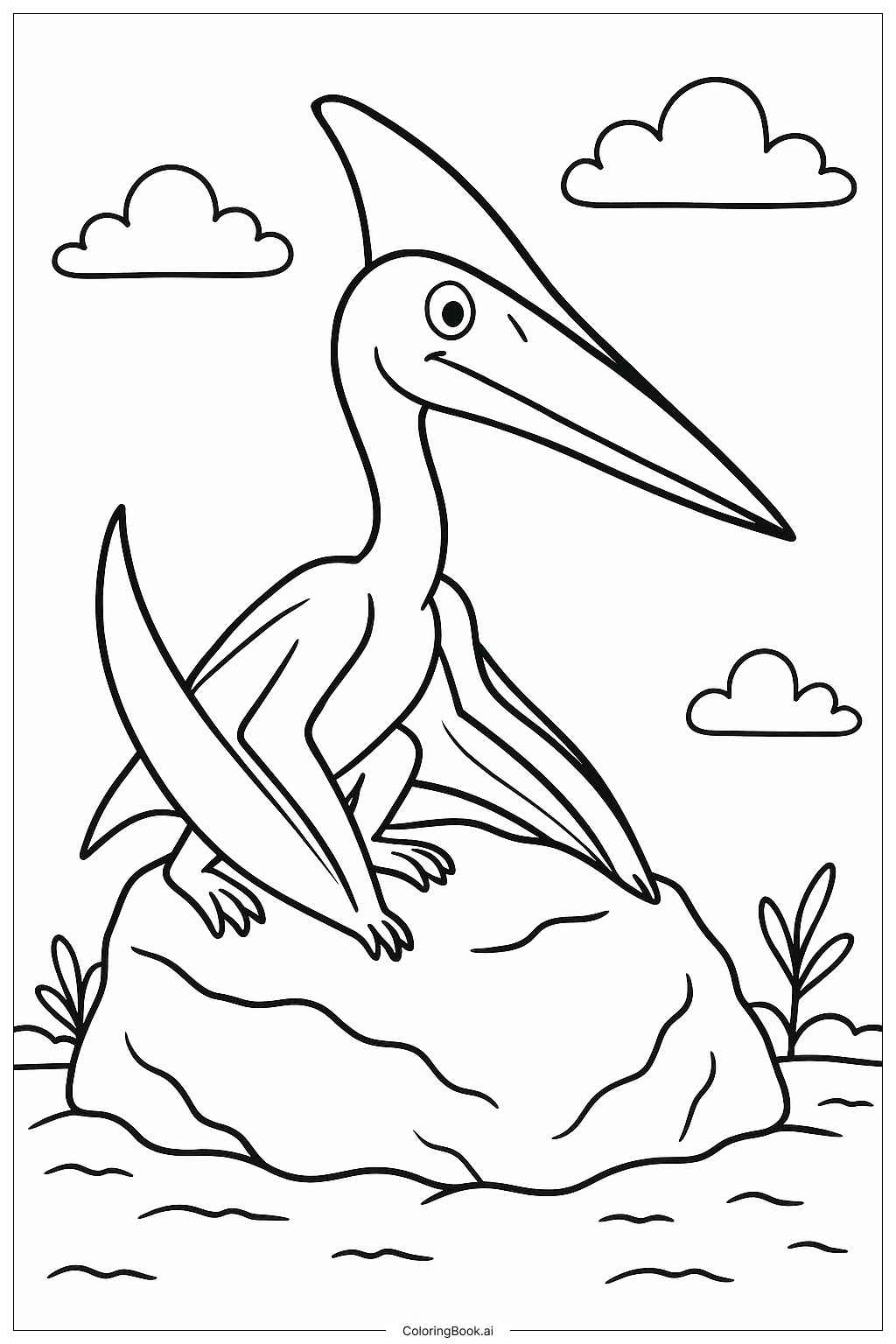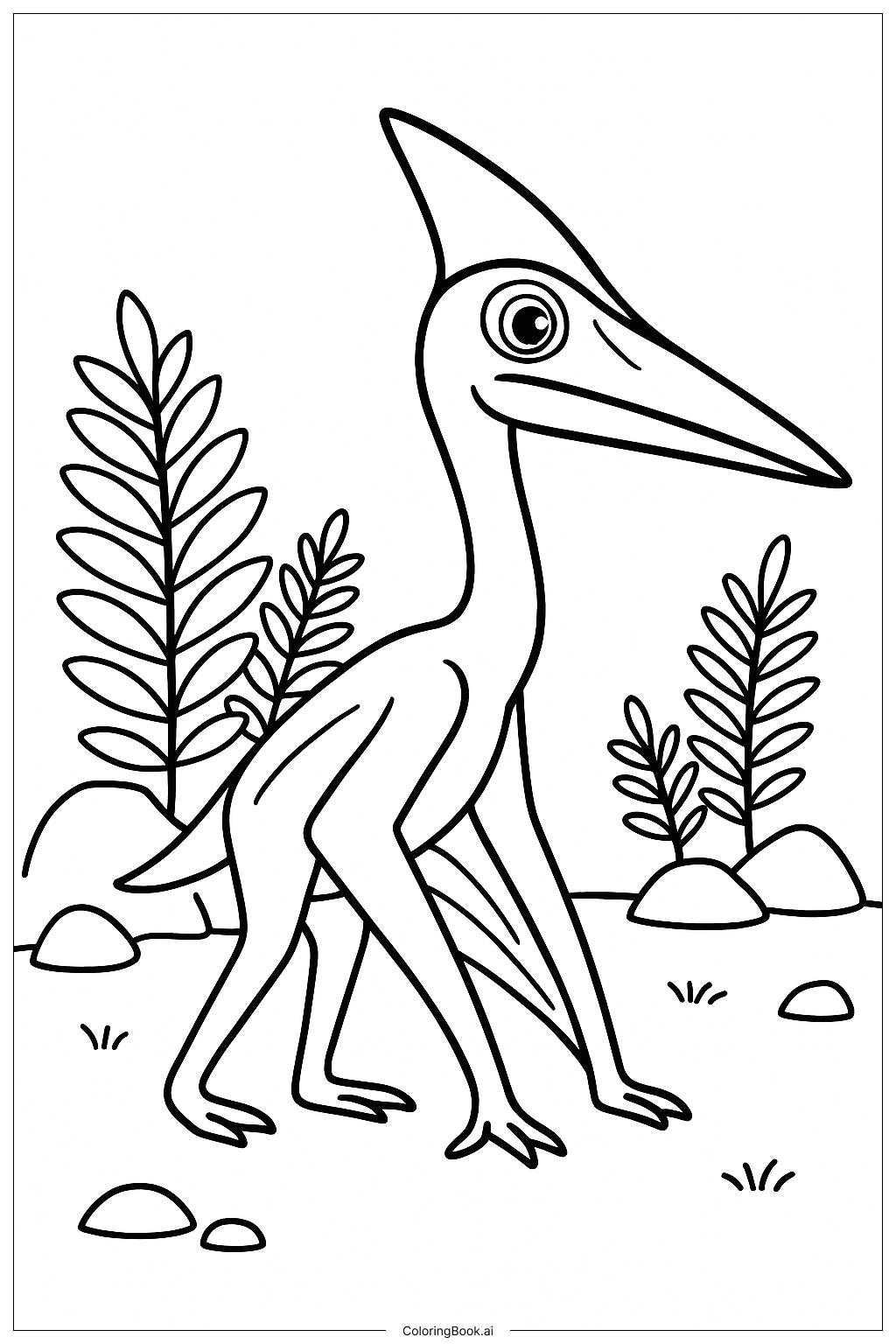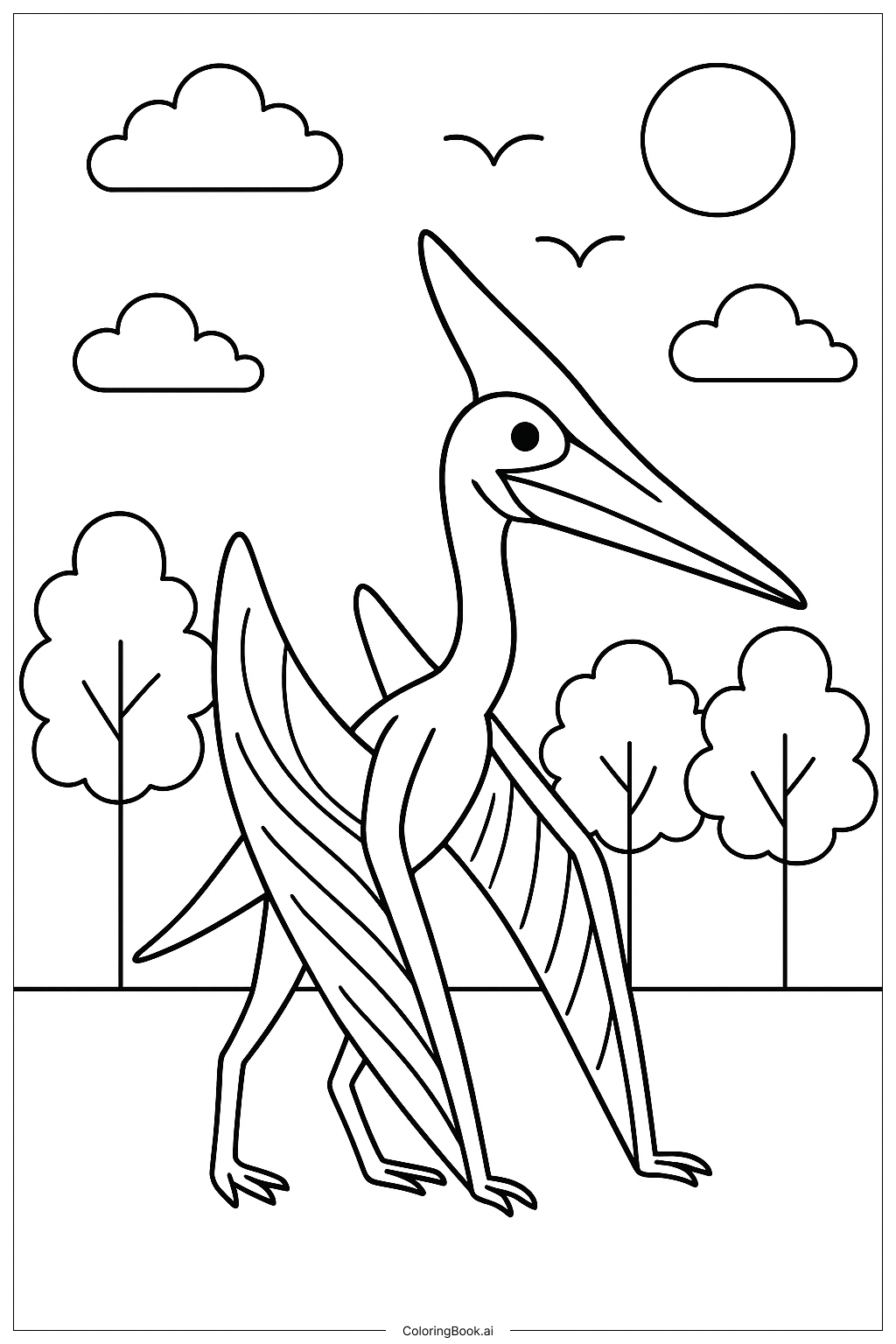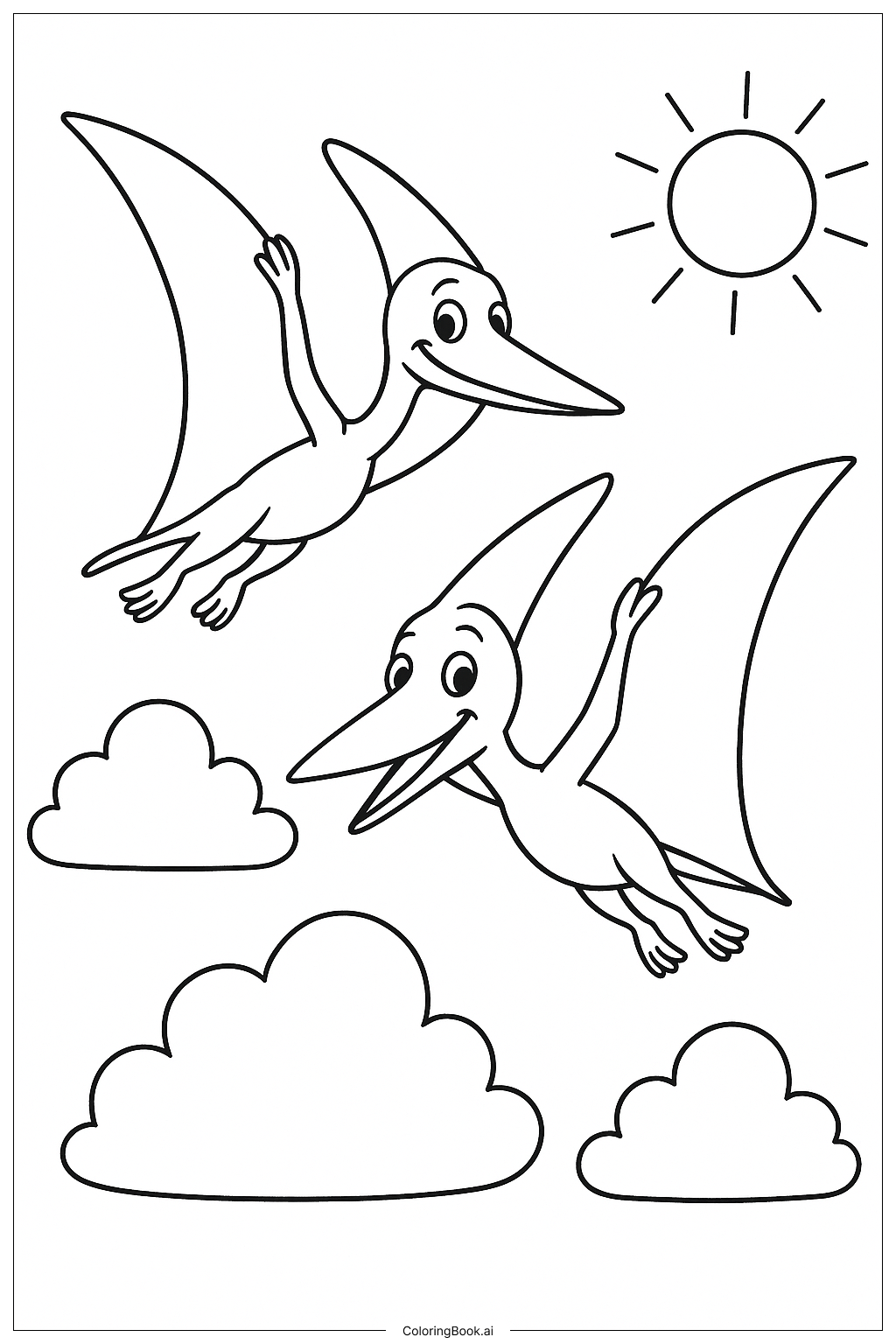
Coloring tips: How to color Quetzalcoatlus Hunting Small Dinosaurs coloring page well?
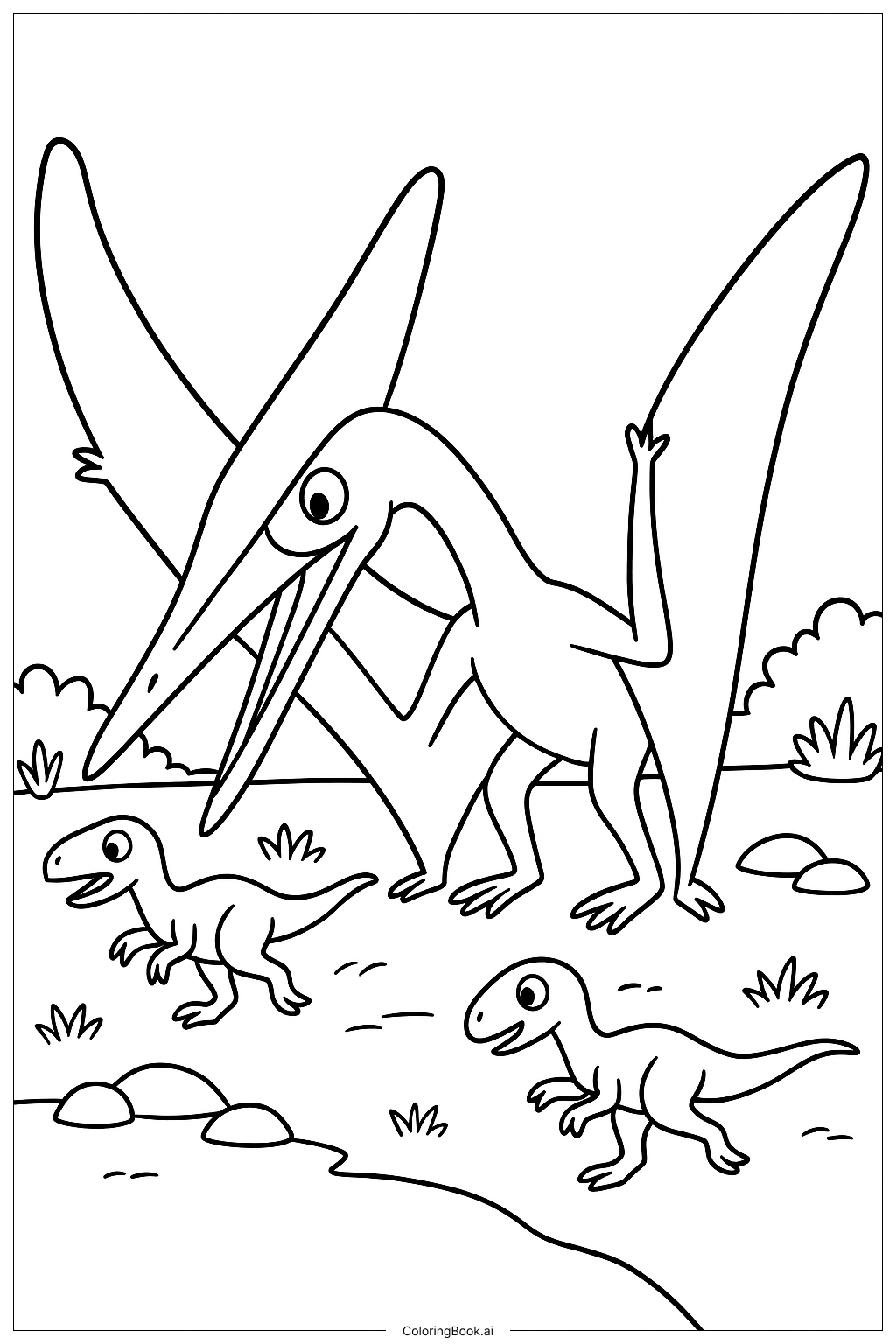
Start by coloring the Quetzalcoatlus with warm earthy tones. Use tan, sandy brown, or rust orange for its large body. Add darker brown or reddish shading along the edges of the wings to give them depth. The bony head crest can be a bright orange or yellow to make it stand out. For the small dinosaurs below, try using greens and olive tones to contrast with the flying predator above. The rocky ground can be colored in gray, beige, or light brown. Use darker shades in the cracks and shadows of the rocks. Prehistoric plants can be deep green or yellow-green. Feel free to make the sky dramatic — try a warm sunset orange or pale blue to set the mood. Do not be afraid to blend colors on the wide wing surfaces to give a smooth, leathery look. Lighter colors in the center of the wings and darker toward the edges work really well.
Coloring challenges: Which parts are difficult to color and need attention for Quetzalcoatlus Hunting Small Dinosaurs coloring page?
• Wing Surface Shading: The Quetzalcoatlus has enormous wings that stretch across much of the image. Coloring such a large, flat surface evenly is tricky. Blending smoothly from light to dark tones without streaks takes patience. Young colorists may find it helpful to work in small circular motions from the center outward.
• Fine Body Details: The creature has detailed skin textures, including folds, ridges, and the bony crest on its head. These small areas require a sharp pencil or fine-tipped marker to color neatly without going outside the lines. Rushing through these sections can muddy the overall look.
• Multiple Small Dinosaurs: The tiny dinosaurs at the bottom of the scene have small, closely packed details. Their legs, tails, and bodies are close together, making it easy to accidentally mix up colors between characters. Using different color families for each small dinosaur helps tell them apart clearly.
• Background Complexity: The rocky landscape and scattered prehistoric plants create a busy background. Choosing colors that support the main characters without competing with them is a real challenge. Sticking to muted, cooler tones in the background helps the Quetzalcoatlus pop forward visually.
• Depth and Perspective: Since the Quetzalcoatlus is diving from above while the small dinosaurs are on the ground, creating a sense of depth requires using lighter, less saturated colors for distant elements and stronger, bolder colors for the main predator in the foreground.
Benefits of coloring books: Advantages of drawing Quetzalcoatlus Hunting Small Dinosaurs coloring page
Coloring this exciting prehistoric scene brings many wonderful benefits for kids and dinosaur fans of all ages. First, it builds fine motor skills. Carefully coloring within the detailed outlines of wings, claws, and rocky terrain trains hand control and pencil grip. Second, it sparks creativity. Choosing colors for a creature that lived millions of years ago means there are no wrong answers — kids can use their imagination freely. Third, it encourages learning. While coloring, children naturally become curious about the Quetzalcoatlus and may want to find out more about how it lived, hunted, and flew. This turns a fun activity into a learning adventure. Fourth, it improves focus and concentration. The scene has many detailed areas that require steady attention, helping children practice staying on task. Fifth, it provides a calming creative outlet. Working through a complex, rewarding image helps reduce stress and builds a sense of accomplishment when the page is complete. This coloring page is a perfect mix of fun, creativity, and prehistoric discovery.