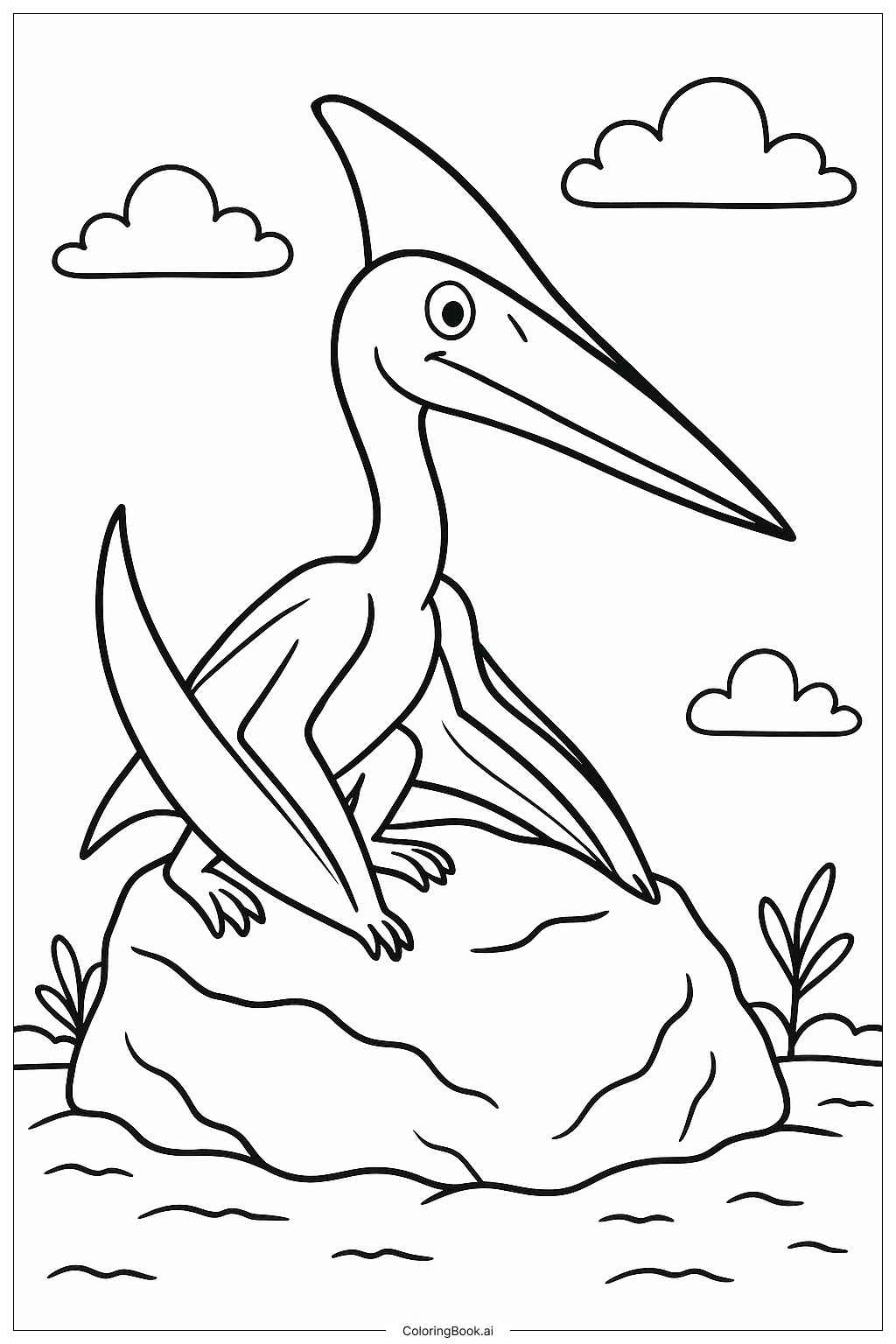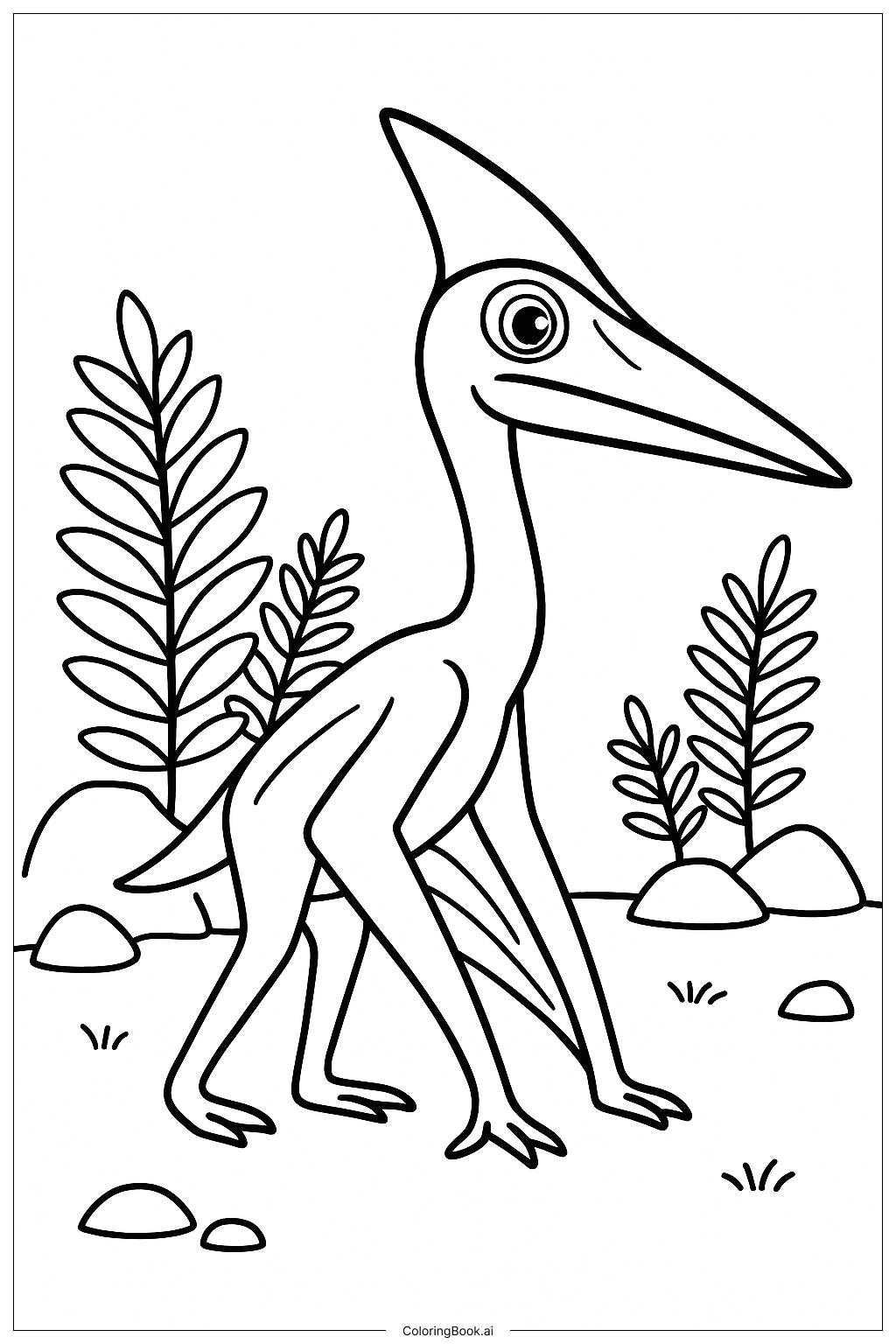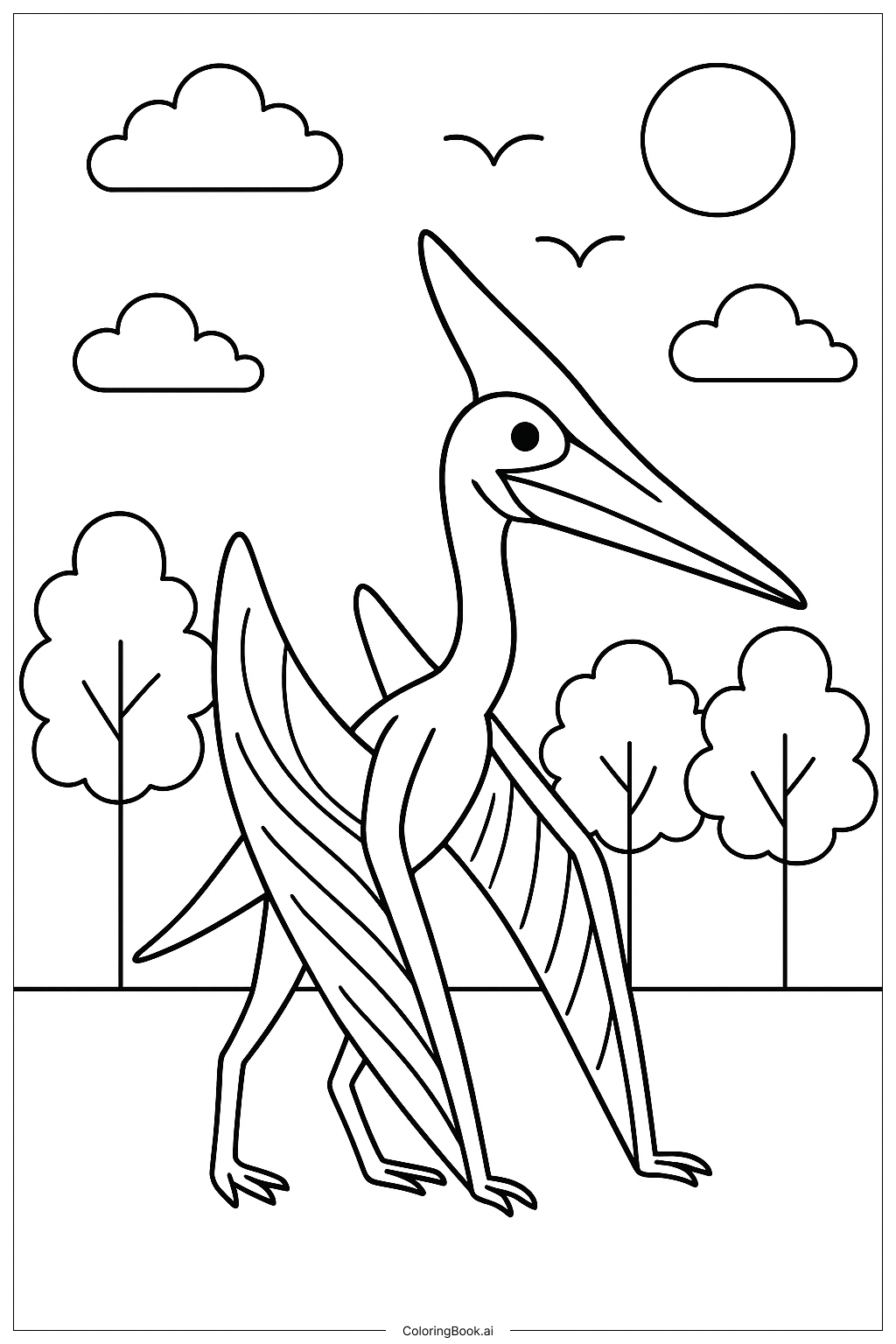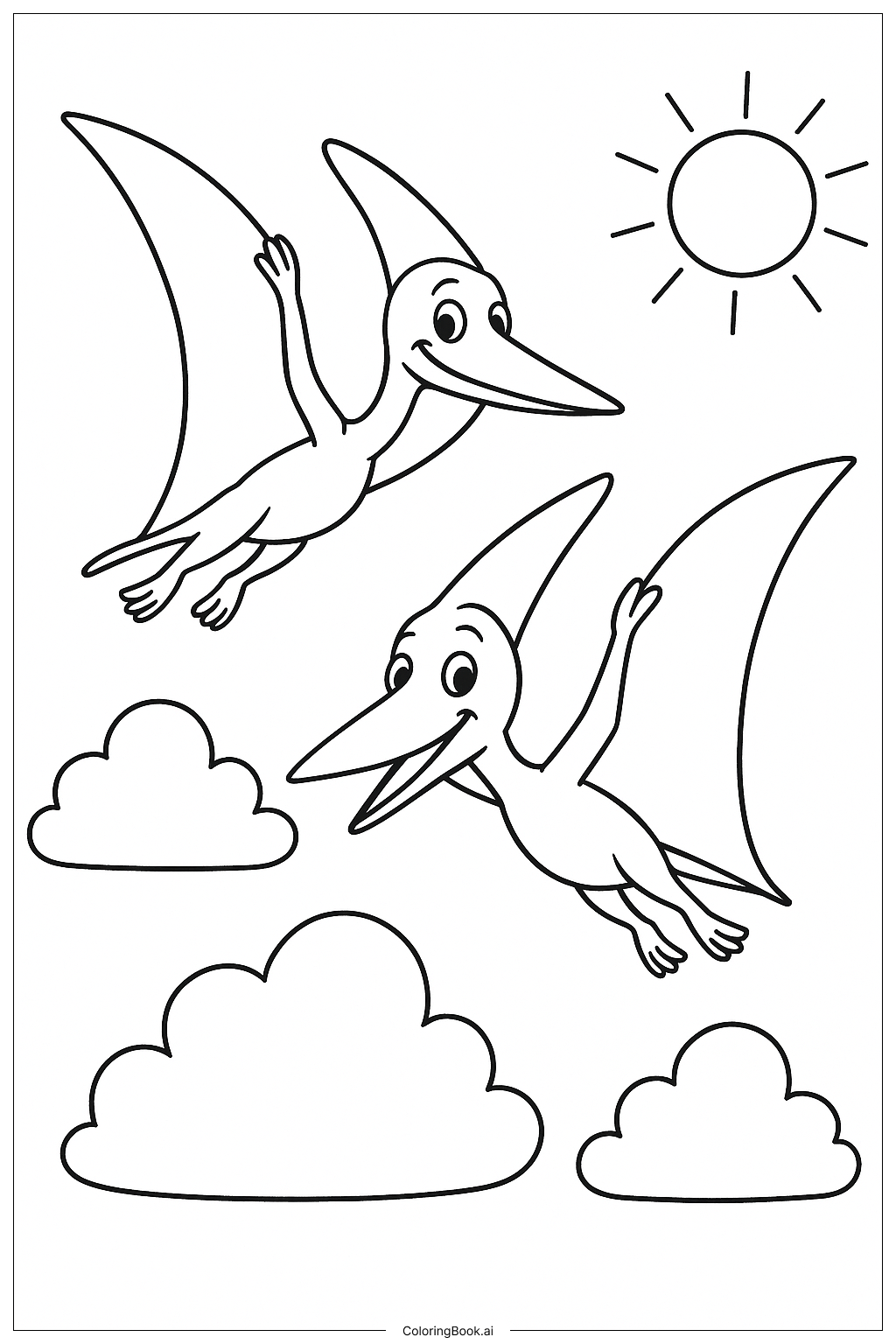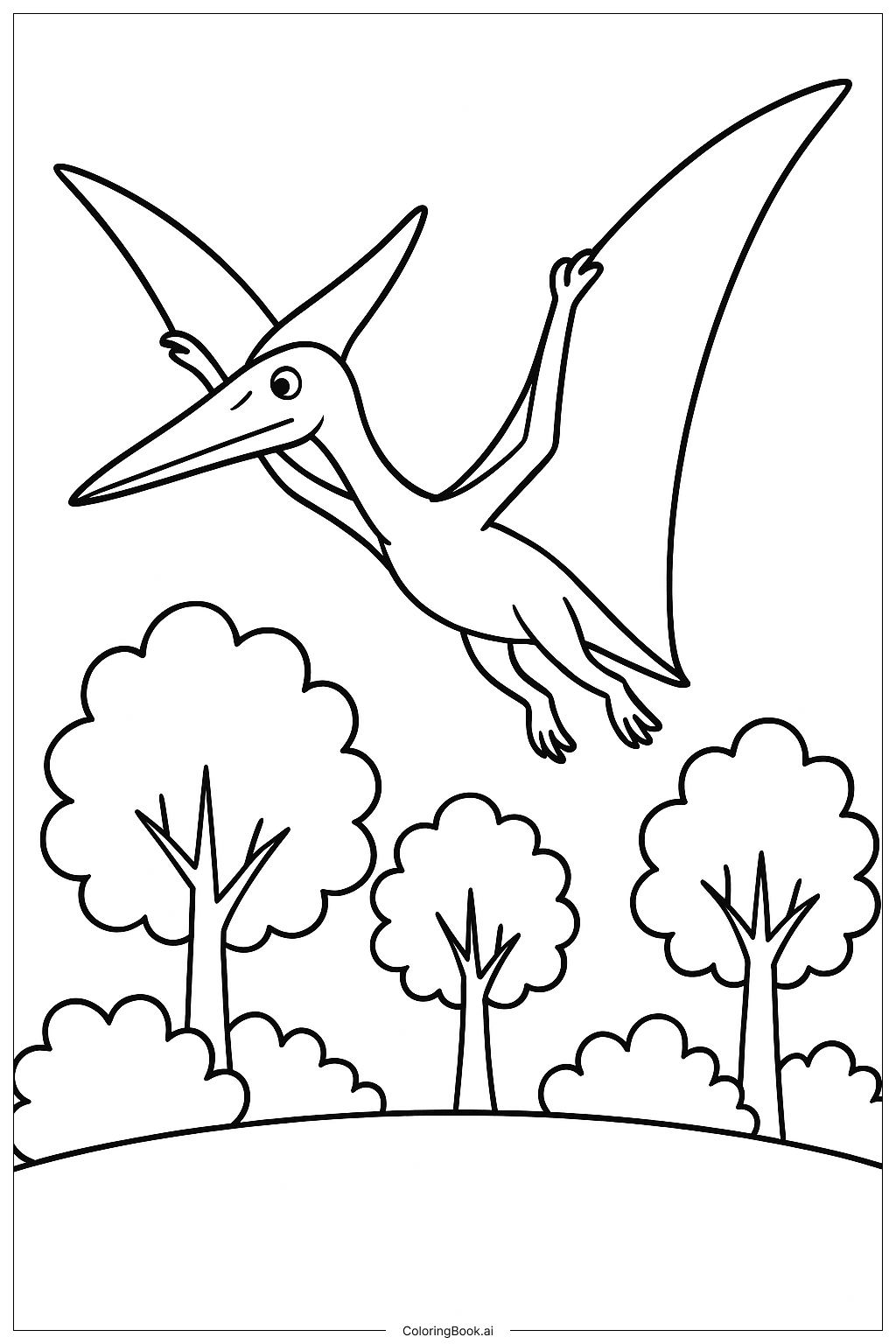
Coloring tips: How to color Quetzalcoatlus Gliding Over A Forest coloring page well?
Start with the Quetzalcoatlus itself. Use warm tones like sandy brown, tan, or muted orange for its body and wings. Add a pop of color to the head crest — try bright red, yellow, or teal to make it stand out. The wing membranes can be a slightly lighter shade than the body to show the thin, stretched skin. For the beak, use a pale yellow or ivory tone. Switch to cool greens for the forest below. Use dark green for the deep canopy shadows and lighter greens for the treetops catching sunlight. Add hints of blue and purple in the distant background hills to create a sense of depth. The sky can be a soft gradient from pale blue near the horizon to a deeper blue above. Leave some areas lighter to suggest clouds or sunlight breaking through. This contrast between the warm dinosaur and cool forest makes the whole scene feel alive and dramatic.
Coloring challenges: Which parts are difficult to color and need attention for Quetzalcoatlus Gliding Over A Forest coloring page?
• Wing Membrane Shading: The Quetzalcoatlus has large, broad wings that need smooth gradual shading to look three-dimensional. Keeping the color even across such a wide, flat surface without streaks or blotches can be tricky. You will need to blend carefully from the darker body edge toward the lighter outer wing tip to give the membrane a natural, stretched-skin appearance.
• Head Crest and Fine Details: The elongated beak and swept-back head crest are narrow and precise areas to color. Using too much color in these small spaces can muddy the details. A fine-tipped colored pencil or a thin marker works best here. Take your time and follow the outlines closely to keep these features looking sharp and accurate.
• Forest Canopy Depth: The forest below the pterosaur is made up of many overlapping trees and layers of leaves. Creating realistic depth means using multiple shades of green — darker tones for areas in shadow and lighter tones where sunlight hits the tops of trees. Without this variation, the forest will look flat and one-dimensional.
• Sky Gradient: Achieving a smooth sky gradient from light near the horizon to deeper blue overhead requires careful blending. Uneven pressure or abrupt color changes can make the sky look patchy. Work in gentle, overlapping strokes and blend with a light touch or a blending tool for the best result.
• Scale and Proportion Balance: The Quetzalcoatlus is enormous compared to the trees below. Coloring both the creature and the background with the right level of detail — keeping the dinosaur as the clear focal point without letting the forest overpower it — requires thoughtful color intensity choices throughout the whole image.
Benefits of coloring books: Advantages of drawing Quetzalcoatlus Gliding Over A Forest coloring page
Coloring this Quetzalcoatlus scene is a wonderful activity for kids and dinosaur fans of all ages. It sparks curiosity about prehistoric creatures and the ancient world, encouraging children to learn more about real animals that once lived on Earth. Filling in the wide wings and sweeping landscape helps build focus and patience, as the image has many different areas that each need careful attention. Choosing colors for the sky, forest, and the pterosaur itself invites creative thinking and decision-making, which are important skills that grow with practice. The large wing sections are great for younger children who are still developing fine motor control, while the detailed crest and forest layers offer a satisfying challenge for older kids. Blending greens and blues across the forest and sky helps develop an eye for color harmony and shading. Completing a complex, dynamic scene like this one builds confidence and a sense of achievement. It is also simply a calming and enjoyable way to spend time, turning a love of dinosaurs into a hands-on creative experience.