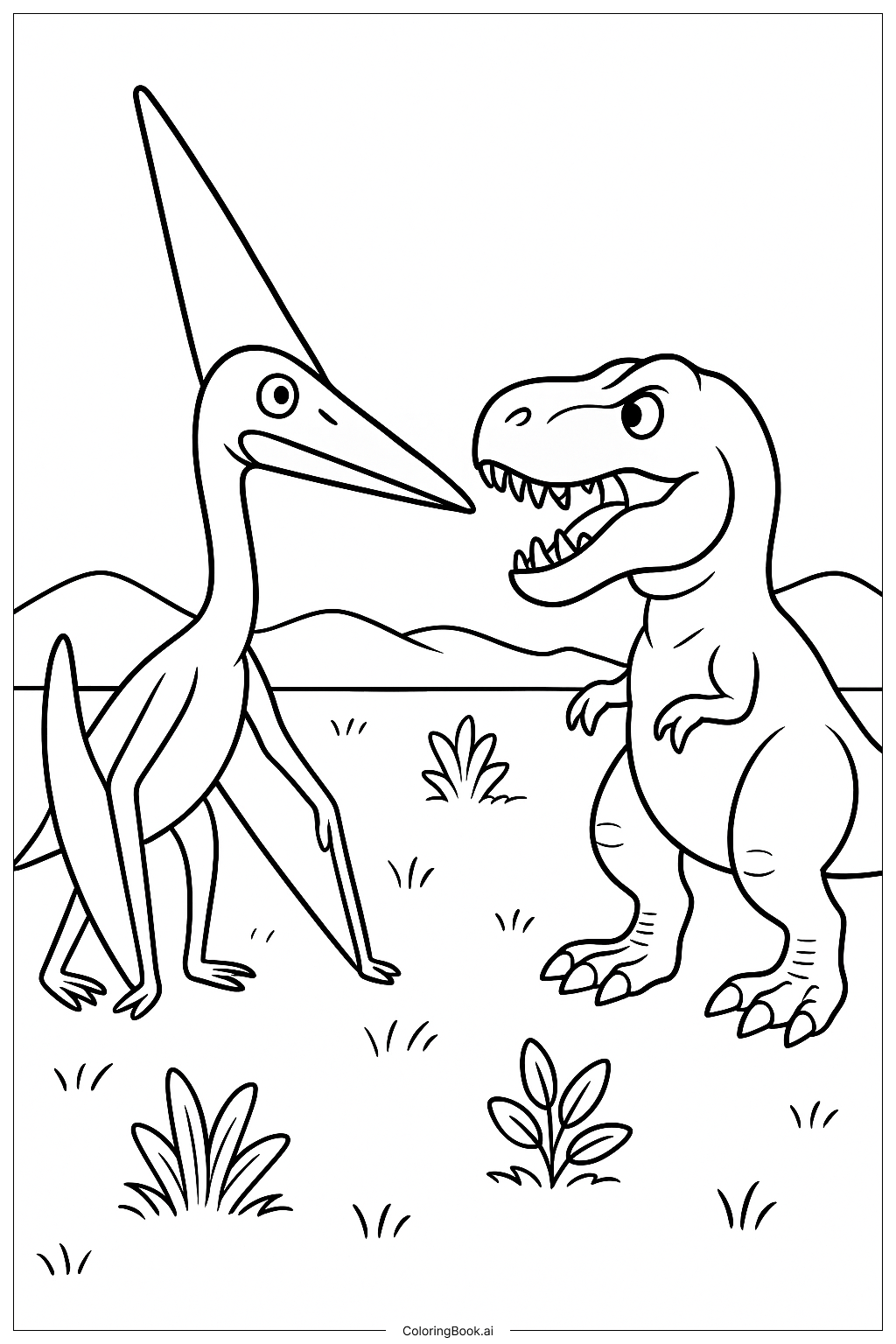
Coloring tips: How to color Quetzalcoatlus Facing A T-Rex coloring page well?
Start with the T-Rex. Use deep greens and earthy browns for its scaly skin. Add darker shades along the spine and lighter tones on the belly to give it a three-dimensional look. For the Quetzalcoatlus, try warm reddish-browns or sandy tans for the body, with a long bright crest in orange or yellow to make it stand out. The wing membranes can be colored in lighter shades like pale orange or beige, with darker veins running through them. Use gray and brown tones for the rocky ground. Add a moody sky in purple, dark blue, or stormy gray to set an exciting prehistoric atmosphere. Kids can also experiment with bright, bold fantasy colors to make the scene feel even more fun and imaginative. Use darker outlines to separate the two creatures and help them pop off the page.
Coloring challenges: Which parts are difficult to color and need attention for Quetzalcoatlus Facing A T-Rex coloring page?
• Wing Membrane Detail: The Quetzalcoatlus has large, complex wing membranes filled with fine vein lines. Staying inside these narrow sections without smudging or going over the lines takes a steady hand and patience. Younger colorists may find this area especially tricky.\n\n• Overlapping Figures: The two creatures overlap in the composition, which means colors from one figure may visually blend into the other. Careful attention is needed to keep the T-Rex and Quetzalcoatlus looking like separate animals with distinct color schemes.\n\n• Skin Texture and Shading: Both creatures have textured, scaly surfaces. Capturing realistic depth using light and shadow requires layering colors gradually. Flat coloring can make the figures look less dynamic, so building up tones slowly is important for a more striking result.\n\n• Small Facial Features: The faces of both creatures include open jaws, teeth, and eyes that are relatively small compared to the rest of their bodies. These tiny details require precision tools like fine-tipped colored pencils or thin markers to fill in cleanly without muddying the expression.\n\n• Background Balance: The prehistoric background must be colored in a way that complements but does not overpower the two main figures. Choosing the right value contrast between foreground and background is a real challenge, especially for beginners who may accidentally make the setting too vivid and distracting from the main scene.
Benefits of coloring books: Advantages of drawing Quetzalcoatlus Facing A T-Rex coloring page
Coloring this exciting prehistoric scene offers a wide range of benefits for children and young learners. Focusing on the detailed lines of the T-Rex and Quetzalcoatlus helps strengthen fine motor skills and hand-eye coordination. Choosing colors for two very different creatures encourages creative thinking and decision-making. Kids naturally start asking questions about these animals, sparking curiosity about paleontology, natural history, and prehistoric life. This kind of interest-driven learning makes education feel like play. The act of coloring also promotes mindfulness and concentration, helping children slow down and focus on one task at a time. Completing a detailed scene like this builds a sense of accomplishment and confidence. For older kids, experimenting with shading and color contrast develops early artistic skills that carry over into other creative projects. The dramatic, action-packed subject matter keeps colorists engaged from start to finish, making it an ideal activity for both quiet solo time and group settings like classrooms or after-school programs.