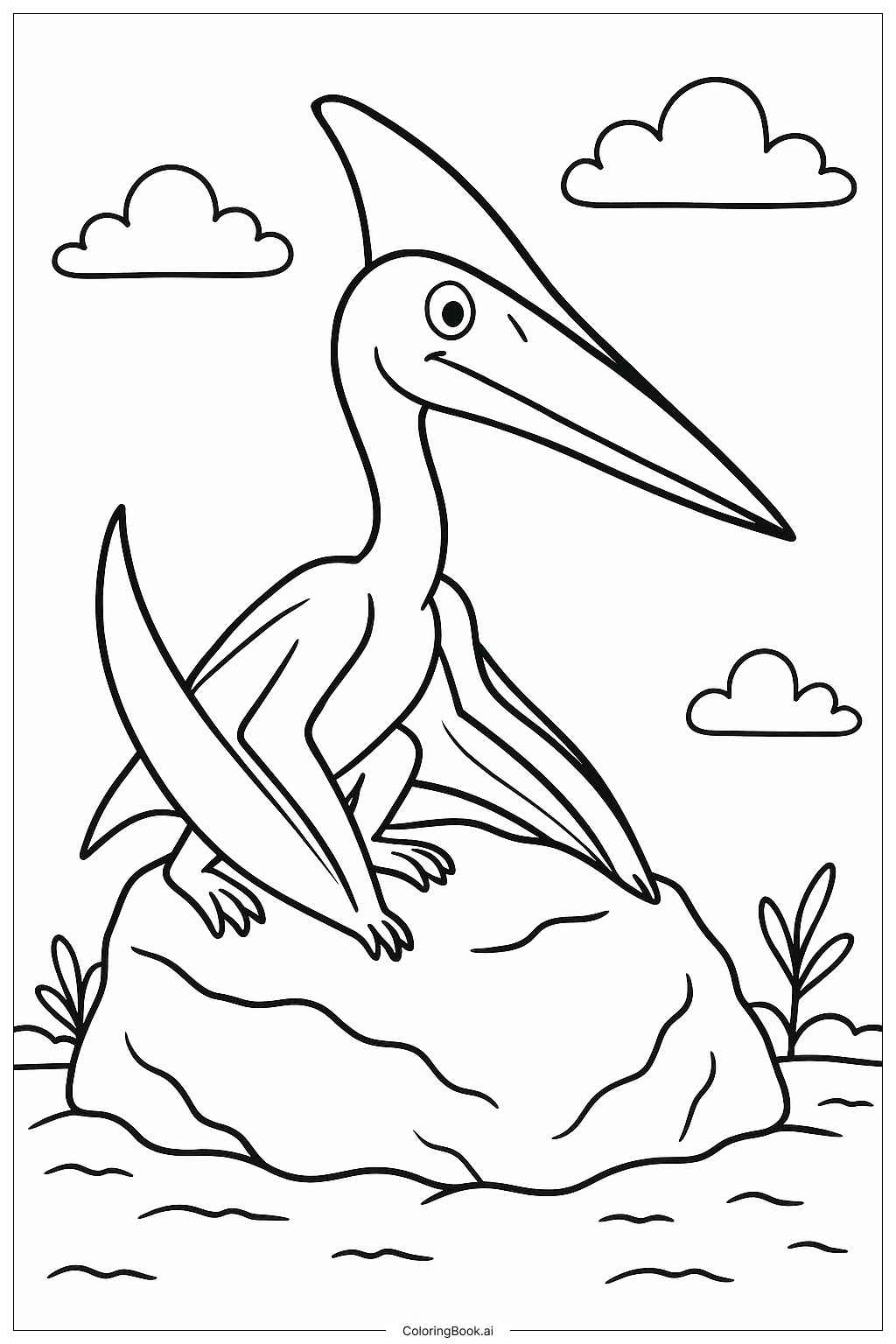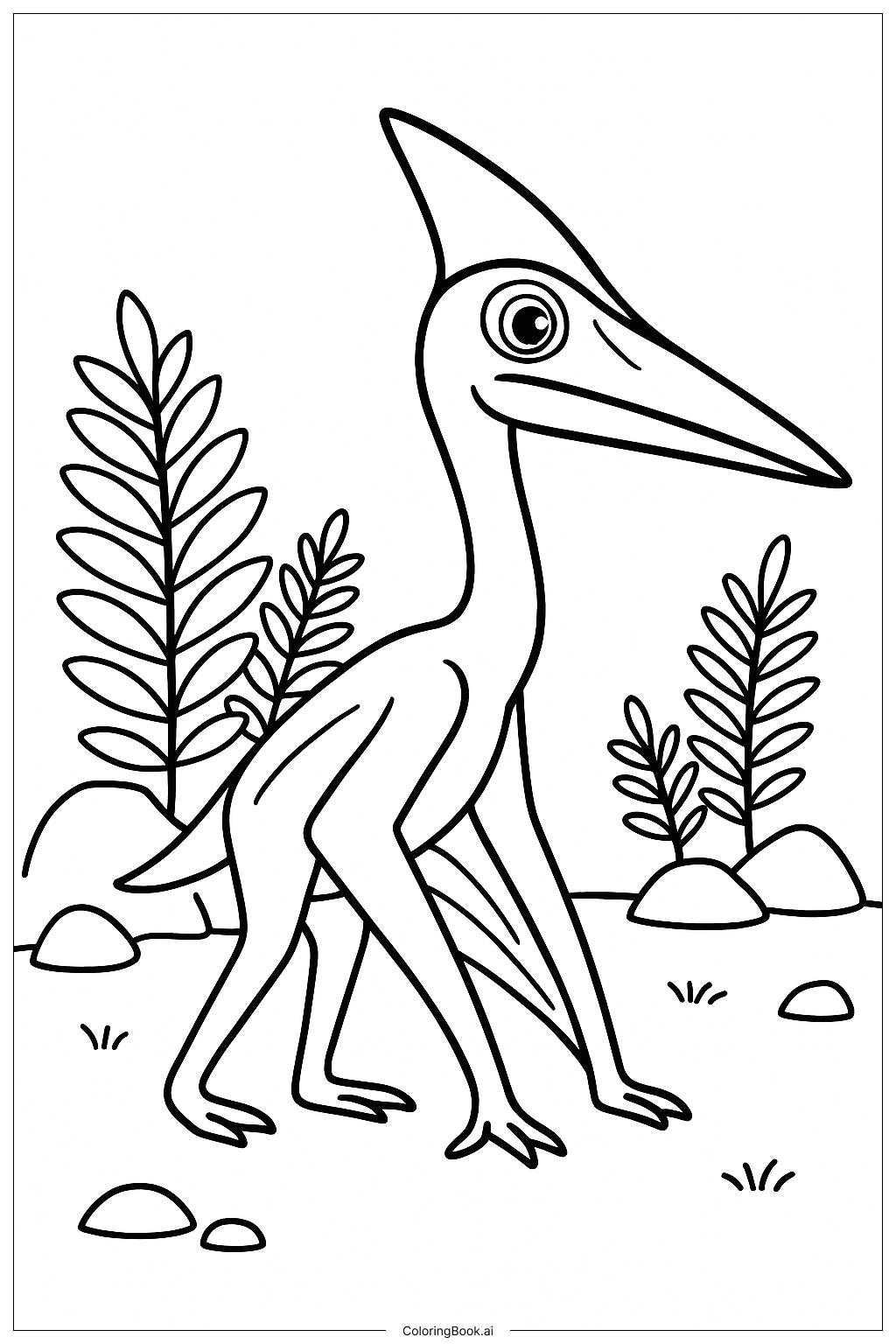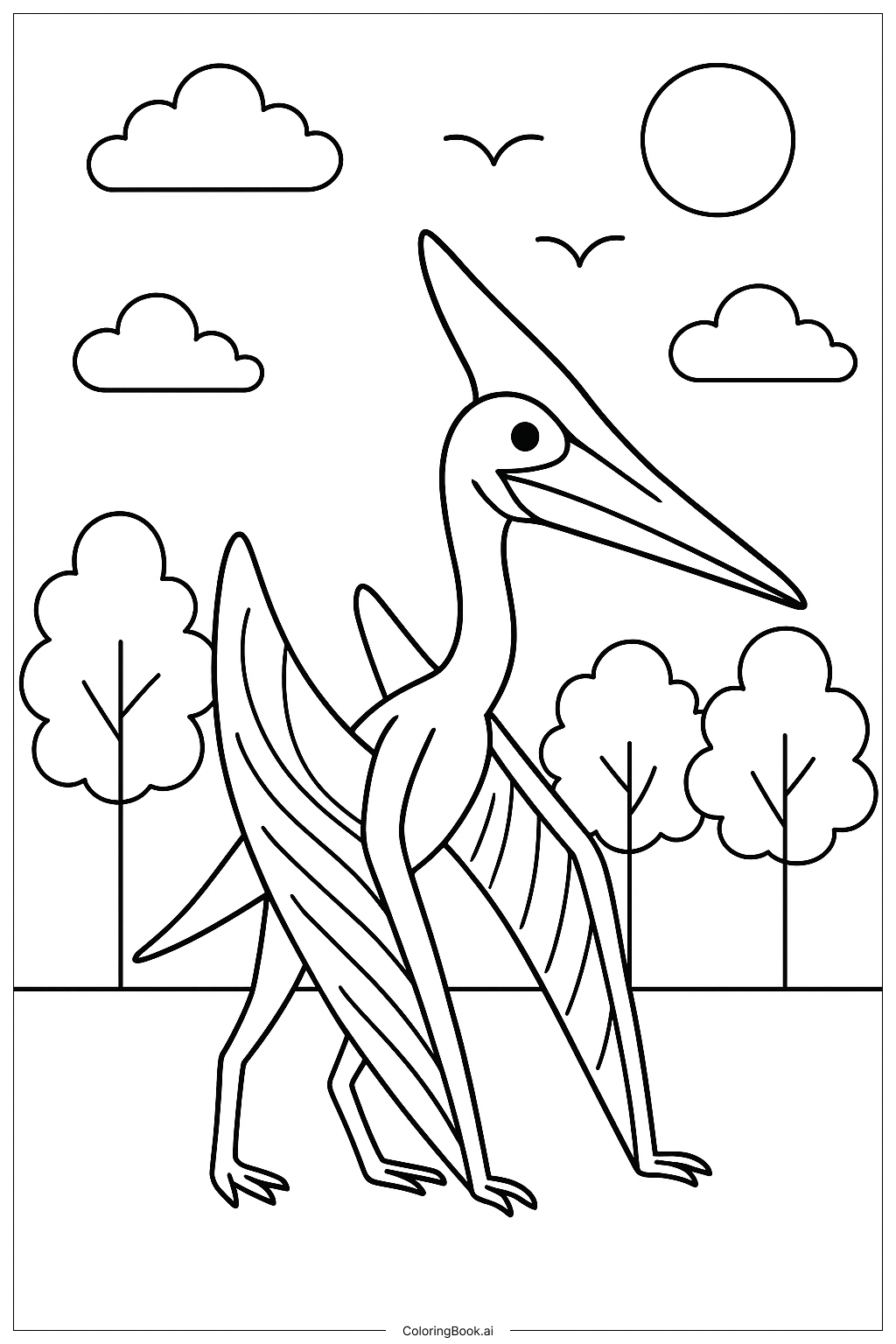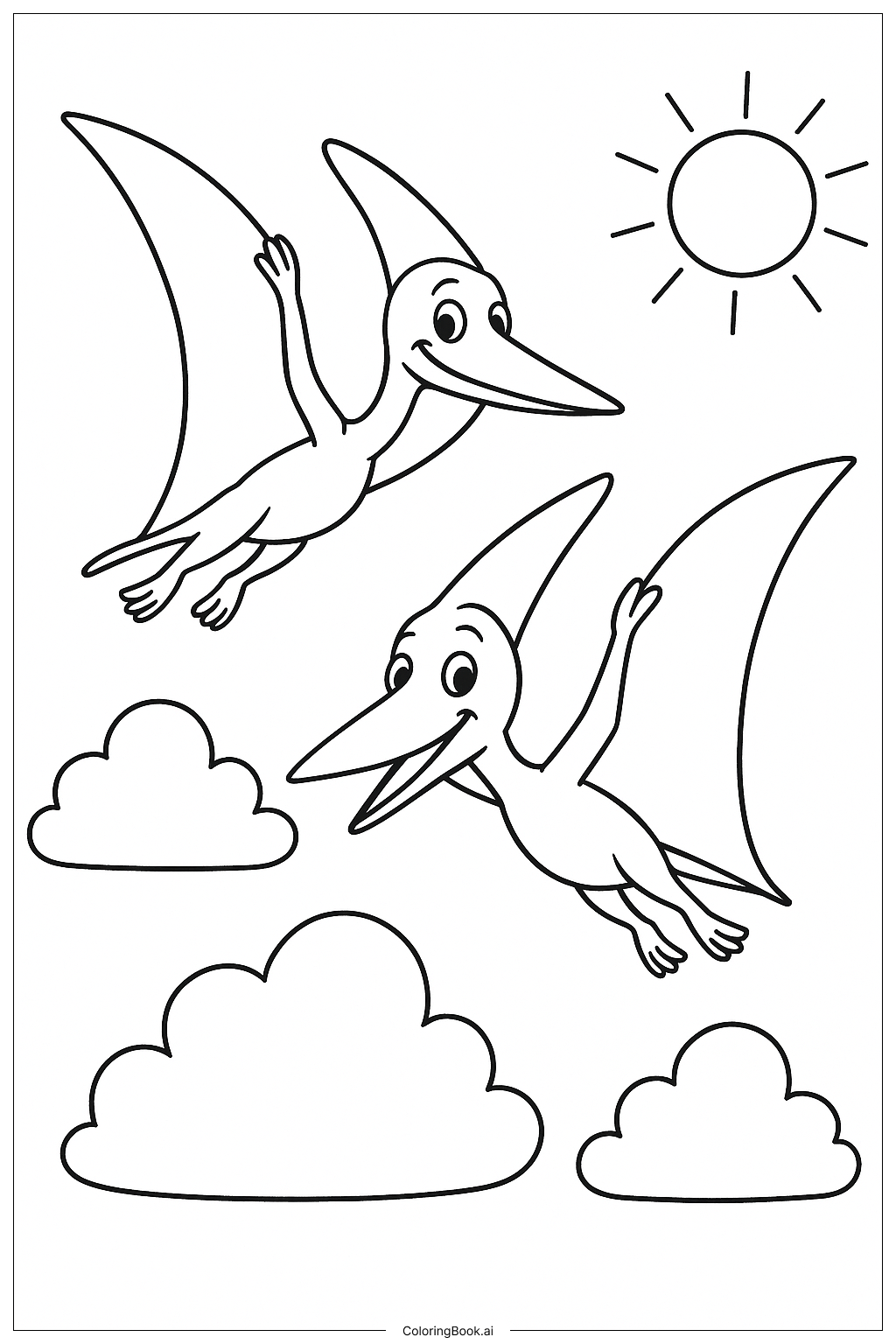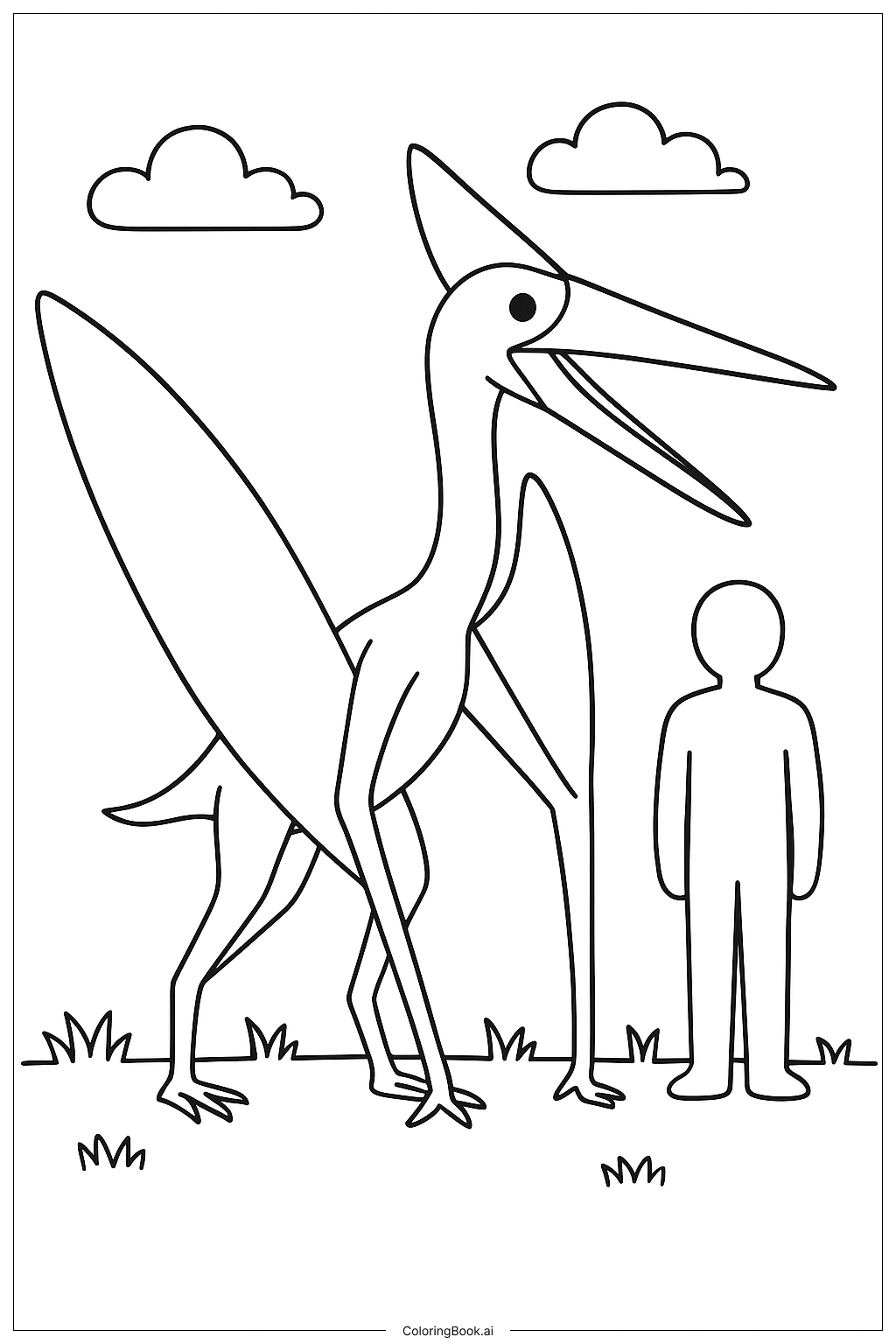
Coloring tips: How to color Quetzalcoatlus And A Human Silhouette coloring page well?
Start with the Quetzalcoatlus by choosing warm earthy tones. Use sandy browns, tans, and muted oranges for the body and neck. The wings can be colored with darker shades of brown or deep gray to show the leathery texture of the membrane. Try adding a subtle gradient by blending lighter colors near the wing edges and darker tones toward the body. The long beak looks great in golden yellow or dull orange. For the crest on its head, try a bold reddish-brown or rust color to make it stand out. The human silhouette can be kept simple with a flat dark gray or deep navy blue, which will contrast nicely against the dinosaur's warmer colors. Leave the background plain or add a soft sky blue to suggest an open prehistoric landscape. Using colored pencils or watercolors works especially well for blending the wing details smoothly.
Coloring challenges: Which parts are difficult to color and need attention for Quetzalcoatlus And A Human Silhouette coloring page?
• Wing Membrane Shading: The large wing surface of the Quetzalcoatlus is one of the most challenging areas to color. Achieving a smooth, realistic gradient across such a wide expanse requires careful blending. Without gradual transitions, the wings can look flat and uninteresting. Take your time layering lighter and darker tones to give the membrane depth and a leathery appearance.
• Scale and Proportion Awareness: Because the image includes both the giant pterosaur and a tiny human silhouette, coloring both elements in a way that feels balanced takes focus. The human figure is very small, so using too many colors or too much detail on it may distract from the main subject. Keeping the silhouette simple and contrasting helps maintain the visual impact.
• Texture on the Body: The Quetzalcoatlus body and neck have a distinct reptilian texture that is tricky to suggest through color alone. Using short, directional strokes with colored pencils can help simulate the rough, slightly bumpy skin surface. Smooth coloring tools like markers may flatten this effect.
• The Long Beak and Crest: These narrow and pointed features require a steady hand and fine-tipped tools. Coloring inside these thin lines without going outside the boundaries is especially difficult for younger artists. A fine-tip marker or sharpened colored pencil works best here.
• Background Depth: If you choose to add a background, creating a sense of prehistoric sky or environment without overwhelming the main figures can be tricky. Keeping background colors lighter and more muted than the dinosaur helps keep the focus where it belongs.
Benefits of coloring books: Advantages of drawing Quetzalcoatlus And A Human Silhouette coloring page
Coloring this image of a Quetzalcoatlus and a human silhouette offers a wonderful mix of fun and learning. Kids discover just how enormous this prehistoric flying reptile was compared to a person, sparking natural curiosity about science and history. This kind of scale-based illustration encourages children to think critically and ask questions about the natural world.
The wide wing surface gives young artists plenty of space to practice blending colors and experimenting with shading, which builds fine motor skills and artistic confidence. Working on a detailed subject like this teaches patience and focus, as children learn to color carefully within smaller areas like the beak and crest.
For older kids and teens, the image provides a chance to study animal anatomy and explore more advanced coloring techniques such as texture rendering and gradients. Completing a detailed piece like this brings a real sense of accomplishment.
Coloring also has well-known calming benefits. It helps reduce stress and allows children to express creativity in a structured and satisfying way. Sharing the finished artwork with family and friends builds pride and encourages communication. Overall, this page makes learning about prehistoric life genuinely exciting and hands-on.