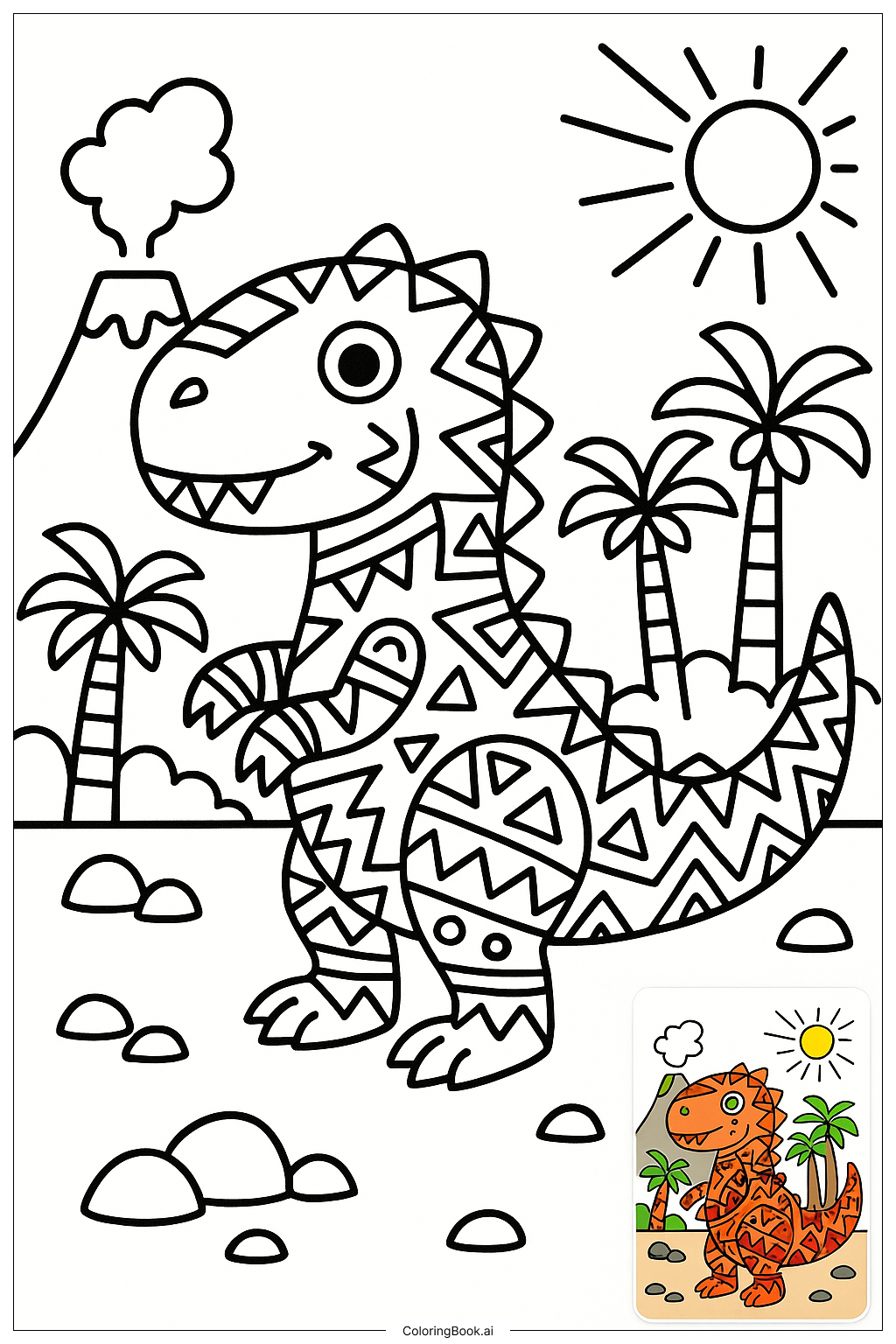
Coloring tips: How to color Dinosaur With Tribal Markings coloring page well?
Start with the large body areas first. Use earthy tones like brown, tan, dark green, or deep red for the dinosaur's skin. These colors give the creature a natural, ancient look.
For the tribal markings, try using contrasting colors so they stand out. Bold choices like black, white, orange, or gold work great against a darker skin tone.
You can also use a two-color approach — pick one color for the skin and a second color for all the patterns. This keeps things clean and striking.
If you want a more dramatic effect, use darker shades at the edges of the body and lighter tones in the center. This adds depth and makes the dinosaur look three-dimensional.
For younger colorists, using just three or four colors is perfectly fine and still looks amazing. Older colorists can try blending or shading inside the tribal shapes for extra detail.
Have fun and make the dinosaur your own. There are no wrong color choices here!
Coloring challenges: Which parts are difficult to color and need attention for Dinosaur With Tribal Markings coloring page?
• Intricate Tribal Pattern Details: The tribal markings covering the dinosaur's body are made up of very small geometric shapes, fine lines, and dot patterns. Coloring inside these tiny spaces without going over the edges requires a sharp pencil or a fine-tipped marker. Younger colorists may find this especially challenging, so using colored pencils with pointed tips is strongly recommended for these sections.
• Maintaining Color Consistency Across Patterns: The tribal designs repeat across different parts of the body — the neck, back, limbs, and tail. Keeping the same colors consistent throughout the entire design takes planning and focus. If you choose gold for one section of the tribal markings, you need to remember to use the same gold tone in every other section, which can be tricky over a large page.
• Creating Contrast Between Skin and Markings: One of the key visual goals is making the tribal patterns clearly visible against the dinosaur's skin. Choosing colors that are too similar will cause the markings to blend in and disappear. Finding the right level of contrast — dark skin with light markings, or light skin with dark markings — requires a little color planning before you begin.
• Shading the Body for Depth: The dinosaur has a large, three-dimensional body shape. Simply filling it with one flat color can make it look dull. Adding shading along the belly, under the neck, and around the legs helps the figure look more realistic and powerful. Blending two tones of the same color smoothly takes patience and practice.
• Facial Details and Expression: The dinosaur's face includes sharp teeth, expressive eyes, and tribal designs around the face. These are small, closely spaced elements that require careful attention and a steady hand to color neatly without muddying the details.
Benefits of coloring books: Advantages of drawing Dinosaur With Tribal Markings coloring page
Coloring this dinosaur page offers a wide range of benefits for kids and adults alike.
For children, working on the large body sections builds hand control and teaches them how to stay within the lines. As they grow more confident, they can move on to the smaller tribal patterns, which sharpen fine motor skills and strengthen the muscles needed for writing.
The tribal markings introduce kids to the idea of patterns and symmetry in art. Deciding which colors to use for the skin versus the markings encourages early color theory thinking and creative decision-making.
For older colorists and adults, the detailed geometric patterns offer a meditative, calming experience. Focusing on each small shape one at a time helps quiet a busy mind and reduce daily stress.
The combination of a prehistoric animal with cultural artistic elements also sparks curiosity. Children may become interested in dinosaurs, ancient cultures, or tribal art traditions, opening doors to learning beyond the coloring page itself.
Overall, this page supports creativity, patience, focus, and a sense of accomplishment. Finishing a complex and detailed image like this one builds confidence and pride in one's own work — a reward that goes far beyond the page.