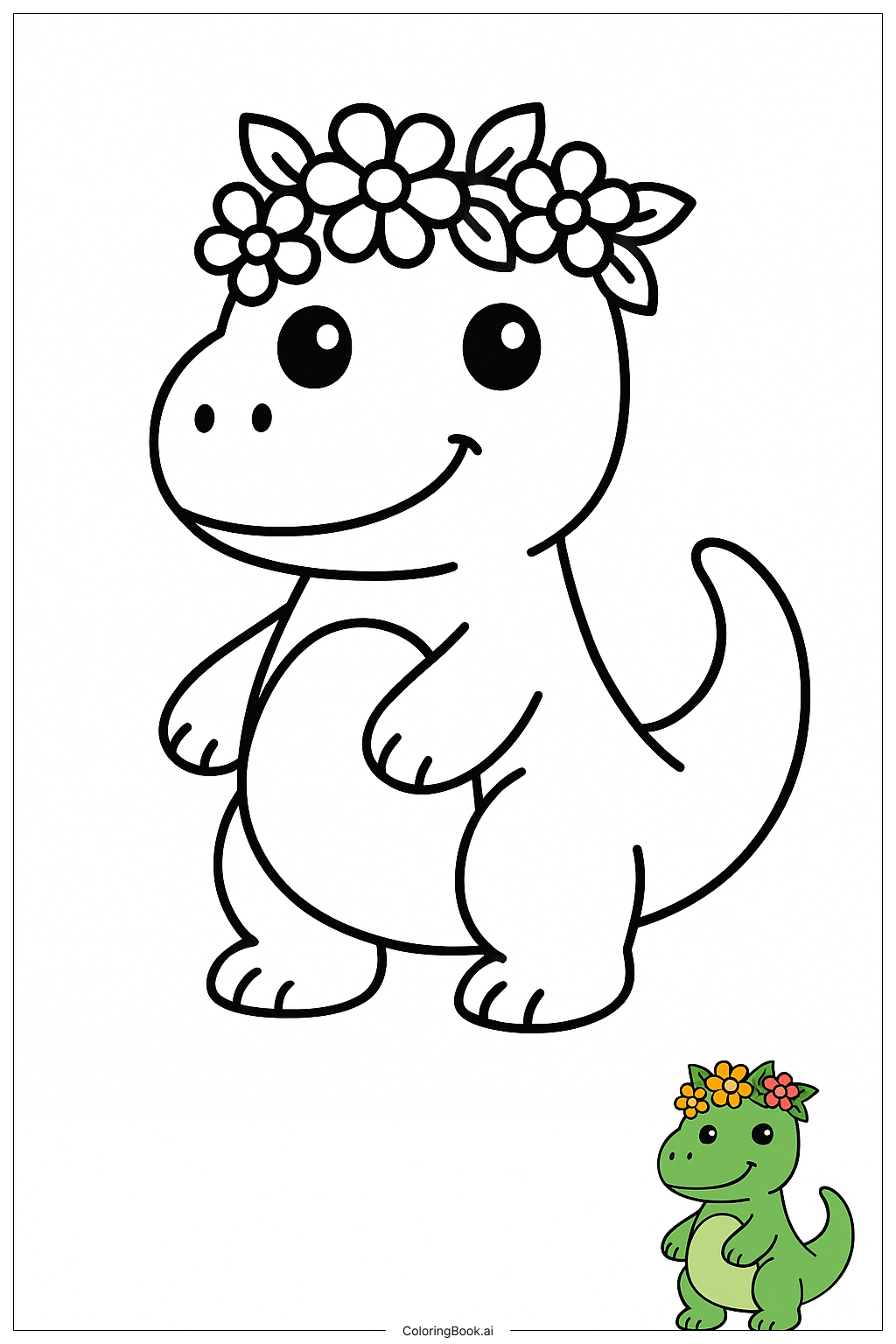
Coloring tips: How to color Dinosaur With Flower Garland coloring page well?
Start by choosing a fun color for the dinosaur's body. Greens are classic, but you can try purple, blue, or even orange for a more imaginative look. Use a slightly darker shade of the same color to fill in the scales, giving the dinosaur a sense of texture and depth. For the flower garland, pick a variety of bright, cheerful colors. Use reds, pinks, yellows, and purples for the blossoms, and different shades of green for the leaves. Try to alternate the flower colors so the garland looks lively and festive. Color the dinosaur's eyes with a warm brown or amber, and add a small white dot to make them look shiny and expressive. For younger kids, use bold, solid colors to keep things simple and fun. Older colorists can experiment with shading and blending to make the petals and scales look more realistic and three-dimensional.
Coloring challenges: Which parts are difficult to color and need attention for Dinosaur With Flower Garland coloring page?
• Dinosaur Scale Details: The dinosaur's body is covered with individual scales, each requiring careful attention. Staying within the small outlines of each scale without smudging neighboring areas can be tricky, especially for younger children. Using a fine-tipped coloring tool helps keep the edges clean and neat.
• Flower Garland Petals: The garland contains many individual flower petals of different sizes. Each petal needs to be colored separately to make the flowers look full and distinct. It is easy to accidentally blend colors between petals, so working slowly and letting each section dry before moving to the next is important.
• Color Variety and Balance: The garland includes both flowers and leaves, which means colorists need to manage many different colors in a small area. Choosing colors that stand out from each other while still looking harmonious together requires some planning. Laying out your color choices before you start can save a lot of time and frustration.
• Transition Between Dinosaur and Garland: Where the garland rests on the dinosaur's body, the two sets of colors meet closely. Keeping the dinosaur's body color from bleeding into the flower petals and vice versa is a real challenge. Using a light pencil to outline borders before filling them in can help maintain clear separation.
• Expressive Face Details: The dinosaur's eyes and smile are small but important features. Coloring these tiny details neatly without going outside the lines requires a steady hand and a sharp, precise tool. Taking your time with the facial features will make the finished artwork much more lively and appealing.
Benefits of coloring books: Advantages of drawing Dinosaur With Flower Garland coloring page
Coloring this friendly dinosaur with a flower garland offers a wonderful range of benefits for children and young artists. First, it helps build fine motor skills. Carefully filling in the small scales, petals, and leaves trains the hand muscles and improves pencil control, which supports handwriting and other detailed tasks. Second, it encourages creativity. Choosing colors for the dinosaur's body and the garland flowers lets kids express their own imagination and personality, building confidence in their artistic choices. Third, it supports focus and concentration. Working through a detailed image like this one requires patience and attention, which helps children practice staying on task in a calm and enjoyable way. Fourth, it introduces a sense of nature and beauty. The combination of a dinosaur and flowers gently connects children to both the natural world and a sense of wonder. Fifth, coloring is a relaxing activity that can reduce stress and anxiety, making it a healthy creative outlet for kids of all ages. Completing the page also gives a satisfying sense of achievement that boosts self-esteem and motivates further creative exploration.