Coloring tips: How to color Dinosaur With Fire Breath coloring page well?
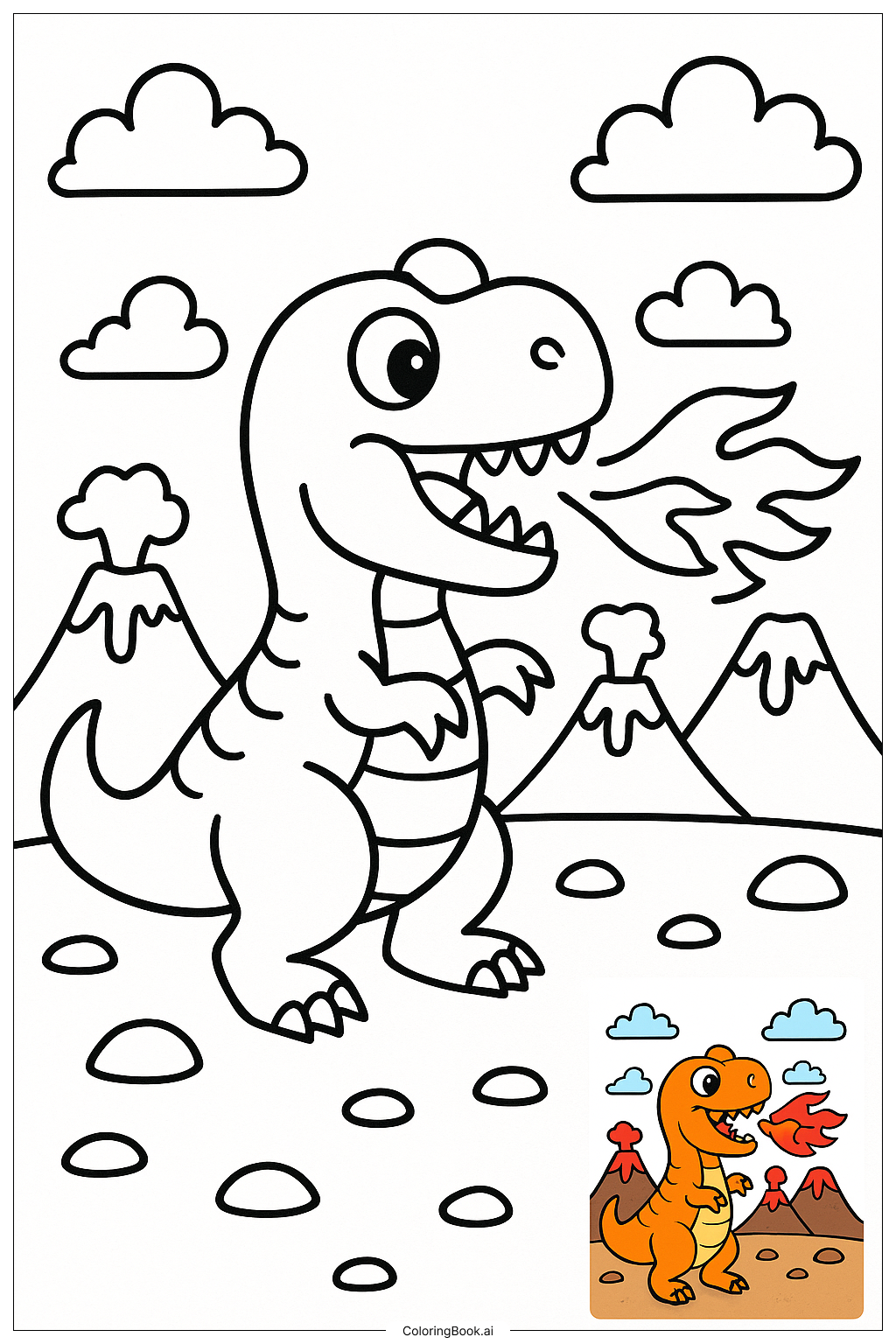
Start with the dinosaur's body before moving to the flames. Use deep greens or dark grays for the scales to give the dinosaur a strong, reptilian look. Add lighter shades of the same color on the belly and underside to create a sense of depth. Use dark brown or black to shade the spines along the back. For the claws and teeth, try off-white or pale yellow. The fire is the most exciting part — layer bright yellow at the center, then move outward with orange and red. Add touches of white near the mouth where the flame is hottest. You can use dark blue or purple along the very edges of the flames to make them look even more dramatic. Feel free to experiment with bold, bright colors to make your dinosaur look truly legendary.
Coloring challenges: Which parts are difficult to color and need attention for Dinosaur With Fire Breath coloring page?
• Scale Texture Consistency: The dinosaur's body is covered in many small, overlapping scales. Keeping a consistent coloring direction across all of them takes patience. It is easy to lose track of shading when moving from one section to another. Work in small areas and try to use the same light source throughout to keep it looking natural and even.
• Fire Gradient Blending: The flames require smooth color transitions from white and yellow at the core to orange and deep red at the edges. Achieving a convincing gradient without harsh lines is tricky, especially for younger colorists. Colored pencils work well here if you blend slowly in circular motions. Markers can be used but require layering light colors first.
• Spine and Claw Details: The sharp spines along the back and the pointed claws are small but important features. Staying inside their narrow outlines while still adding shading and dimension is a challenge. A fine-tipped tool is recommended for these areas to avoid coloring outside the lines.
• Body-to-Flame Boundary: Where the fire exits the dinosaur's mouth, the two elements meet closely. Deciding where the body color ends and the flame color begins requires careful attention. Leaving a thin uncolored border between the two areas can help them stand out from each other without blending into a muddy mix.
• Depth and Shadow on the Body: A large, muscular form like this dinosaur needs shading to look three-dimensional. Adding darker tones under the belly, beneath the jaw, and along the inner leg areas brings the figure to life. Without shadow work, the body can appear flat and less impactful.
Benefits of coloring books: Advantages of drawing Dinosaur With Fire Breath coloring page
Coloring this fire-breathing dinosaur is a fantastic activity for kids and anyone who loves adventure and prehistoric creatures. It offers a wide range of creative benefits.
Working on the detailed scales and textures helps build fine motor skills and hand-eye coordination. Carefully staying within small outlined areas trains focus and patience, skills that transfer directly to school and everyday tasks.
Choosing colors for the flames encourages creative thinking. There is no single right answer, so kids feel free to experiment and express themselves. This builds confidence and nurtures artistic imagination.
The large, dramatic scene also makes it emotionally engaging. Bringing a powerful creature to life through color can feel rewarding and exciting. Completing the page gives a real sense of accomplishment.
For older children and teens, the challenge of blending gradients on the fire and adding shading to the body introduces basic art techniques in a fun, low-pressure way. It is a great introduction to concepts like light, shadow, and color theory.
Overall, this coloring page combines fun, creativity, and skill-building into one engaging experience that kids of all ages can enjoy.