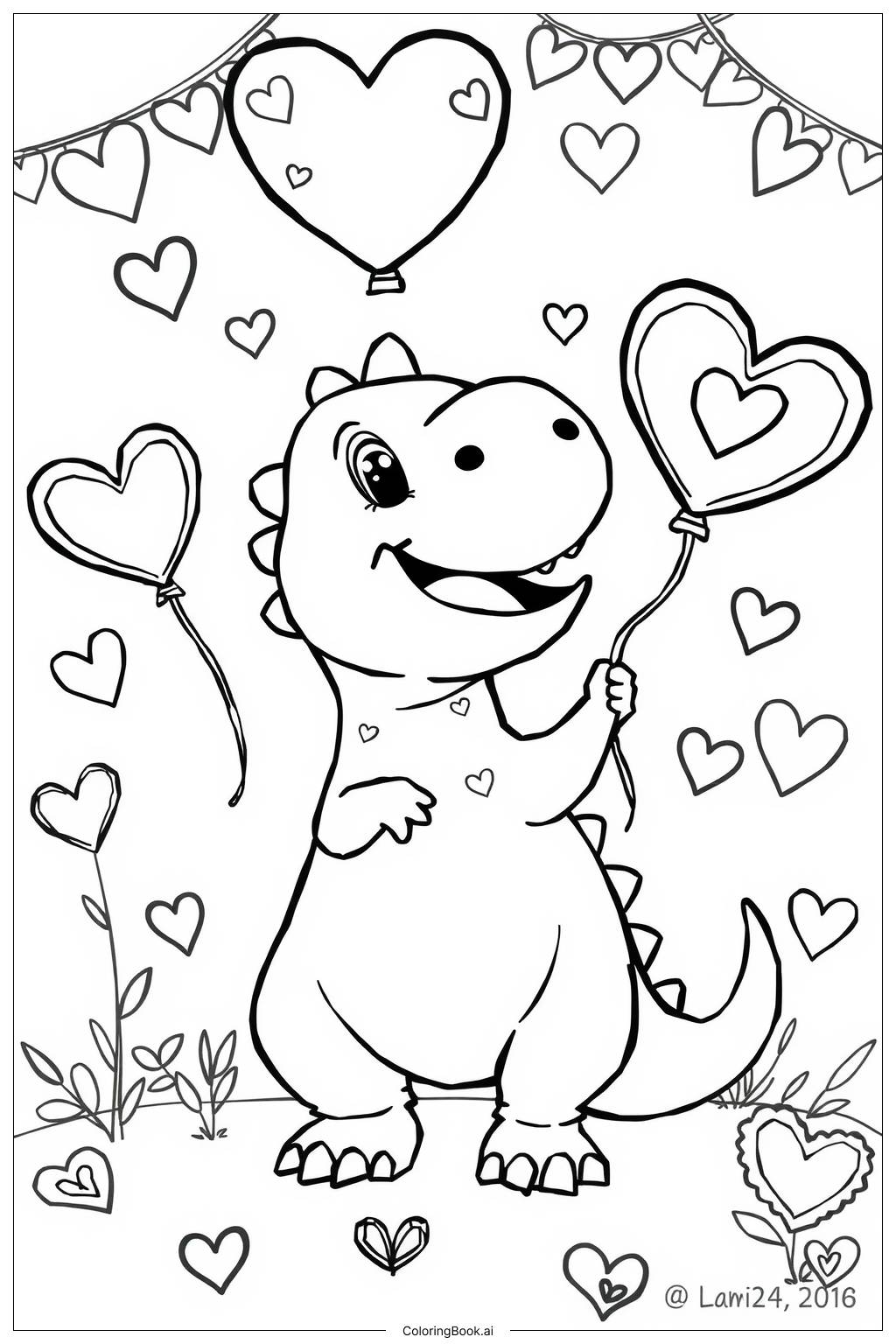
Coloring tips: How to color Dinosaur Valentine Heart coloring page well?
Start with the dinosaur's body using bright, fun colors. Try green, teal, or purple for the main body. Use a slightly darker shade for the scales or ridges along the back to add depth. For the big heart, go with classic red or pink to keep the Valentine's Day feel alive. You can also try a gradient effect — light pink in the center fading to deep red at the edges. Color the eyes with warm browns or black pupils and add a tiny white dot for a shiny look. If there are background details like flowers or swirls, use soft yellows, oranges, or light blues to keep them from overpowering the main image. Kids can keep it simple with solid colors, while older colorists can experiment with shading and blending to make the dinosaur and heart pop off the page. Have fun and make it your own!
Coloring challenges: Which parts are difficult to color and need attention for Dinosaur Valentine Heart coloring page?
• Dinosaur Body Texture: The dinosaur's scales, ridges, and bumpy skin can be tricky to color neatly. Each small section needs careful attention to stay within the lines. Using a fine-tipped colored pencil or marker works best here. Adding light and dark shades of the same color can make the texture look more realistic and three-dimensional.
• Heart Shape Edges: The large heart is a simple shape, but keeping the color smooth and even throughout can be a challenge, especially near the curved top and pointed bottom. Pressing too hard with a pencil may cause uneven patches. Try using light, circular strokes to build up color gradually for a clean, polished result.
• Small Decorative Details: If the image includes tiny flowers, dots, swirls, or patterns inside or around the heart, these are some of the hardest areas to fill in. They require a very fine-tipped tool and a steady hand. Take your time and work slowly in these sections to avoid going outside the lines.
• Color Transitions and Contrast: Making sure the dinosaur stands out from the heart, and the heart stands out from the background, takes some planning. Choosing colors that contrast well with each other — like a green dinosaur against a red heart — helps the design look clear and balanced.
• Facial Expression Details: The dinosaur's eyes, mouth, and any other facial features are small but important. Coloring them carefully can bring the character to life. Use darker tones around the eyes to add expression and make the face feel warm and friendly.
Benefits of coloring books: Advantages of drawing Dinosaur Valentine Heart coloring page
Coloring this Dinosaur Valentine Heart page brings together creativity, fun, and learning in one activity. For younger children, it helps develop fine motor skills as they practice staying within the lines and controlling their coloring tools. The combination of a dinosaur and a heart gives kids a chance to explore both bold and soft color palettes, encouraging them to think about color choices and contrast.
For older kids and teens, this page offers a chance to practice blending, shading, and creating texture — especially on the dinosaur's scales and the heart's surface. These skills build patience and attention to detail.
The Valentine's Day theme adds an emotional layer to the activity. Coloring this page can inspire conversations about kindness, love, and friendship, making it great for classroom activities or home crafts around the holiday.
Coloring is also a calming activity. It helps reduce stress and encourages focus, giving both children and Adults a healthy way to relax and express themselves. Completing the page gives a sense of accomplishment and pride. Whether it ends up on the fridge or gifted to someone special, this dinosaur Valentine creation is a meaningful and joyful experience for colorists of all ages.