Coloring tips: How to color Dinosaur Valentine Heart coloring page well?
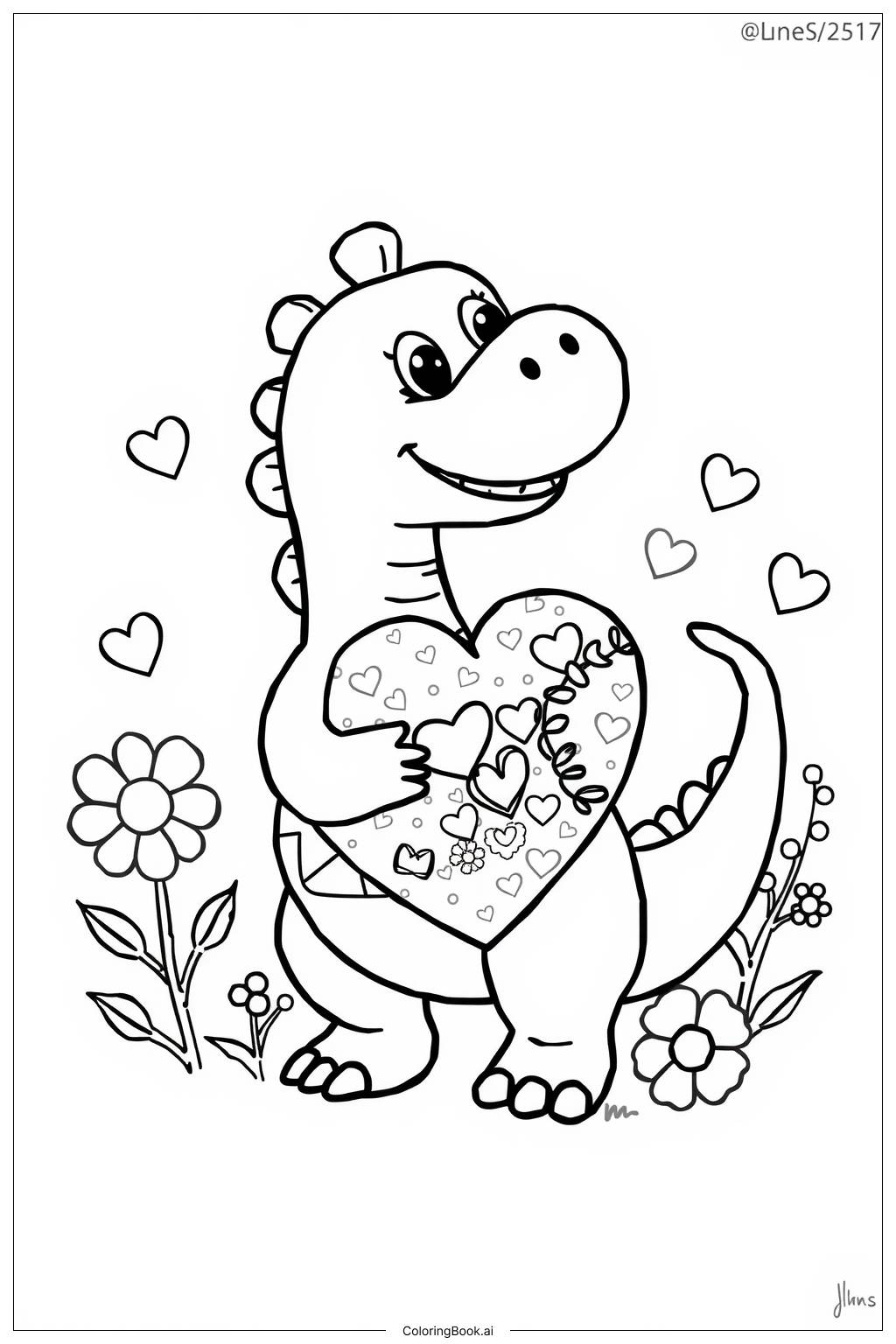
Start with the dinosaur's body using your favorite dino color — bright green, teal, or even purple works great! Use a slightly darker shade along the back, belly edges, and under the arms to add depth and make the dinosaur look round and three-dimensional. Color the spines along the back in a contrasting color like yellow or orange to make them pop. For the big heart, try a classic red or hot pink, and add a lighter shade in the center to create a glowing effect. The background swirls and flowers can be colored in soft pastels like lavender, sky blue, or pale yellow to keep the Valentine mood light and sweet. Use bright colors for the small stars to make them sparkle. Take your time with the small details — they make the whole picture shine!
Coloring challenges: Which parts are difficult to color and need attention for Dinosaur Valentine Heart coloring page?
• Dinosaur Scale Texture: The dinosaur's body is covered with small rounded scales, which can be tricky to color evenly. Each scale is close to the next, so you need a fine-tipped marker or a sharpened colored pencil to fill them in neatly without coloring outside the lines. Staying consistent with your shading across all the scales takes patience and a steady hand.
• Heart Shading and Highlights: The large heart in the center looks best when it has smooth gradients — darker on the edges and lighter in the middle. Blending two shades of red or pink without creating harsh lines requires practice. Young colorists may find it hard to transition colors gradually, especially on a large curved shape.
• Small Background Details: The tiny flowers, swirling vines, and stars in the background are densely packed and very small. Coloring each one separately without smudging nearby areas is a real challenge, especially for younger children. Using thin markers or fine-point colored pencils is strongly recommended for these areas.
• Spines and Outline Edges: The small spines running along the dinosaur's back are narrow and pointed. Filling them with a distinct color without going over the outlines demands careful, controlled strokes. It is easy to accidentally bleed color into the body or the background.
• Color Harmony Across the Whole Page: Choosing colors that work well together across the dinosaur, heart, and background is a creative challenge in itself. Picking colors that clash can make the image look busy, while a well-planned palette makes the whole scene feel warm and unified.
Benefits of coloring books: Advantages of drawing Dinosaur Valentine Heart coloring page
Coloring this Dinosaur Valentine Heart page offers wonderful benefits for kids of all ages. First, it builds fine motor skills. Carefully filling in small scales, tiny flowers, and narrow spines trains the hand muscles and improves pencil control, which helps with writing too. Second, it encourages creativity. Choosing colors for the dinosaur, heart, and background gives children the freedom to express themselves and experiment with different color combinations. Third, it teaches focus and patience. Completing a detailed image like this one requires sitting still and concentrating, which are valuable skills for school and everyday life. Fourth, it introduces color theory in a fun way. Kids naturally start to notice how colors work together — which shades complement each other and which ones create contrast. Fifth, it has a calming effect. The repetitive, gentle motion of coloring is relaxing and can help reduce stress or anxiety, making it a great quiet-time activity. Finally, finishing the page gives children a real sense of pride and accomplishment. It is a small but meaningful confidence boost that encourages them to keep creating.