Coloring tips: How to color Dinosaur Roaring At Moon coloring page well?
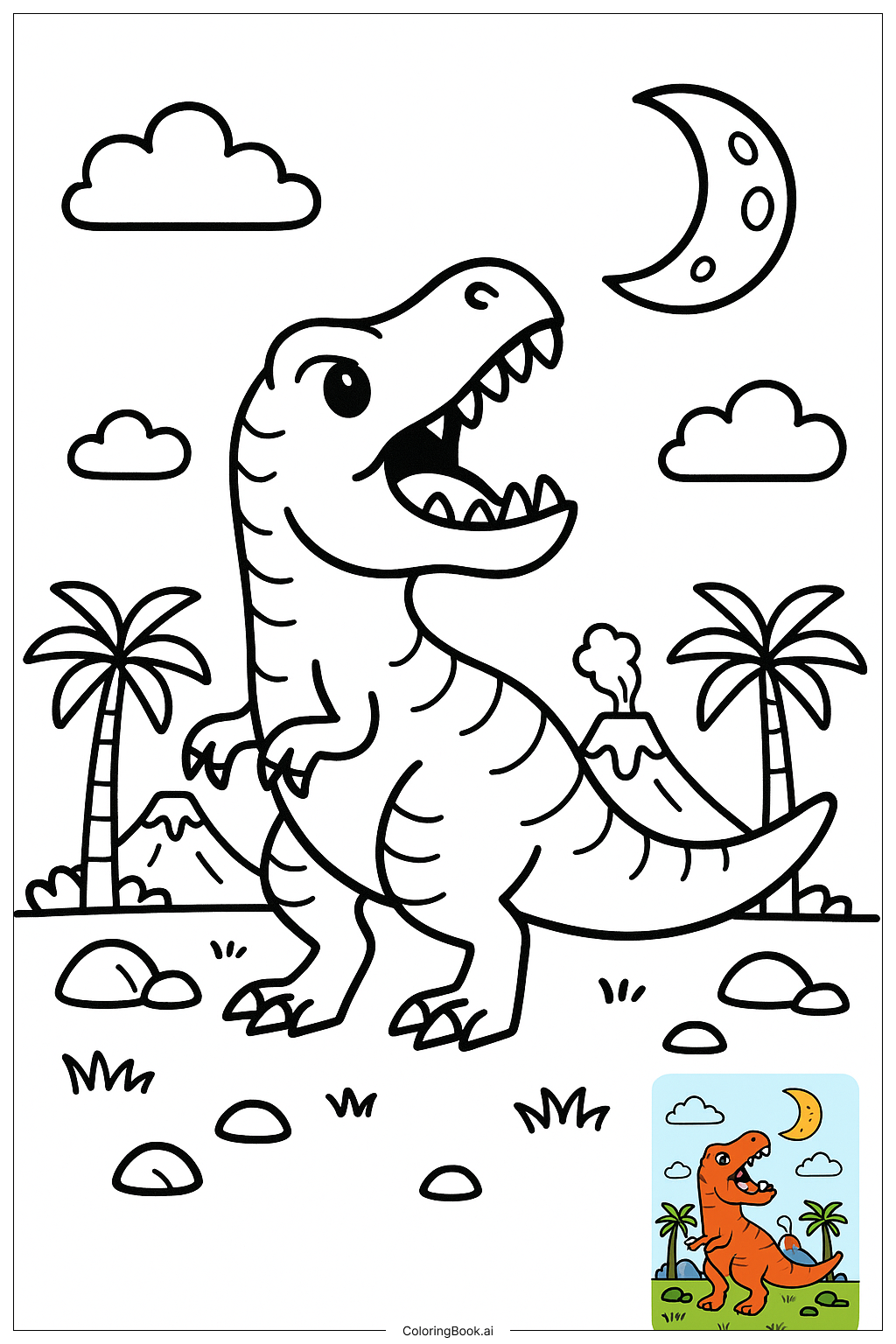
Start with the dinosaur's body using earthy tones like olive green, dark brown, or deep teal. Add lighter shades on the belly and underside to create a natural look. Use a darker shade along the back and tail to show depth and shadow. Color the sharp claws and teeth with off-white or pale yellow. For the moon, try a warm golden yellow or a soft silver-white. Add light blue or purple shading around the moon's edges to show the glow of night. Color the sky deep navy blue or dark purple, and use white or pale yellow for the stars. For the background trees and mountains, use dark greens and grays to keep the focus on the dinosaur. Younger kids can use just a few bold colors to fill in large areas, while older kids can experiment with blending and shading to make the scene feel more dramatic and alive.
Coloring challenges: Which parts are difficult to color and need attention for Dinosaur Roaring At Moon coloring page?
• Dinosaur Scale Texture: The dinosaur's body is covered in rows of overlapping scales of different sizes. Coloring each scale individually takes patience and a steady hand. Using two or three shades of the same color and alternating them across rows can give the scales a realistic, three-dimensional look without becoming overwhelming.
• Mouth and Teeth Details: The wide-open roaring mouth contains many teeth and interior details packed into a small area. Keeping colors clean and separate inside the mouth — such as pale pink for the tongue, off-white for the teeth, and darker tones for the throat — requires a fine-tipped tool and careful control to avoid smearing colors together.
• Moon Glow and Sky Gradient: Creating a convincing nighttime glow around the full moon is one of the trickiest parts of this image. The sky needs to transition smoothly from lighter tones near the moon to deep, dark shades at the edges. Blending colored pencils or layering watercolor washes slowly is the best way to achieve this soft gradient effect.
• Background Depth and Layering: The background includes mountains, trees, and clouds at different distances. Keeping the background visually separate from the foreground dinosaur requires using lighter, less saturated colors for distant elements and reserving the boldest, darkest tones for the dinosaur itself. This contrast helps the main subject stand out clearly.
• Claw and Foot Detail: The dinosaur's claws and feet sit against rocky ground, with multiple overlapping shapes in a tight space. Careful outlining before filling in each claw with a slightly darker edge color can help define each shape and prevent the feet from blending into the ground beneath them.
Benefits of coloring books: Advantages of drawing Dinosaur Roaring At Moon coloring page
Coloring this image brings a wide range of benefits for kids and creative minds of all ages. The detailed dinosaur design helps build fine motor skills and hand-eye coordination as children carefully fill in scales, claws, and teeth. Working through the different textures and shapes encourages focus and concentration, helping kids practice patience in a fun and rewarding way.
The dramatic nighttime scene — featuring a roaring dinosaur, a glowing moon, and a starry sky — sparks imagination and storytelling. Children may find themselves inventing adventures for their dinosaur, strengthening creative thinking and narrative skills.
Choosing and mixing colors for the dinosaur's scales and the night sky introduces basic color theory in a natural, hands-on way. Kids learn how light and dark shades can create depth and how cool blues and purples can set a mood without being told directly.
Because coloring is calm and repetitive, it also works as a relaxing, screen-free activity that helps reduce stress and anxiety. It gives children a sense of accomplishment when they finish a complex, detailed page. For older kids and adults, the challenge of blending and shading makes this image a genuinely satisfying artistic exercise that builds real illustration skills over time.