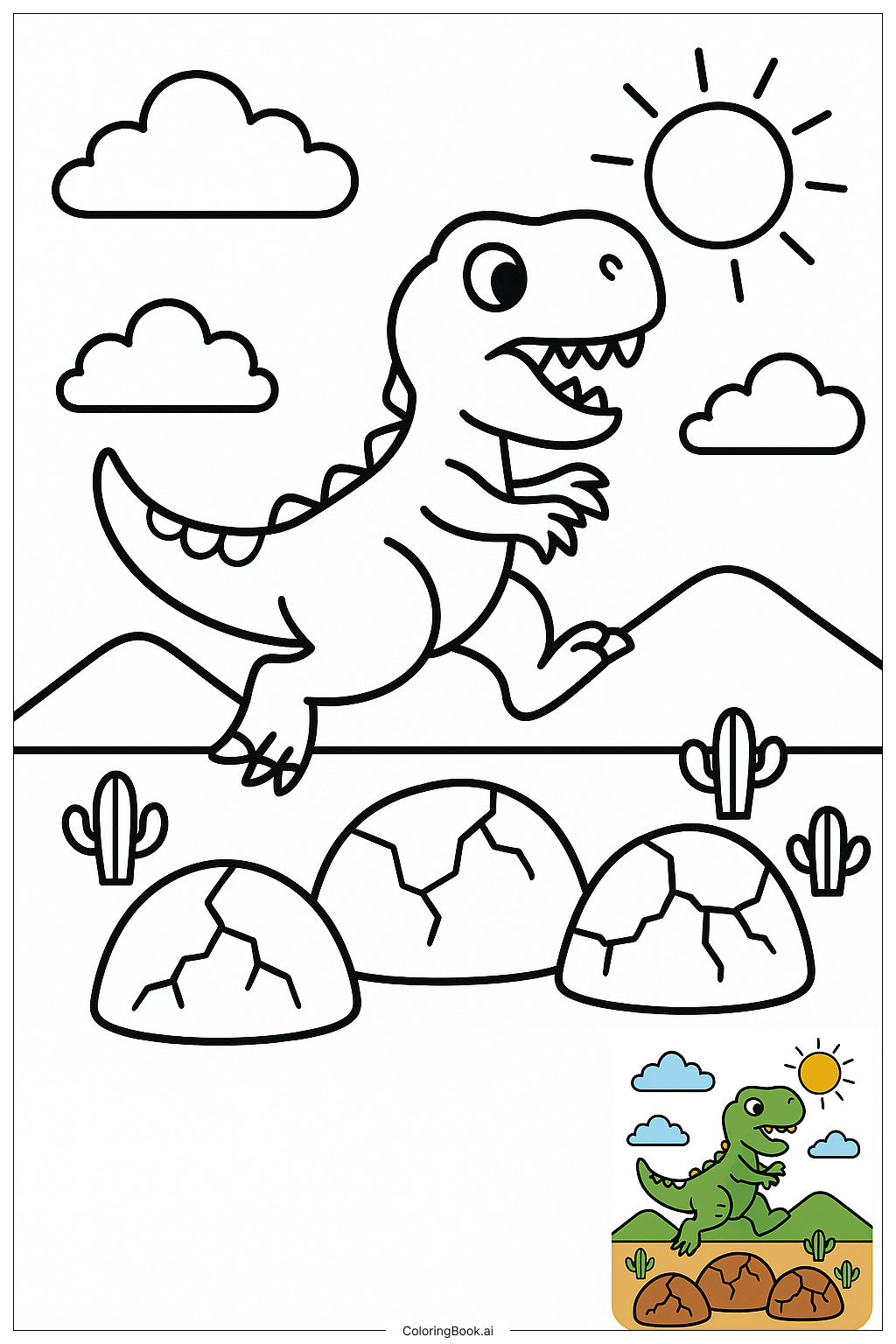
Coloring tips: How to color Dinosaur Jumping Over Rocks coloring page well?
Start with the dinosaur's body and pick a fun base color. Green is a classic choice, but you can try orange, blue, or even purple to make your dinosaur unique. Use a slightly darker shade of the same color for the belly, sides, and shaded areas to give the body depth. Add lighter highlights along the back and top of the head to show sunlight hitting the skin. For the rocks, use shades of gray, brown, or tan. Mix light and dark tones to make each rock look solid and three-dimensional. The grass and small plants look great in bright or dark green. Try yellow-green for areas catching sunlight and deeper green for shadows. Color the open mouth area pink or red on the inside, with white or light gray for the teeth. Feel free to use your imagination and give this dinosaur stripes, spots, or any pattern you like. There are no rules when it comes to coloring prehistoric creatures!
Coloring challenges: Which parts are difficult to color and need attention for Dinosaur Jumping Over Rocks coloring page?
• Dinosaur Body Shading: The dinosaur's large body has curved muscles and textured skin. Blending two or three shades smoothly across the body can be tricky, especially around the legs, belly, and tail. Take your time layering colors to avoid harsh lines and make the figure look rounded and full of life.
• Small Teeth and Mouth Details: The open mouth contains multiple small teeth and a tongue area packed into a tight space. Coloring each tooth individually without going outside the lines requires a fine-tipped tool and a steady hand. This section demands extra patience and focus, especially for younger colorists.
• Rock Texture and Variation: The scattered rocks come in different shapes and sizes. To make them look realistic, each rock needs at least two shades, a base tone and a darker shadow side. Keeping the shading consistent across all rocks while also making each one look slightly different is a fun but challenging task.
• Jumping Pose and Negative Space: Because the dinosaur is airborne, there is open space between its body and the rocks below. Deciding how to handle that background area, whether to leave it blank, add color, or create a sky, requires planning so the overall composition does not look empty or unfinished.
• Grass and Plant Details: Small tufts of grass and tiny plants fill the gaps between rocks. These fine details are easy to overlook but add a lot of charm to the finished piece. Coloring them neatly without accidentally coloring over the rock outlines takes careful attention and a sharp-pointed coloring tool.
Benefits of coloring books: Advantages of drawing Dinosaur Jumping Over Rocks coloring page
Coloring this dinosaur jumping scene brings a wonderful mix of fun and learning for kids of all ages. Staying inside the lines and switching between colors builds fine motor skills and hand-eye coordination in a natural, enjoyable way. Choosing colors for the dinosaur, rocks, and plants encourages creative thinking and helps children develop their own sense of style and artistic expression. Because the image includes a variety of textures, from scaly skin to rough rocks and soft grass, young colorists practice blending and shading techniques that strengthen their understanding of color and light. The exciting action pose of the jumping dinosaur also sparks imagination and storytelling, inspiring kids to invent names, personalities, and adventures for their prehistoric creation. Completing the full page builds patience and focus, giving children a satisfying sense of achievement when the artwork is done. For older kids and teens, experimenting with realistic color schemes or bold fantasy palettes offers a relaxing creative outlet that reduces stress and promotes mindfulness. Overall, this coloring page combines artistic skill-building with prehistoric fun, making it a rewarding activity for Boys and Girls alike.