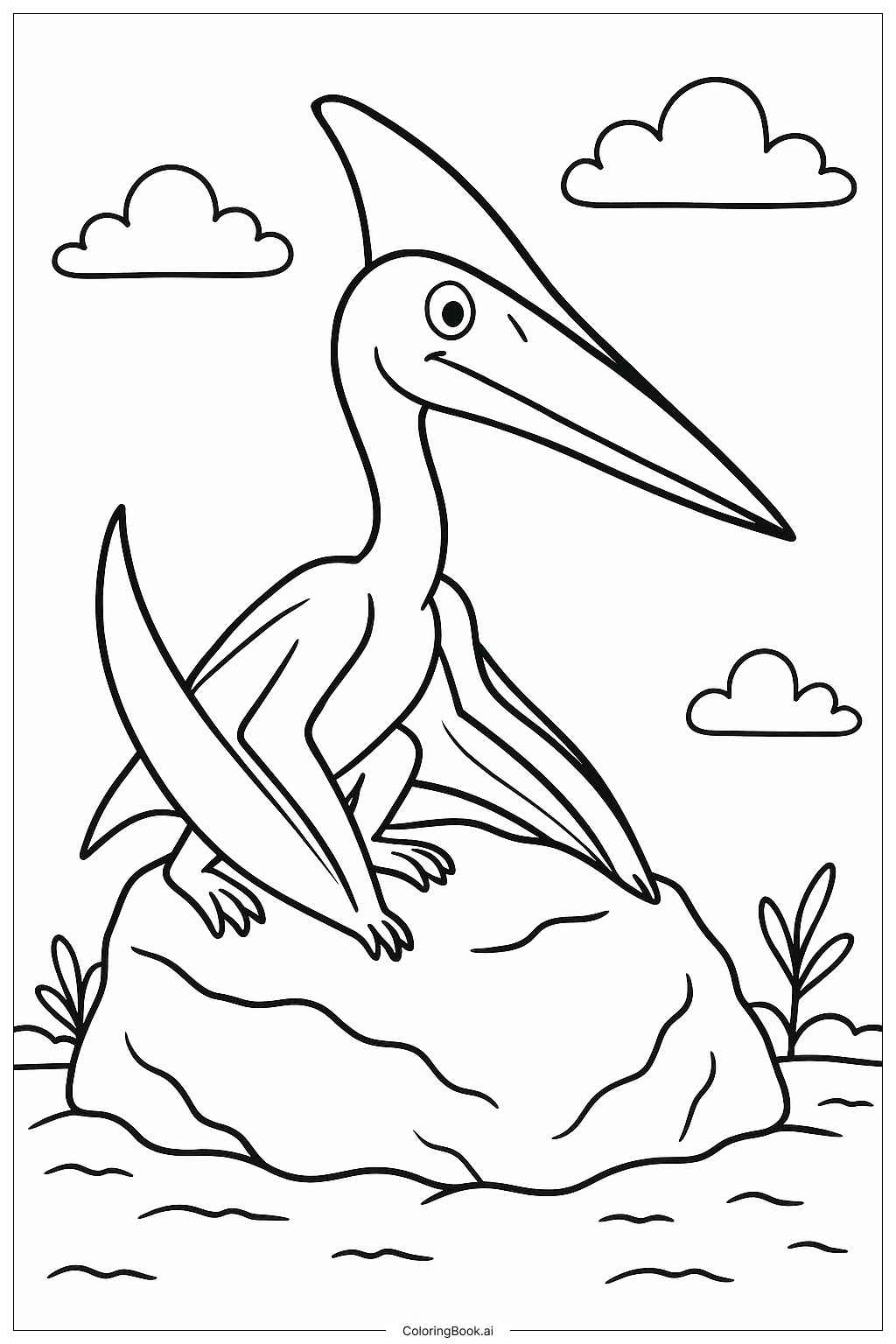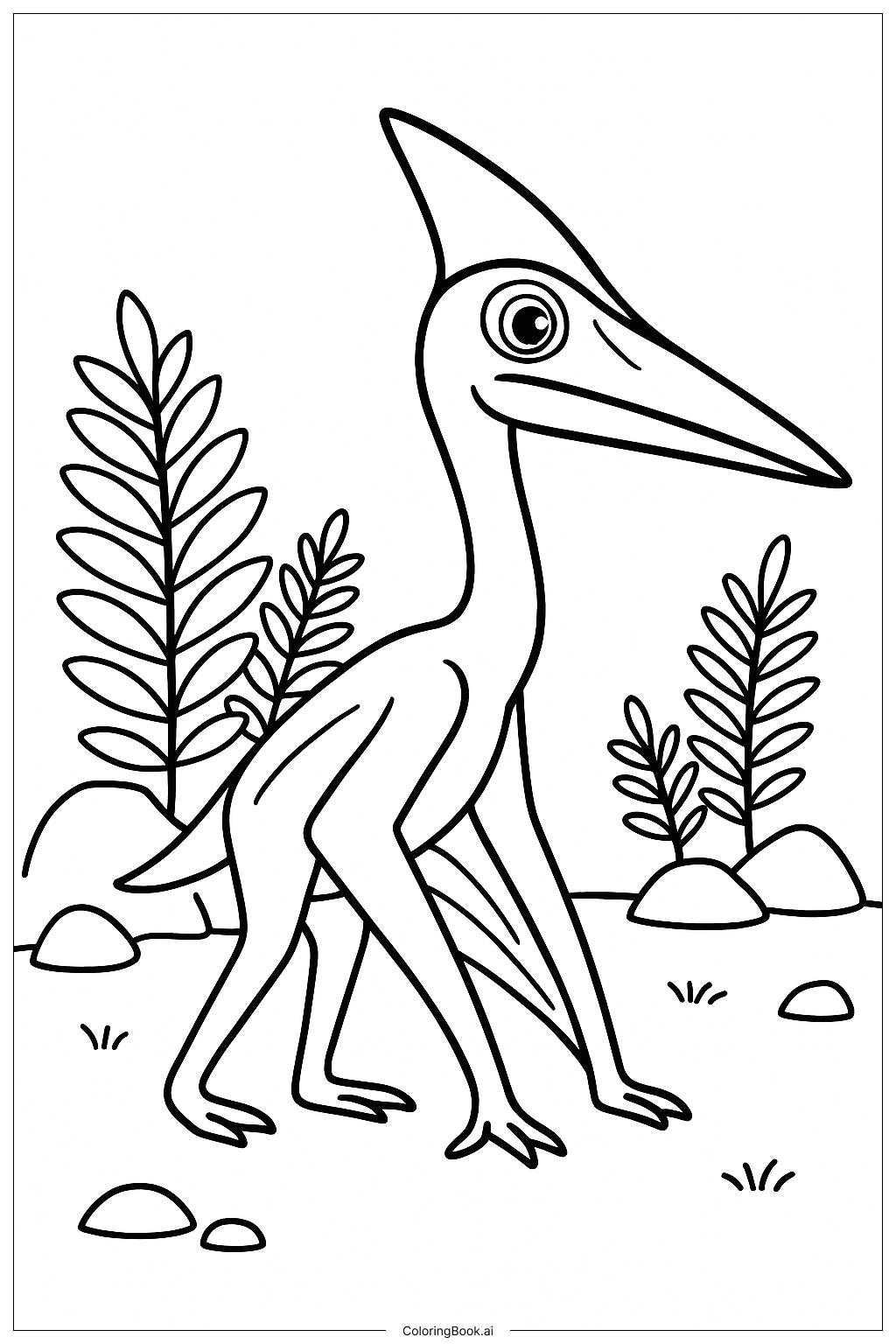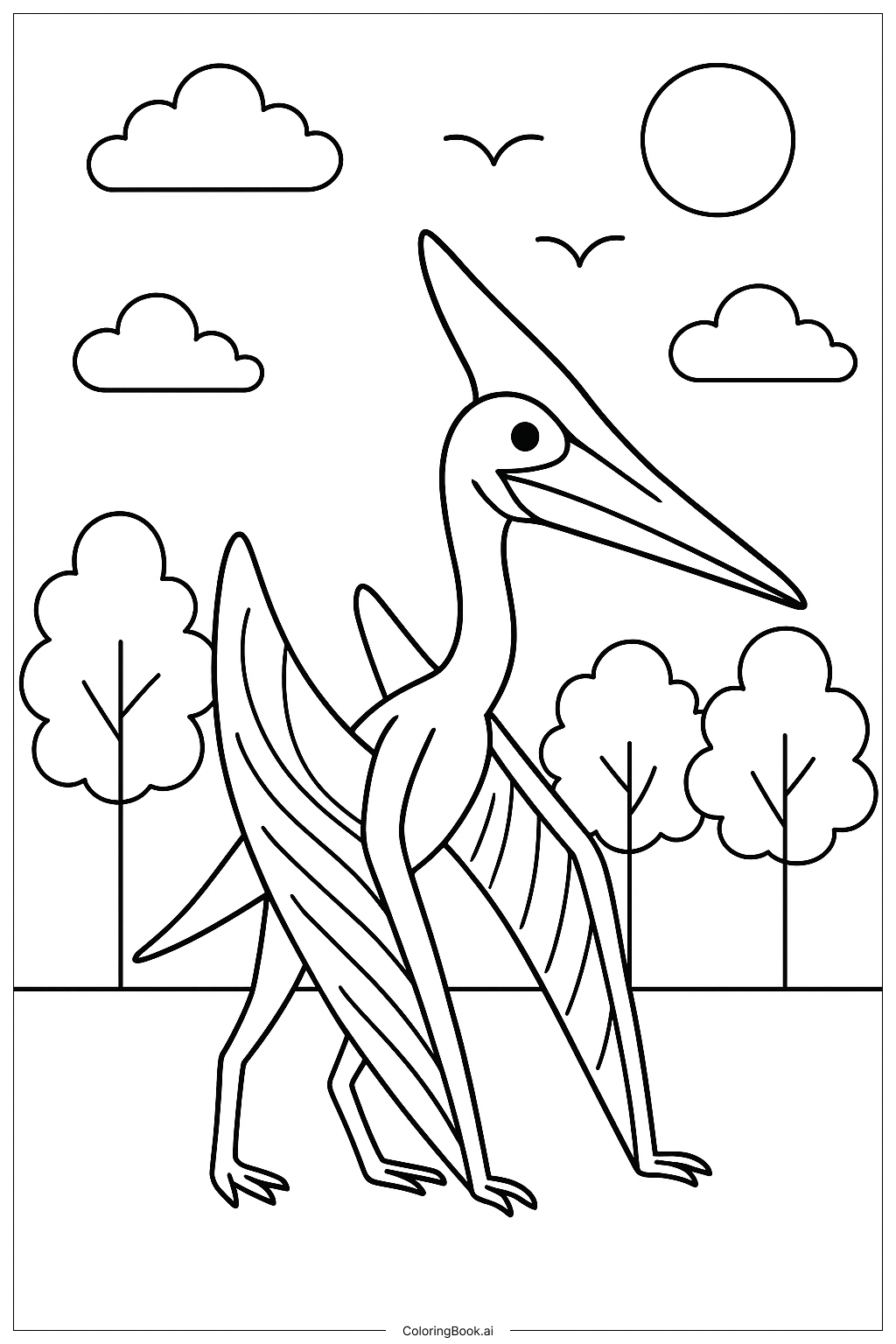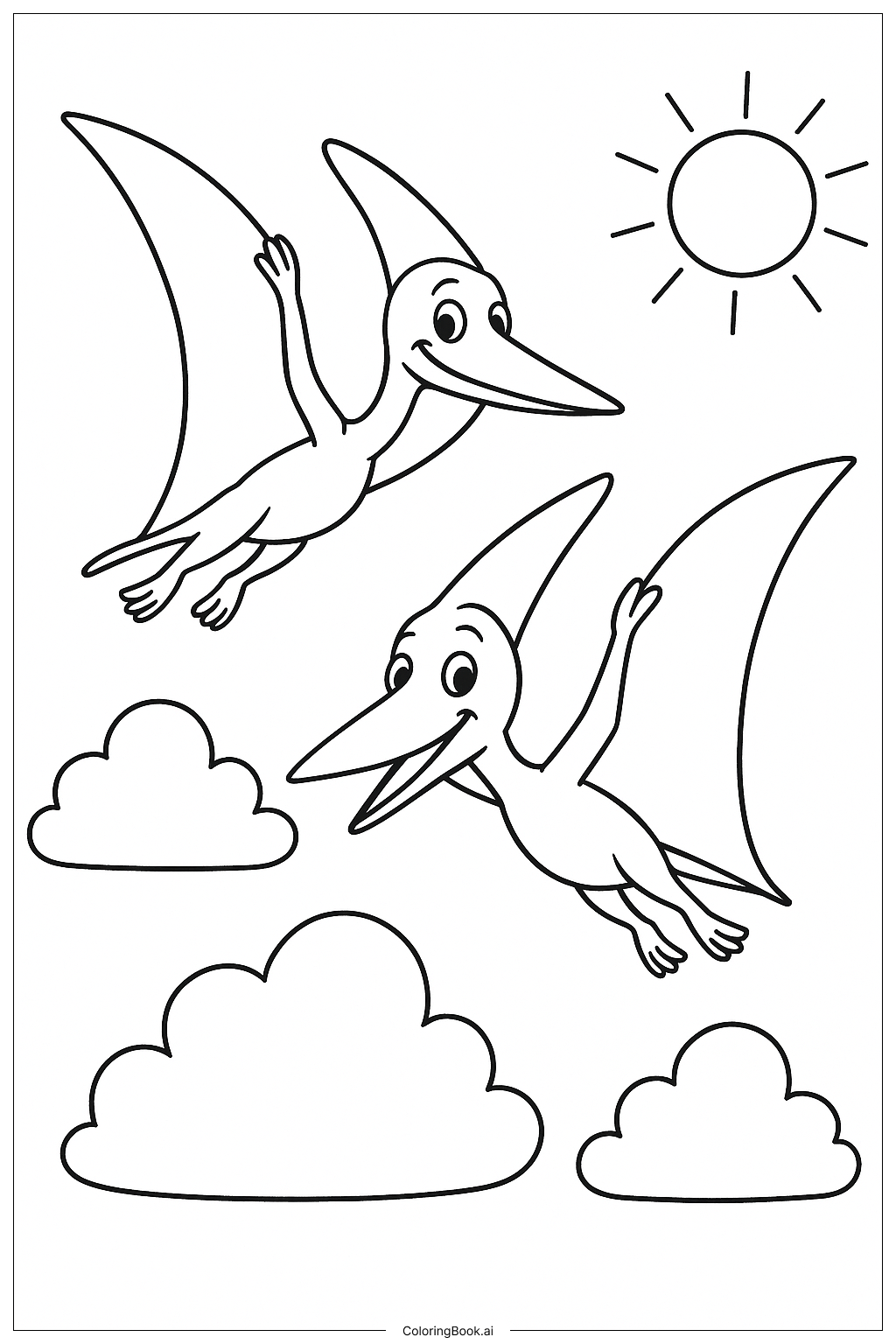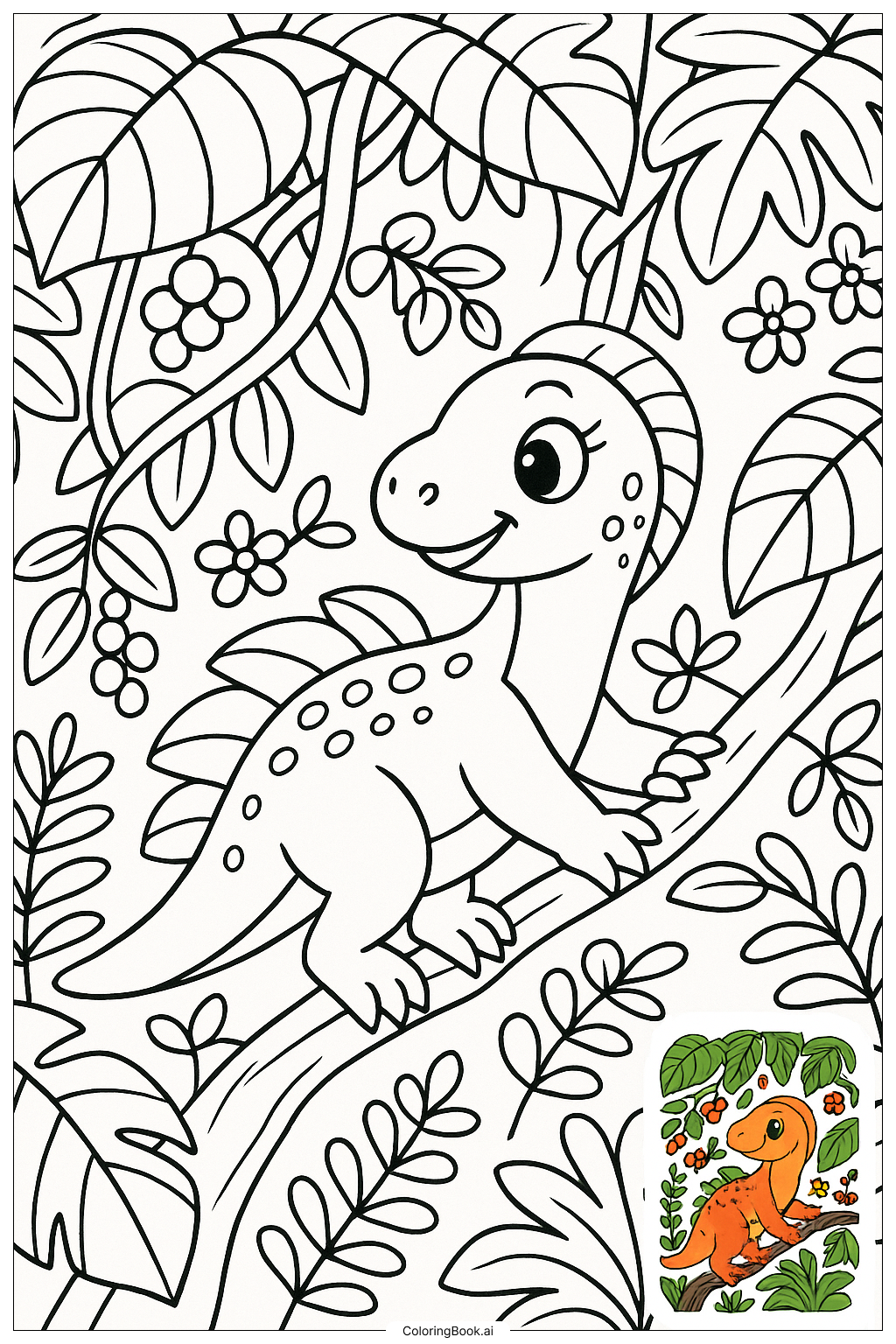
Coloring tips: How to color Dinosaur In Rainforest Canopy coloring page well?
Start with the dinosaur's body using shades of green, such as olive, forest green, and lime, to blend with its jungle surroundings. Add darker green or brown patches along the spine and tail for a realistic scale texture. Use a warm brown or tan for the belly area to create contrast. For the rainforest canopy, use many shades of green for the leaves, from pale yellow-green for sunlit areas to deep emerald for shadowed spots. Color the tree trunks and vines in brown, gray, and tan tones. Add small touches of orange, red, or yellow to suggest tropical flowers or exotic berries peeking through the leaves. Use soft blue or pale yellow where light streams through the canopy to bring the scene to life.
Coloring challenges: Which parts are difficult to color and need attention for Dinosaur In Rainforest Canopy coloring page?
• Dinosaur Scale Texture: The dinosaur's body is covered in overlapping scales and ridges. Coloring each scale individually takes time and patience. You need to shade from light to dark across the body to give it a rounded, three-dimensional look. Using multiple shades of the same color helps, but keeping the transitions smooth is tricky, especially for younger colorists.
• Layered Canopy Leaves: The rainforest canopy contains many leaves stacked on top of one another at different depths. Each layer needs a slightly different shade of green to separate it from the others. Without careful color choices, the leaves can blend together and look flat. Deciding which leaf is in front and which is behind requires close attention.
• Vine and Branch Detail: Twisted vines and branches weave throughout the scene, crossing over leaves and the dinosaur itself. Coloring these thin, winding lines without going outside the edges is a real challenge, particularly for small hands. Choosing the right brown or gray tones while keeping them distinct from the tree trunks adds another layer of difficulty.
• Light and Shadow Effects: The scene suggests sunlight filtering through the canopy from above. Recreating this effect means leaving some areas lighter and making others darker. Beginners may find it hard to decide where the light falls and how to blend colors to show depth and glow.
• Background Tree Detail: The tall trees in the background need to feel distant without losing their detail. Using lighter, less saturated colors for the background while keeping the foreground bright helps create depth, but this technique requires some practice and color control.
Benefits of coloring books: Advantages of drawing Dinosaur In Rainforest Canopy coloring page
Coloring this dinosaur in rainforest canopy scene offers a wonderful range of benefits for children and young artists. Working through the layers of jungle foliage builds focus and concentration, as young colorists must slow down and pay attention to each leaf and branch. Choosing from so many shades of green, brown, and gold sparks creativity and helps children develop a stronger understanding of color relationships. The detailed scale texture on the dinosaur encourages fine motor skill development, as careful, controlled strokes are needed to stay within small areas. This kind of precise hand movement also supports handwriting skills. Learning to use light and shadow to make the dinosaur look round and solid introduces basic artistic thinking in a fun, low-pressure way. The rainforest setting naturally sparks curiosity about nature, ecosystems, and prehistoric life, making the activity educational as well as enjoyable. Completing a complex, detailed scene builds confidence and a satisfying sense of achievement. For older kids and teens, the challenge of blending colors across the canopy and body can be genuinely relaxing, offering a creative escape from everyday stress. Overall, this image turns coloring into a rich, rewarding experience that nurtures both artistic skills and a love of the natural world.