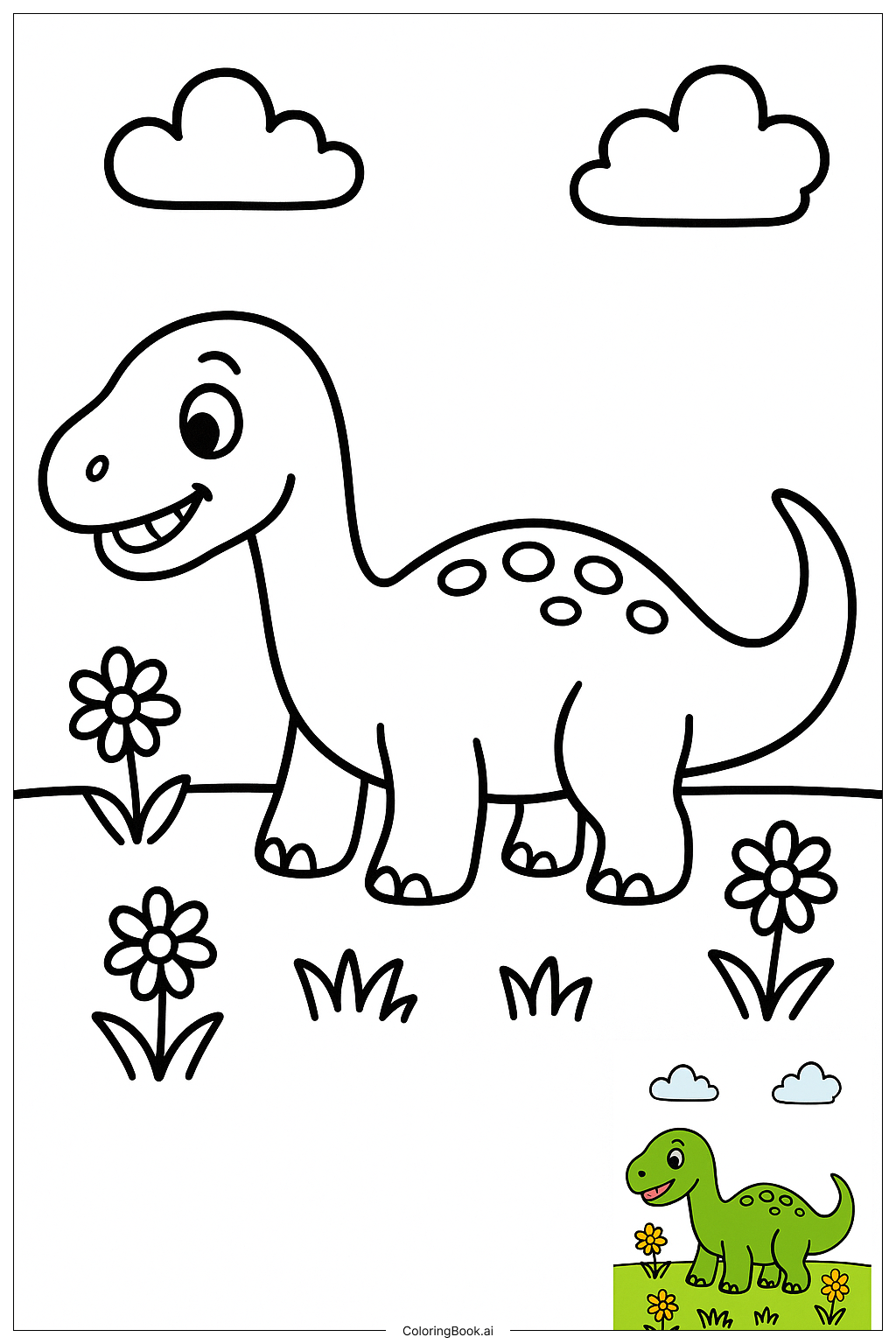
Coloring tips: How to color Dinosaur Grazing In Meadow coloring page well?
Start with the dinosaur's body using warm, earthy tones like olive green, mossy brown, or dusty teal. Add darker shading along the spine and belly to give the body a rounded, three-dimensional look. Use lighter shades on the underbelly and neck for contrast.
For the meadow, use several shades of green for the grass to show depth. Color the wildflowers in bright yellows, purples, and pinks to make the scene pop. The rolling hills in the background can be soft sage green or light blue-green.
Paint the sky in a gentle sky blue, and use white or very light gray for the clouds. The stream can be a soft blue or aqua tone with white highlights.
Add the butterflies in cheerful colors like orange, yellow, or red to bring extra life to the scene. Keep the overall palette bright and nature-inspired for a vibrant, joyful result. Kids can experiment freely with realistic or fantasy colors to make the dinosaur their own.
Coloring challenges: Which parts are difficult to color and need attention for Dinosaur Grazing In Meadow coloring page?
• Dinosaur Scale Texture: The dinosaur's body is covered in small, rounded scales and bumpy skin details. Coloring each section consistently without muddying the colors can be tricky. Take your time to stay within the lines and use a fine-tipped marker or colored pencil to fill in smaller scale areas carefully.
• Shading the Large Body: Because the dinosaur takes up a big portion of the image, creating smooth, even shading across such a large surface is a real challenge. Blending two or three shades of the same color family helps create a natural, rounded look. Work in one direction to keep the shading clean.
• Layered Meadow Depth: The meadow includes foreground grass, mid-ground flowers, and background hills all stacked together. Using lighter values for distant elements and richer, more saturated tones for close-up plants helps create a convincing sense of space. Without this contrast, the scene can look flat.
• Small Flower and Plant Details: The wildflowers and leafy plants have small petals and thin stems that require precision. Using a sharp pencil tip or a fine marker helps keep these tiny elements neat and colorful without accidentally blending into the surrounding grass.
• Sky and Cloud Gradients: Achieving a smooth gradient in the sky from deeper blue at the top to lighter near the horizon takes practice. Blending colored pencils or using a light wash technique with watercolor markers gives the best results. Leaving cloud edges soft rather than heavily outlined keeps them looking natural.
Benefits of coloring books: Advantages of drawing Dinosaur Grazing In Meadow coloring page
Coloring this peaceful dinosaur scene offers a wonderful mix of fun and learning for kids of all ages.
Focusing on staying inside the lines and choosing colors for different textures builds fine motor skills and hand control. These are important skills that support writing and everyday tasks.
The wide variety of elements in the image, from the dinosaur's scales to the flowers, grass, sky, and stream, encourages children to think about color relationships and how nature uses different shades together. This nurtures an early appreciation for art and the natural world.
The calm, gentle mood of the scene makes it a great activity for relaxation. Coloring has been shown to reduce stress and help children feel focused and settled. It gives kids a quiet, creative outlet away from screens.
For older children and adults, the challenge of shading, blending, and adding texture to the dinosaur's body turns this into a satisfying artistic exercise that builds confidence and patience.
The prehistoric theme also sparks curiosity about dinosaurs, encouraging kids to ask questions and explore topics like paleontology, nature, and ancient Earth. Learning and creativity go hand in hand with this engaging coloring page.