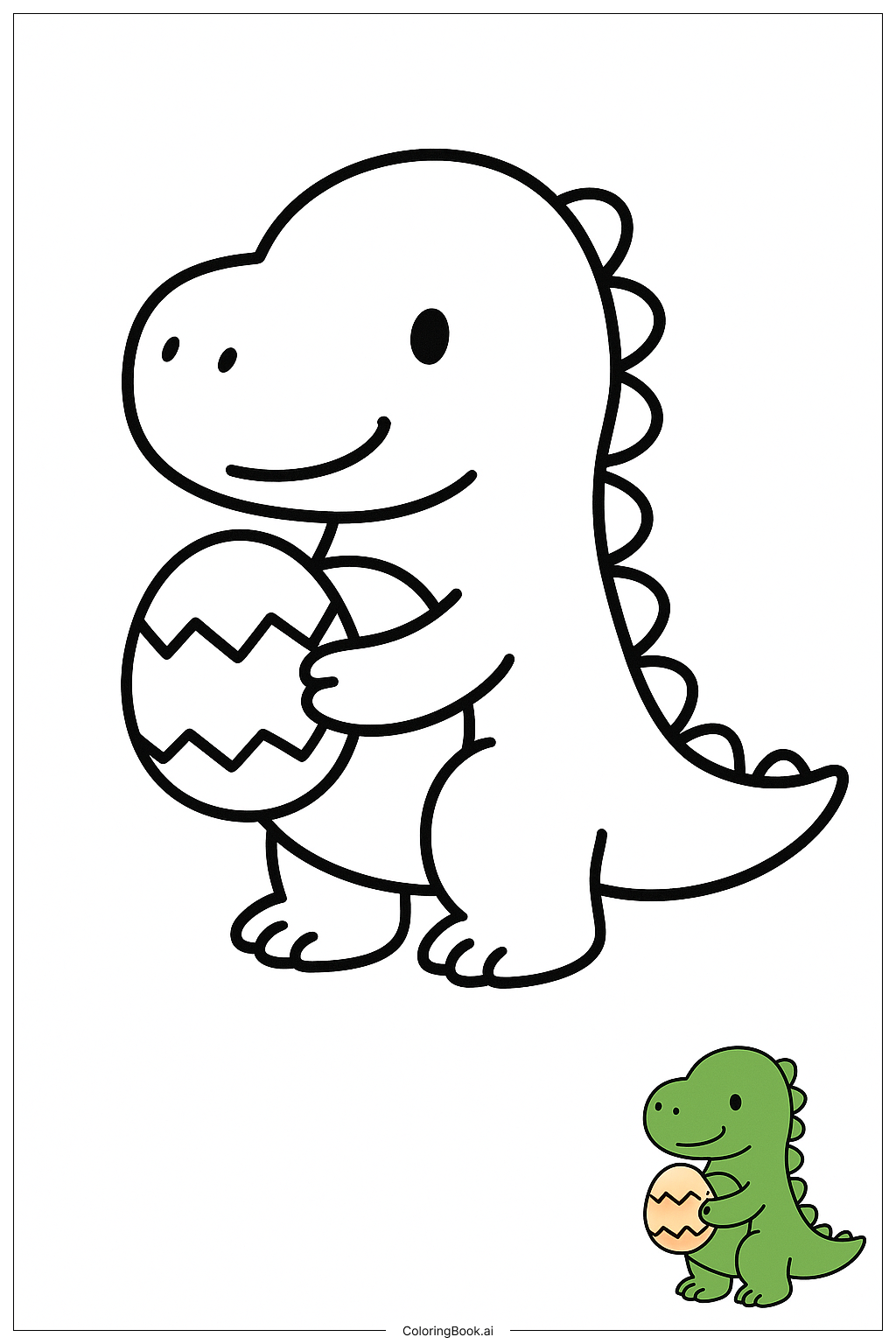
Coloring tips: How to color Dinosaur Finding Lost Egg coloring page well?
Start with the dinosaur's body using warm greens or earthy browns to give it a natural, prehistoric feel. You can add darker shades along the back and belly to create depth. Use sandy yellows or soft creams for the egg and the nest. Color the ferns and trees in different shades of green to make the jungle feel alive. Try using light brown or gray for the rocks to contrast with the bright plants. The sky in the background can be a soft blue or warm orange to set the mood. Don't be afraid to mix colors and use your imagination. There are no wrong choices here. Have fun and make your dinosaur unique.
Coloring challenges: Which parts are difficult to color and need attention for Dinosaur Finding Lost Egg coloring page?
• Dinosaur Scale Texture: The dinosaur's body is covered in detailed scales and skin patterns. Coloring each scale individually takes time and patience. Using small strokes and switching between light and dark shades will help bring out the texture naturally. Young colorists may find it easier to work in sections rather than all at once.
• Overlapping Plants and Leaves: The background is filled with ferns, leaves, and branches that overlap each other. It can be tricky to tell where one plant ends and another begins. Choosing contrasting colors for nearby plants helps separate them clearly. Taking your time to outline each leaf before filling it in makes the process easier.
• The Egg Hidden in Shadows: The lost egg is partially hidden behind rocks or foliage, creating shadowed areas around it. Capturing the difference between light and shadow on a round egg shape requires careful blending. Using a lighter color for the top of the egg and a darker tone for the bottom adds a realistic, three-dimensional look.
• The Nest Details: The nest is woven from many small twigs and dried grasses, creating a complex, layered surface. Coloring this area without making it look muddy means using several shades of brown, tan, and gold. Light strokes in different directions can mimic the natural woven texture.
• Background Depth: Creating a sense of distance in the rocky, forested background can be challenging. Objects farther away should be colored with lighter, cooler tones, while things in the foreground get richer, warmer colors. This technique, called atmospheric perspective, adds a feeling of space and depth to the whole scene.
Benefits of coloring books: Advantages of drawing Dinosaur Finding Lost Egg coloring page
Coloring this image offers a wonderful range of benefits for children and young artists. Following the dinosaur on its search for a lost egg sparks imagination and encourages storytelling. Kids naturally begin to wonder what happens next, building creative thinking skills along the way.
The detailed textures of the dinosaur's scales, the tangled plants, and the woven nest give young colorists plenty of practice with fine motor skills. Carefully staying within the lines and using controlled strokes strengthens hand-eye coordination over time.
The scene also introduces children to prehistoric nature, gently encouraging curiosity about dinosaurs, ancient plants, and how animals care for their young. This kind of learning through play makes education feel fun and natural.
Choosing colors for the landscape, the dinosaur, and the hidden egg encourages decision-making and boosts confidence. There are no wrong answers, so every child gets to feel proud of their finished artwork.
Finally, spending focused time on a coloring activity is a calming, meditative experience. It helps children slow down, concentrate, and find a moment of peaceful enjoyment in their day.