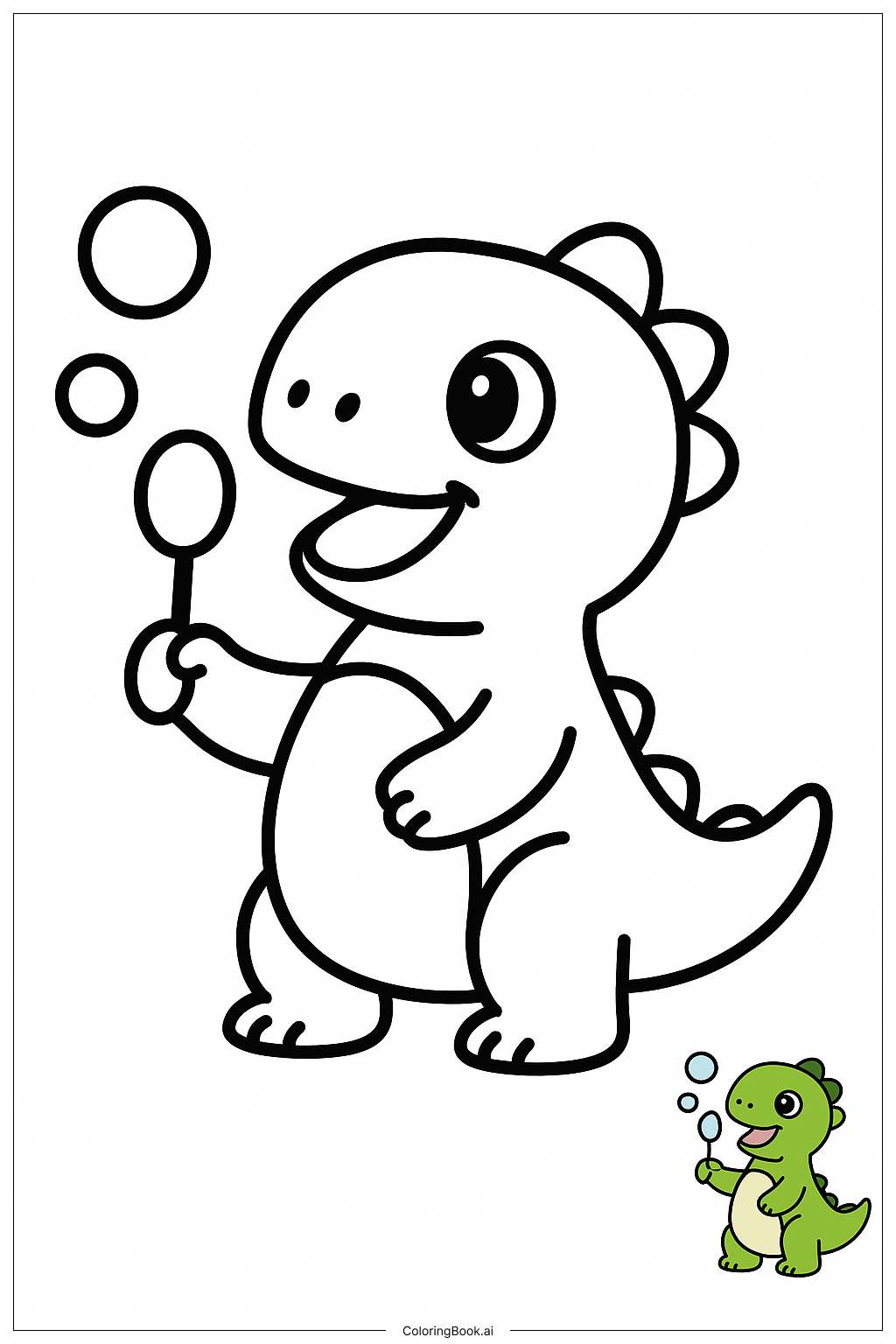
Coloring tips: How to color Dinosaur Blowing Bubbles coloring page well?
Start with the dinosaur's body using a bright green as your base color. You can add a slightly darker green to the scales along the back and tail to create depth. Use yellow or orange for the dinosaur's belly to give it a warm, fun contrast. For the bubbles, try light blue or lavender with a small white circle left uncolored in each one to mimic a shiny reflection — this makes them look realistic and magical. Color the grass with two shades of green, using a lighter tone for the top and a deeper shade at the base. The clouds can be soft white with a pale blue or gray shadow along the edges. Feel free to add rainbow colors inside the bubbles for extra fun. Encourage creativity by mixing unexpected colors — a purple dinosaur or pink bubbles can make the page truly unique and personal.
Coloring challenges: Which parts are difficult to color and need attention for Dinosaur Blowing Bubbles coloring page?
• Bubble Reflections: Each bubble needs to look round and transparent. Leaving a small white spot inside every bubble and blending light blue gently around the edges is tricky, especially for younger colorists. Keeping each bubble distinct without making them look flat requires patience and a light hand.
• Scale Texture on the Dinosaur: The dinosaur's back and tail are covered in small overlapping scales. Coloring each scale individually with slightly different shades of green adds depth but takes time and steady control. Using the same flat color throughout will make the scales disappear, so careful shading is needed.
• Color Blending on the Body: The dinosaur's rounded belly and limbs benefit from smooth color transitions. Blending from a lighter belly color to a darker body shade can be challenging, especially with crayons or colored pencils. Markers may bleed between sections if not used carefully.
• Grass and Background Layering: The grass at the bottom uses at least two different shades of green to look lush and natural. Coloring in consistent strokes to mimic the direction of grass blades while keeping the background clouds soft and airy requires coordination between different coloring tools.
• Fine Details Around the Face: The dinosaur's expressive eyes, puffed cheeks, and open mouth are small areas packed with detail. Coloring the eyes without going outside the lines, adding a subtle pink to the cheeks, and shading the inside of the mouth all require fine-tipped tools and a steady, careful approach.
Benefits of coloring books: Advantages of drawing Dinosaur Blowing Bubbles coloring page
Coloring this fun dinosaur page offers a wide range of benefits for children and creative minds alike. The playful subject matter — a dinosaur blowing bubbles — instantly sparks imagination and makes the activity enjoyable rather than feel like work. For younger children aged 4 to 8, staying within the lines of the scales, bubbles, and background helps build fine motor skills and hand-eye coordination. The variety of shapes and sizes in the image keeps the brain actively engaged throughout the coloring session. For older children and teens, experimenting with shading, blending, and color choices builds confidence in artistic decision-making. Choosing how to color the bubbles, for example, encourages creative thinking and problem-solving. The repetitive, focused nature of coloring also has a calming effect, helping to reduce stress and anxiety while improving concentration. Completing the full page gives a strong sense of accomplishment, which boosts self-esteem. Sharing the finished artwork with family or friends adds a social dimension that reinforces communication and pride in one's work. Overall, this coloring page is a joyful, educational, and therapeutic activity suitable for a wide age range.