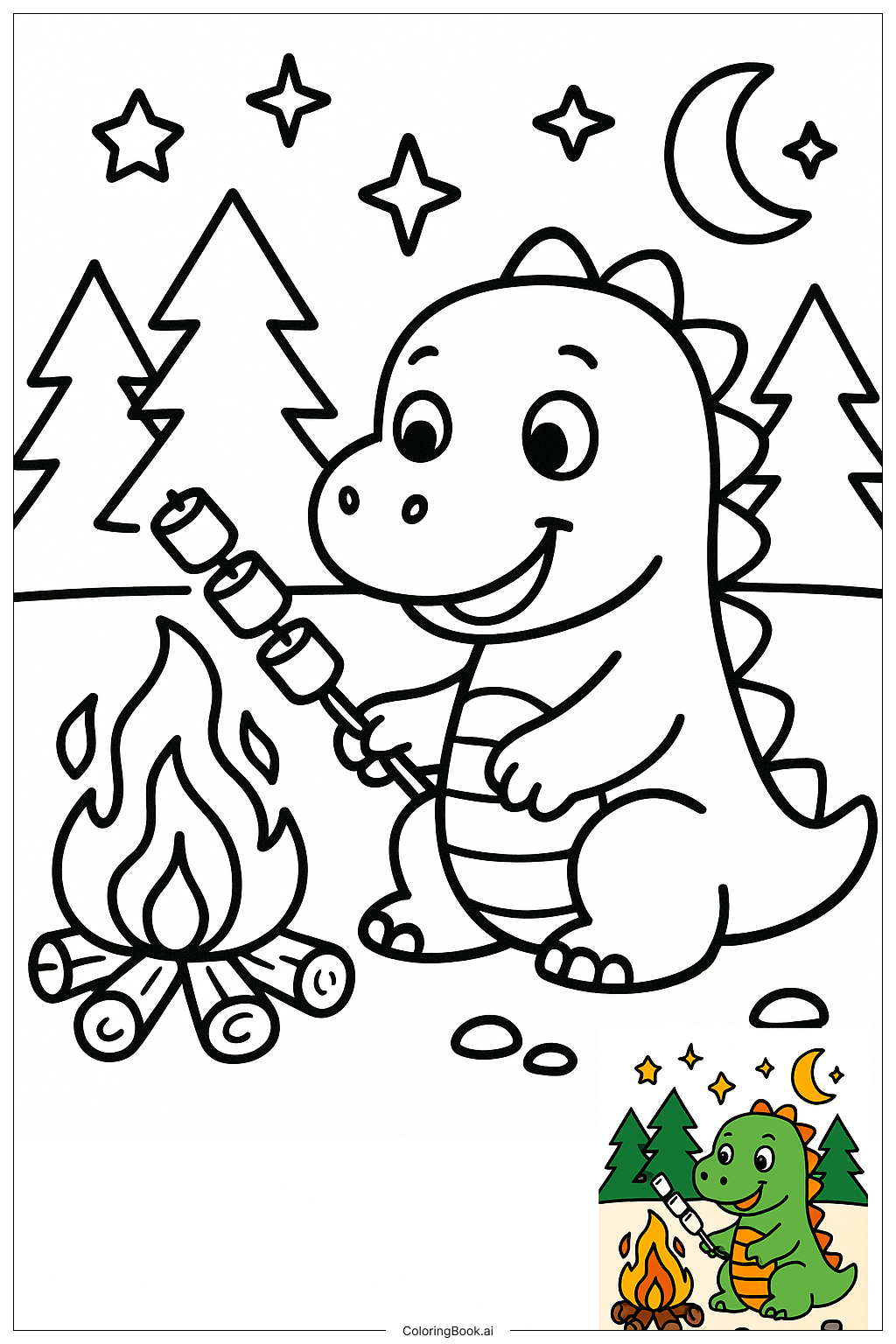
Coloring tips: How to color Dinosaur At Campfire coloring page well?
Start with the dinosaur's body. Use green shades for its skin — bright green for the top and a lighter or yellow-green for the belly. Add darker green lines to show scales or texture. For the campfire, use red and orange for the flames. Add yellow near the center where the fire is hottest. Color the logs brown with dark brown shadows underneath. Paint the rocks gray with light and dark patches to make them look real. Use dark green and brown for the trees and bushes in the background. Try a deep blue or purple for the night sky. Add white or light yellow dots for stars. Keep the ground earthy with tan or brown tones. Use warm colors near the fire to show the glow it gives off. Have fun mixing shades to make the scene feel alive and cozy.
Coloring challenges: Which parts are difficult to color and need attention for Dinosaur At Campfire coloring page?
• Campfire Flames: The flames have layered shapes that need multiple warm colors — red, orange, and yellow. Blending these colors smoothly without making them look muddy can be tricky. The key is to work from the outer edges inward, placing red on the outside, orange in the middle, and yellow at the core. Young colorists may find this transition challenging but rewarding.
• Dinosaur Skin Texture: The dinosaur's body may include scale patterns or ridged outlines. Filling these small sections with consistent color takes patience. Using a sharp colored pencil or a fine-tipped marker helps stay within the lines. Choosing two or three shades of green and alternating them across the scales can create a realistic and eye-catching look.
• Background Depth: The trees, bushes, and rocks in the background need to look further away than the main characters. This means using slightly muted or darker shades for distant elements. Getting this sense of depth is a more advanced technique that challenges older or more experienced colorists.
• Campfire Glow Effect: One of the hardest details is showing the warm glow of the fire on nearby objects — like the dinosaur's face and the surrounding ground. Lightly adding orange or yellow tones to areas close to the fire can create this effect, but it requires a gentle hand and careful layering.
• Small Detail Areas: Some sections like the logs, rocks, or smaller plant leaves have tight outlines. These areas require fine tools and steady hands to color neatly, especially for younger children still developing motor control.
Benefits of coloring books: Advantages of drawing Dinosaur At Campfire coloring page
Coloring this dinosaur campfire scene offers a wide range of benefits for children and young learners. First, it builds fine motor skills. Staying inside the lines and controlling a pencil or crayon strengthens the small muscles in the hands and fingers, which supports writing development. Second, it encourages creative thinking. Choosing colors for the dinosaur, fire, and forest setting lets kids make their own artistic decisions and express their imagination freely. Third, it teaches color mixing and contrast. Learning how to blend warm fire colors or cool night sky tones introduces basic art concepts in a playful way. Fourth, it supports focus and patience. Completing a detailed scene like this one requires sustained attention, which helps children practice sitting still and working toward a goal. Fifth, it creates a calming, screen-free activity. Coloring is known to reduce stress and anxiety in both children and Adults, making it a healthy and enjoyable way to relax. Finally, the fun dinosaur and campfire theme sparks curiosity about nature, prehistoric animals, and outdoor adventure, making learning feel exciting and imaginative.