Coloring tips: How to color Dia De Los Muertos Skeleton Marching Band coloring page well?
Start with the skeletons' bones using a clean white or soft ivory tone to make them stand out. Then work on the costumes with bold, traditional Dia De Los Muertos colors like deep purple, bright orange, vivid pink, and rich red. Use golden yellow for the marigold flowers and decorative trim on jackets and hats. Color the sugar skull face designs with contrasting hues like turquoise, magenta, and lime green so they pop. For the instruments, try shiny brass tones like gold and bronze. Add warm orange and yellow to the background marigold garlands. Use bright contrasting shades for the musical notes floating in the air. Let kids experiment freely with colors since this holiday is all about joy and vibrance. There are no wrong color choices here. Encourage layering lighter colors first, then adding deeper shades for richness. Mixing warm and cool tones throughout the page will keep the overall composition lively and festive.
Coloring challenges: Which parts are difficult to color and need attention for Dia De Los Muertos Skeleton Marching Band coloring page?
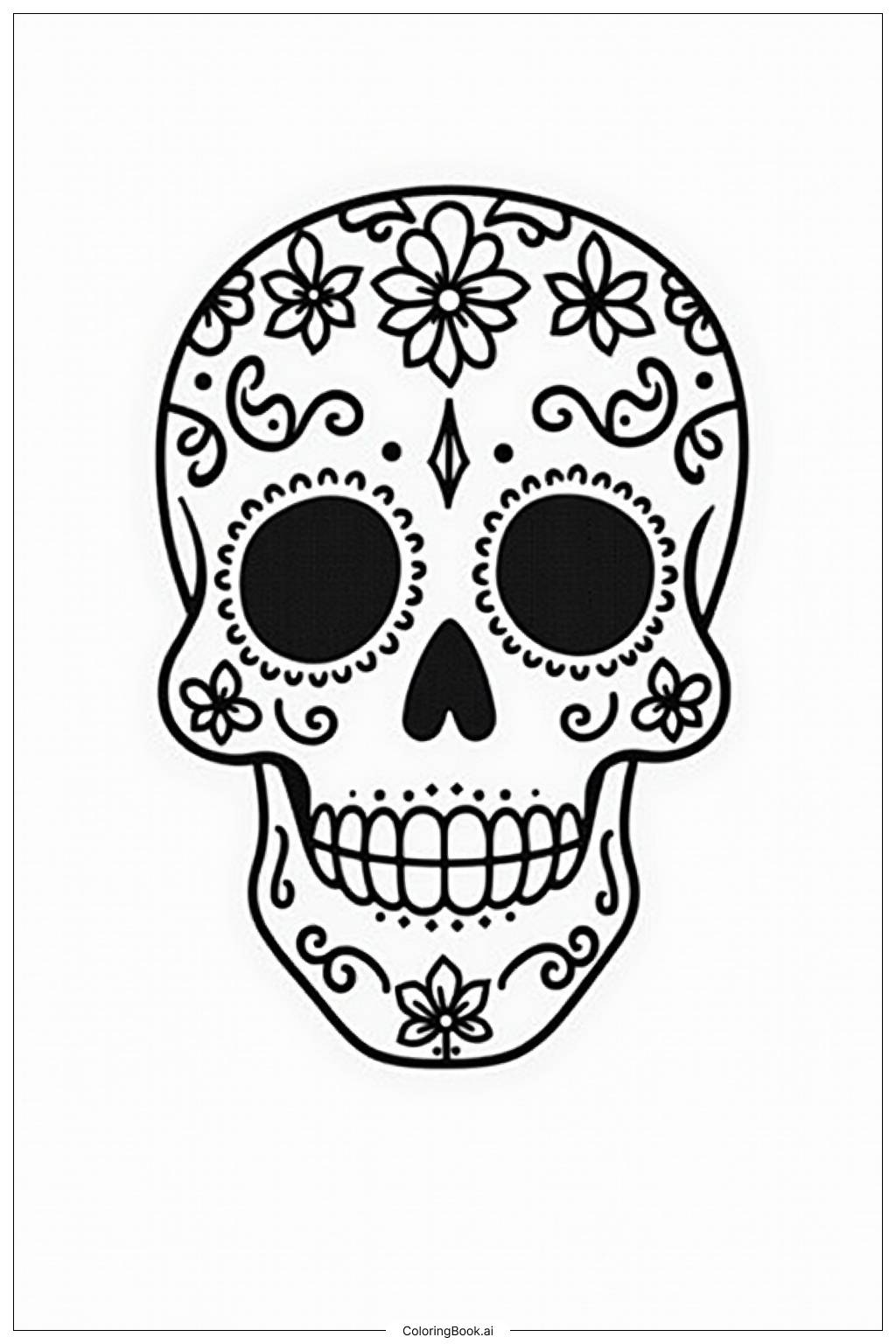
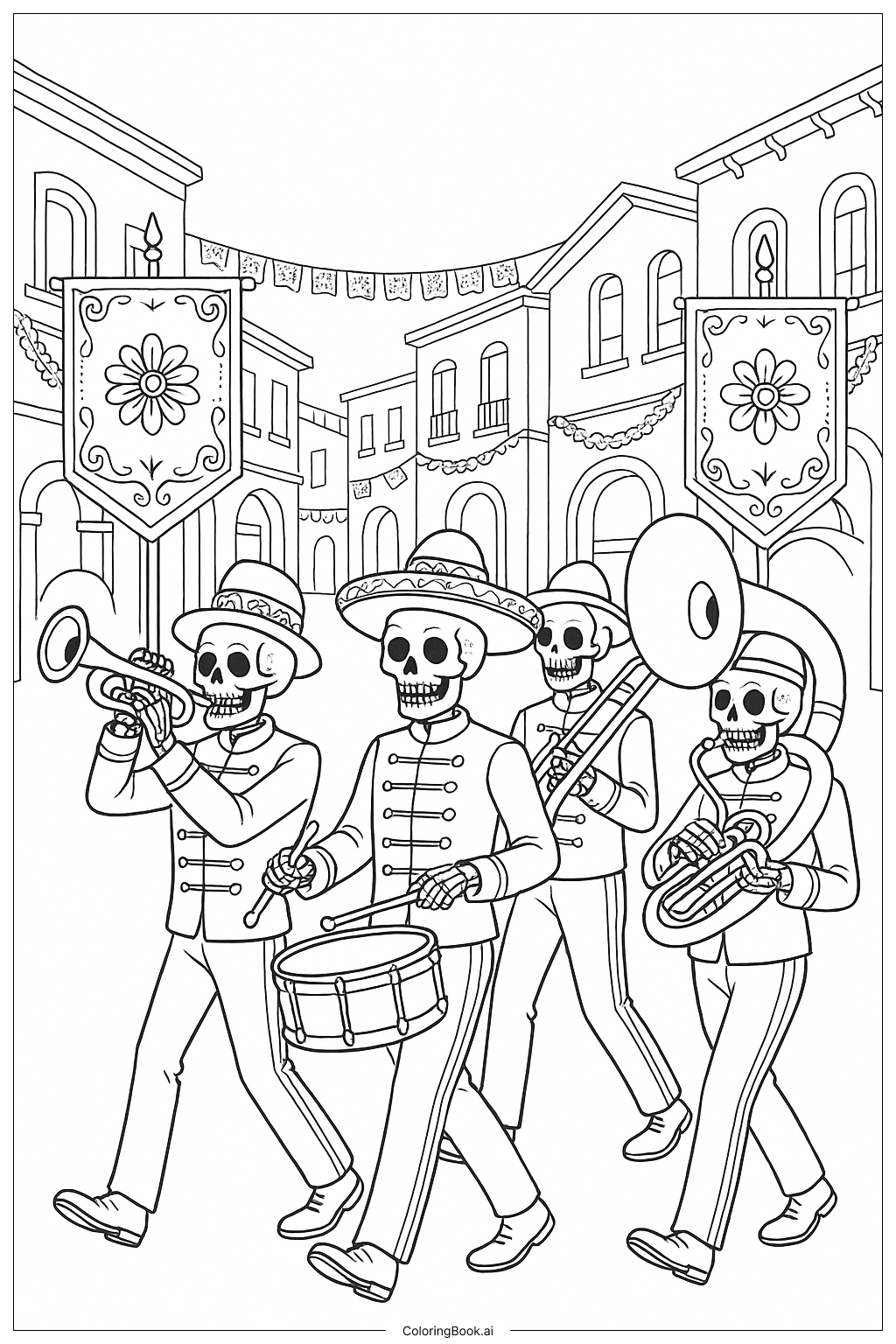
• Sugar Skull Face Details: The skeletal faces are decorated with intricate sugar skull patterns including small flowers, swirls, and geometric shapes around the eye sockets and cheekbones. These tiny designs require a fine-tipped marker or colored pencil to fill in accurately without bleeding into neighboring areas. Young children may find it helpful to outline each section carefully before adding color.
• Costume Embroidery Patterns: Each skeleton wears a richly decorated jacket and hat covered in detailed floral and geometric embroidery patterns. These overlapping elements are closely packed together, making it tricky to color each one separately. Using sharp pencil tips and working slowly section by section will help keep the details clean and distinct.
• Instrument Shading: The musical instruments like trumpets, trombones, and drums have curved surfaces that benefit from shading to look realistic and three-dimensional. Blending lighter and darker tones of gold, bronze, or silver takes practice and patience, and may be challenging for younger colorists who are still developing fine motor skills.
• Overlapping Figures and Layers: Several skeletons are positioned close together or slightly overlapping in the marching formation. Deciding which figure is in front and applying depth through color contrast requires spatial thinking. Using lighter shades for background figures and bolder shades for foreground ones helps create visual depth.
• Background Floral Elements: The background is filled with marigold garlands, banners, and floating musical notes. Coloring these without making the scene feel cluttered takes careful color planning. Choosing a limited palette for the background helps the main figures remain the visual focus of the page.
Benefits of coloring books: Advantages of drawing Dia De Los Muertos Skeleton Marching Band coloring page
Coloring this Dia De Los Muertos Skeleton Marching Band page offers a wonderful mix of creative, educational, and developmental benefits for children of all ages. The rich cultural imagery introduces kids to the traditions and visual symbols of Dia De Los Muertos in a fun and engaging way, sparking curiosity about world cultures and heritage.
The detailed patterns on costumes and sugar skull faces help children develop fine motor skills and hand-eye coordination as they practice staying within lines and filling small spaces with care. This kind of focused work also builds patience and concentration.
Choosing colors for the vibrant festival scene encourages creative thinking and color theory awareness. Kids learn how contrasting colors create energy and how warm tones evoke celebration and warmth.
The festive and joyful nature of the image makes coloring a positive emotional experience. It can be calming and stress-relieving while also sparking excitement and pride when the finished page comes to life with color.
For older children and adults, the intricate detail provides a satisfying challenge that promotes mindfulness and a sense of accomplishment. Sharing the completed artwork can also become a meaningful way to learn about and honor cultural traditions together as a family or classroom.