Coloring tips: How to color Dia De Los Muertos Marigold Flower coloring page well?
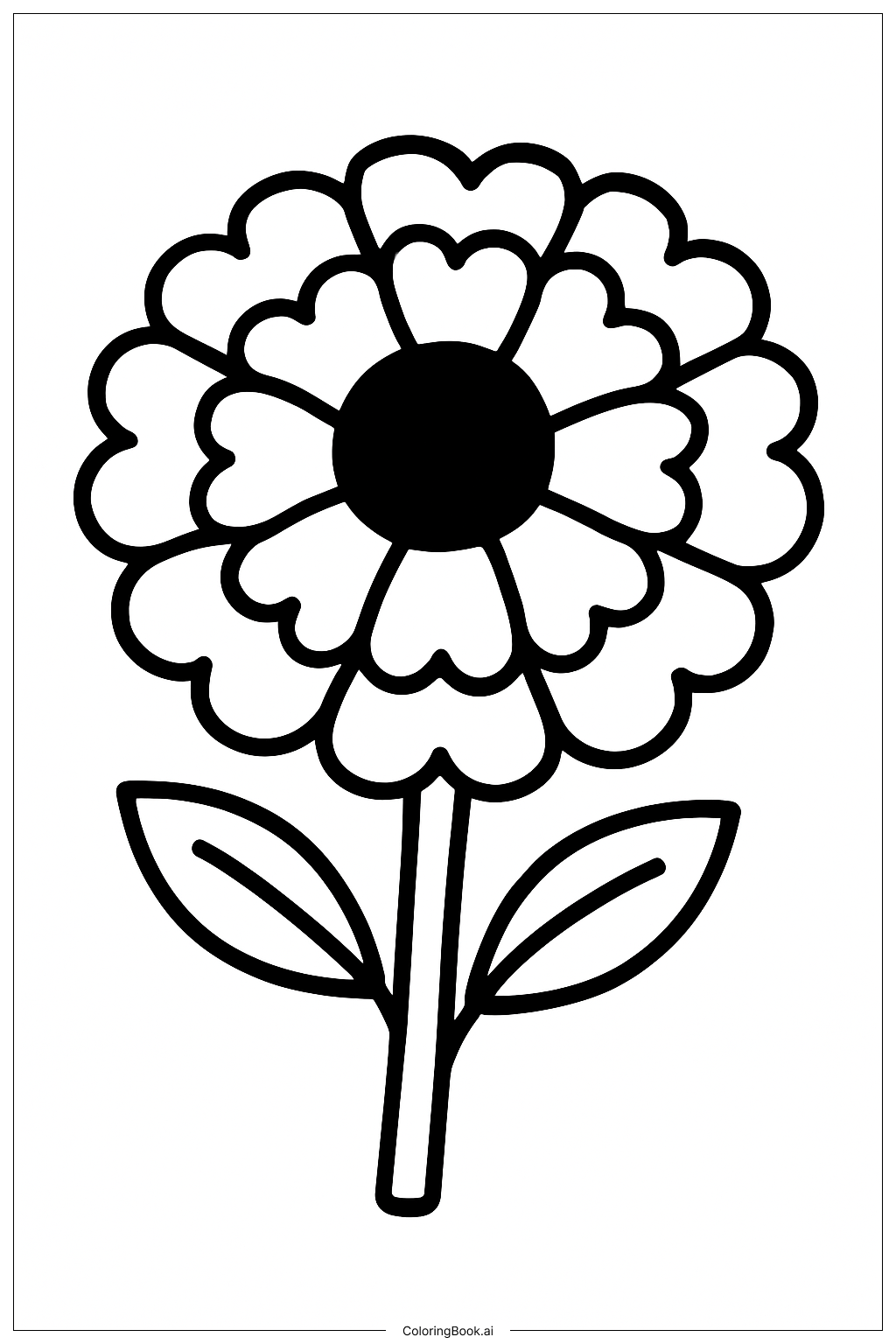
For coloring this marigold flower, use bright orange and yellow shades for the petals to mimic the real marigold flower. You can alternate the petals in orange and yellow to create a lively and colorful look. The center circle can be colored dark brown or black to make the flower stand out. For the stem and leaves, use different shades of green. Try using a darker green for the stem and a lighter green for the leaves to add contrast. Feel free to add shading by coloring lightly in some areas and darker in others. You can also experiment with blending the colors smoothly for a more natural effect. Don’t hesitate to use crayons, markers, or colored pencils to find your favorite way to color!
Coloring challenges: Which parts are difficult to color and need attention for Dia De Los Muertos Marigold Flower coloring page?
1. Petal shapes: The flower petals have curved, heart-like edges which can be tricky for younger children to color neatly inside the lines. 2. Alternating colors: If kids want to color the petals in alternating colors, they need to plan carefully to keep the pattern consistent. 3. Center circle: The small center circle needs precise coloring to avoid going outside the black outline. 4. Leaf veins: Coloring the veins inside the leaves clearly without mixing colors might be challenging due to their small size. 5. Stem and leaves contrast: Using different shades of green for the stem and leaves requires some color blending skills, which might be hard for beginners.
Benefits of coloring books: Advantages of drawing Dia De Los Muertos Marigold Flower coloring page
Coloring this marigold flower helps children improve their fine motor skills as they carefully fill in the petals and leaves. It also encourages creativity by letting them choose bright and cheerful colors, reflecting the happy spirit of Dia De Los Muertos. Following a color pattern can teach kids about planning and order, boosting their cognitive skills. Coloring inside the lines builds hand-eye coordination and concentration. Overall, this activity is fun and educational, making it a perfect way to learn about culture while practicing art.