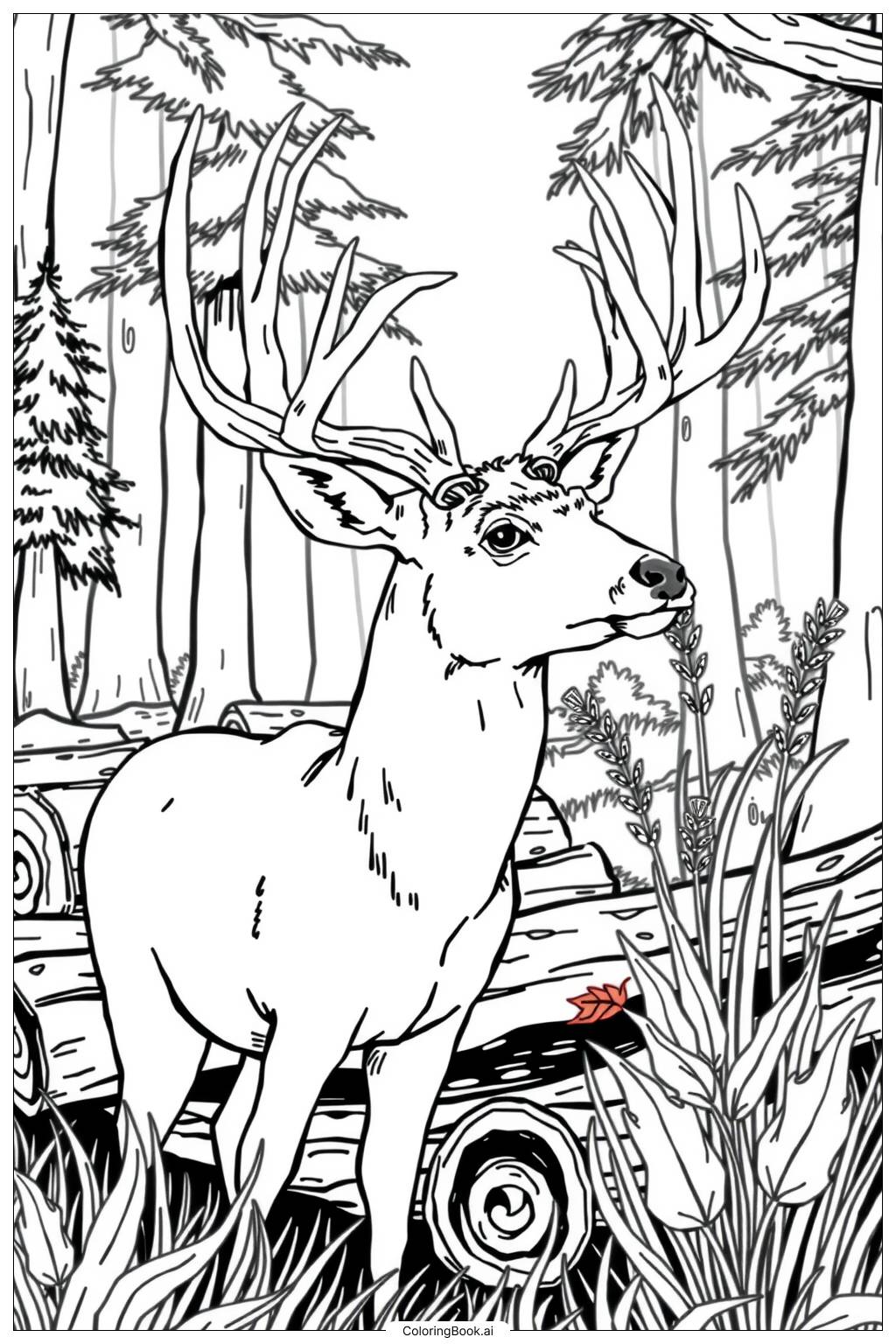
Coloring tips: How to color Whitetail Deer Buck-2 coloring page well?
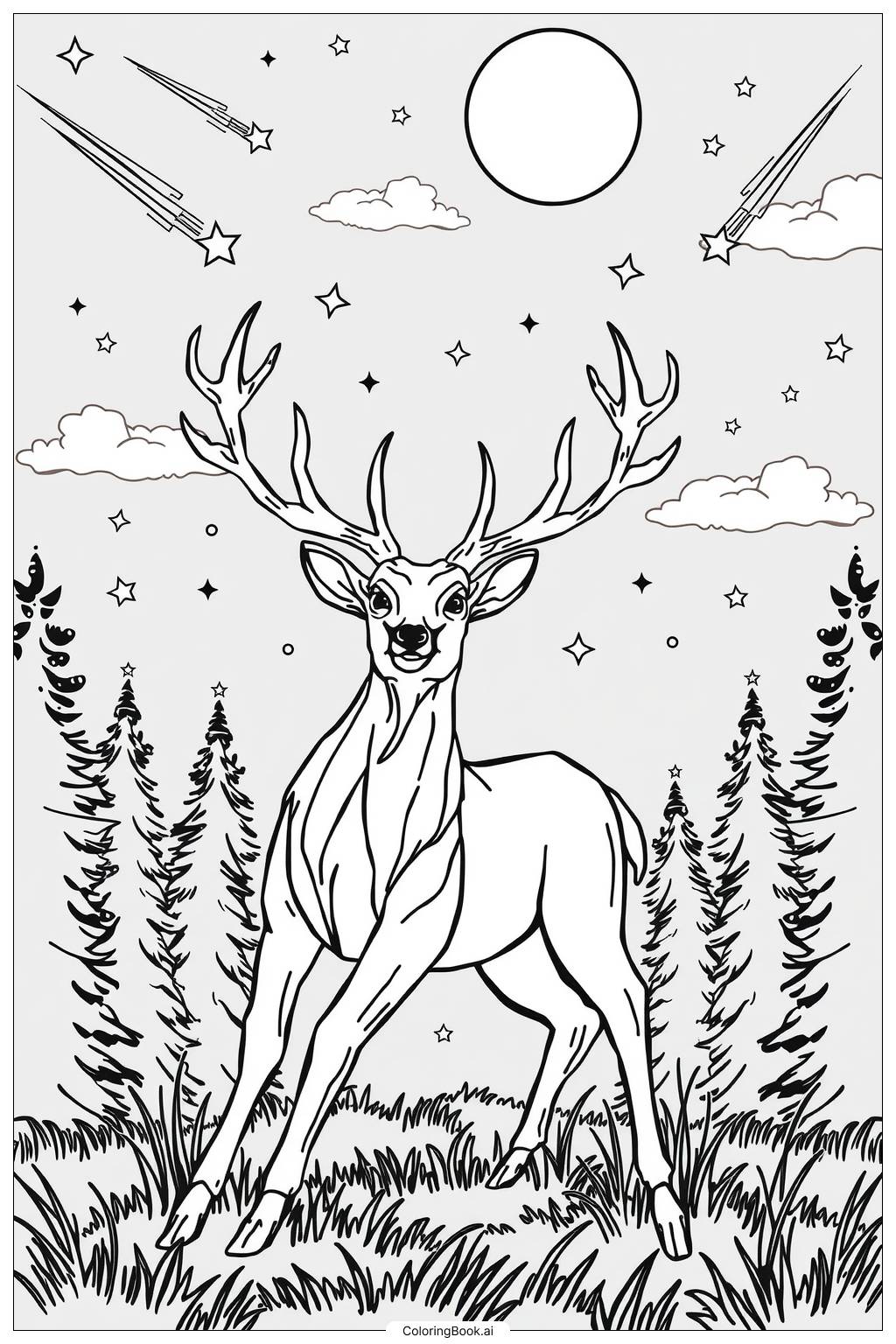
To color this Whitetail Deer buck, start with warm earthy tones for the body such as shades of brown, tan, and cream to represent the deer’s natural fur color. You can use darker browns or even touches of gray for the shadows under the neck and belly to add depth. Color the antlers with a medium gray or light brown, highlighting their texture with subtle shading. For the background, try soft greens and yellows for grasses and light blues for the sky through the trees. Feel free to add some autumn tones like oranges or reds in the foliage to give a seasonal feel. Use colored pencils or crayons that allow layering to achieve smooth blends between light and shadow areas, bringing the deer to life.
Coloring challenges: Which parts are difficult to color and need attention for Whitetail Deer Buck-2 coloring page?
• Antler Details: The many branches of the antlers require careful coloring to keep the lines clear and avoid smudging, which can be tricky for younger colorers. Staying within thin sections means paying attention to fine motor skills. • Fur Texture: Showing the sleekness of the buck’s fur involves blending colors smoothly. Creating a soft gradient from lighter to darker tones to reflect light and shadow can challenge beginners. • Facial Features: The deer’s face contains delicate details like the eyes, nose, and ears. Coloring these small areas precisely helps convey expression but needs good control and patience. • Background Elements: The grasses and trees behind the deer are less detailed but require balanced color choices so they do not overpower the subject. Coordinating colors between the background and the deer can be complex but important for harmony. • Layering Colors: Achieving realistic effects on the deer’s coat and antlers is easier with layering techniques that may require multiple coloring passes, which can test endurance and focus especially for younger artists.
Benefits of coloring books: Advantages of drawing Whitetail Deer Buck-2 coloring page
Coloring this Whitetail Deer buck helps develop concentration and hand-eye coordination as colorers focus on details like the antlers and facial expressions. It encourages creativity in choosing natural colors and experimenting with shading to make the deer look lifelike. The image promotes observation skills as children compare their coloring to the real colors of a Whitetail Deer in nature. Engaging with this picture also nurtures patience and fine motor skills through controlled strokes on small areas. Furthermore, coloring animals fosters a connection to wildlife and builds appreciation for the outdoors, making the experience both relaxing and educational.