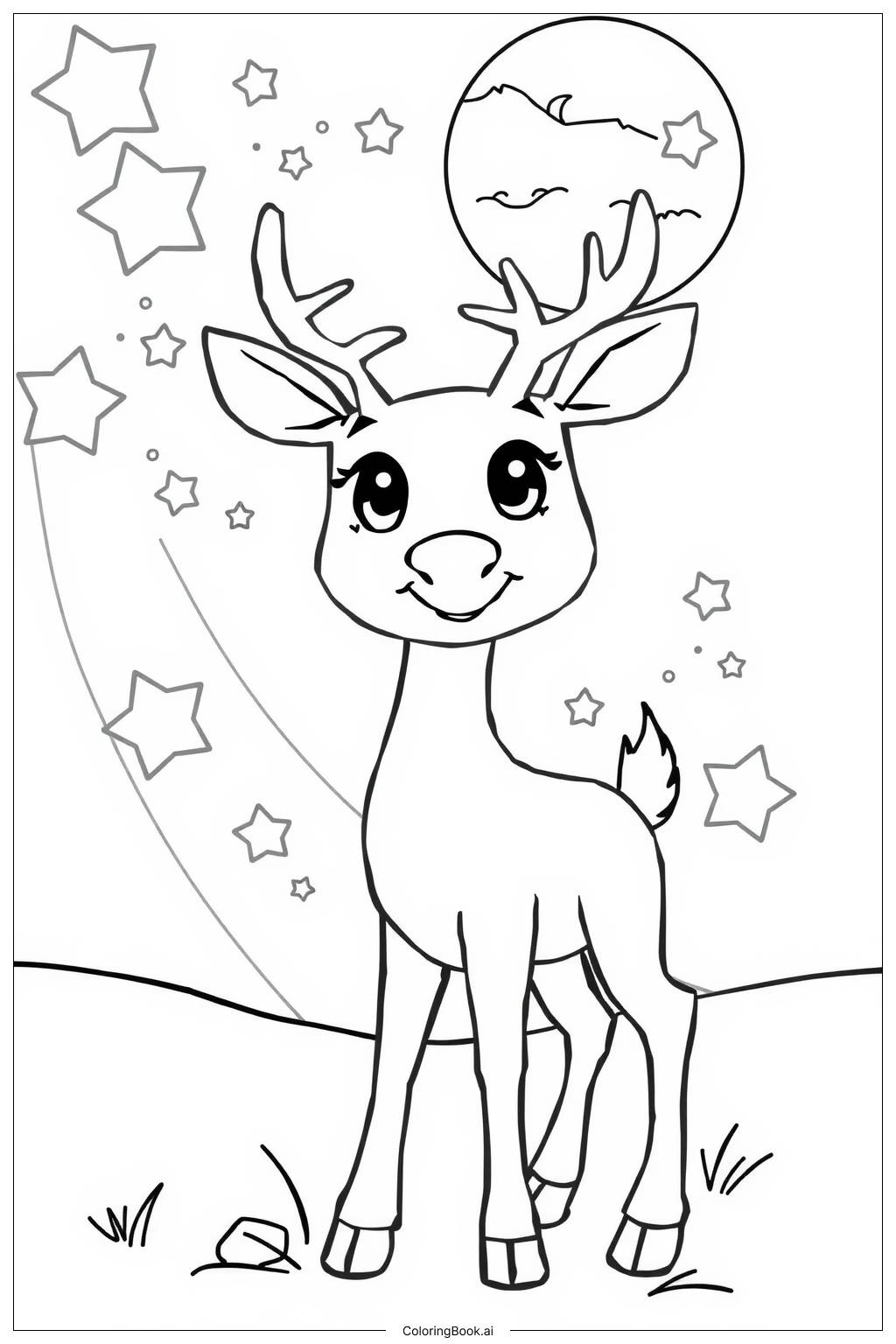
Coloring tips: How to color Deer Under Starlight coloring page well?
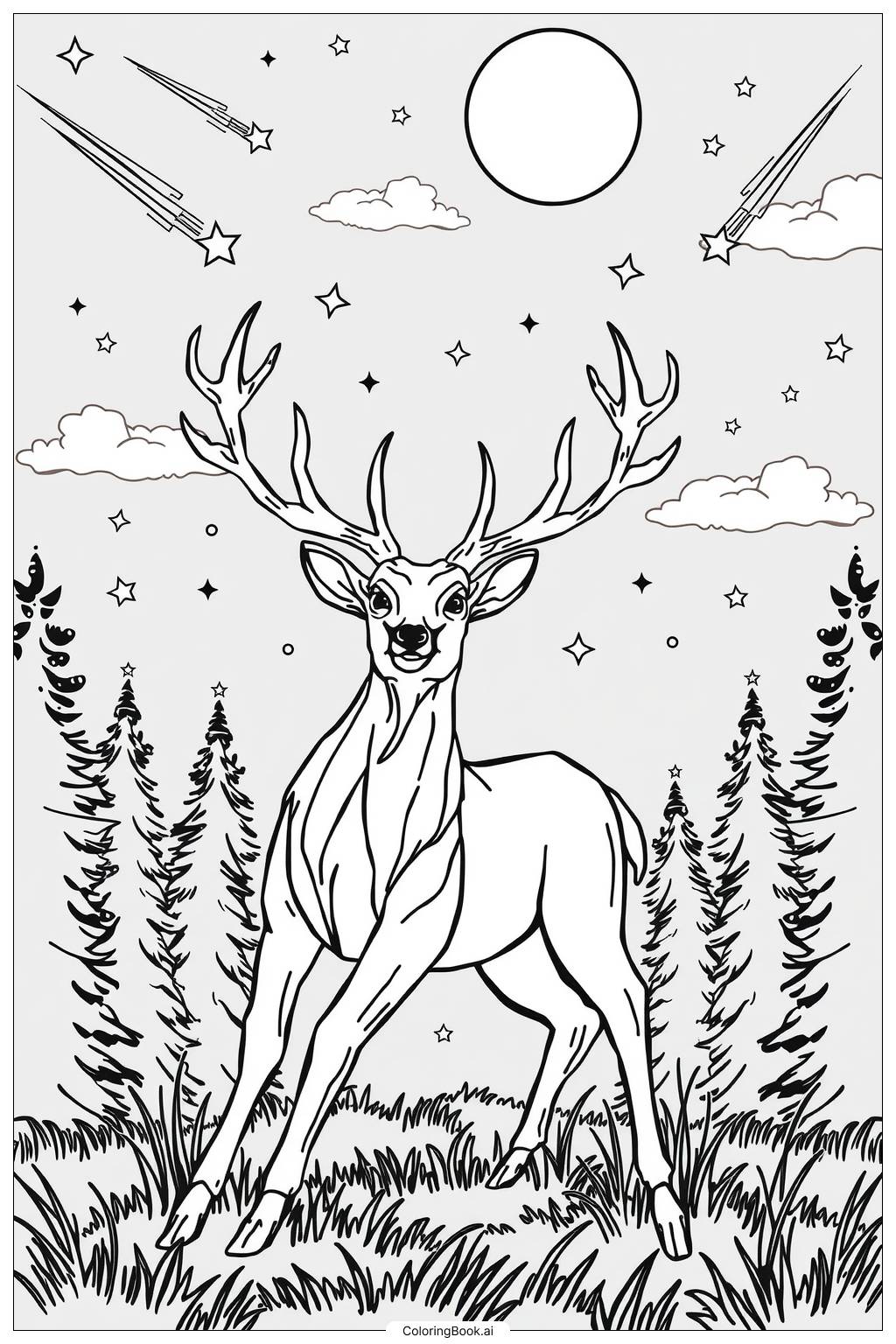
Use soft browns, tans, and creams to color the deer to make it look natural and gentle. Try different shades for the antlers, such as light beige or warm cream tones. For the forest, dark greens and browns will give depth to the trees and plants. The sky can be colored in deep blues or purples to create a nighttime feeling. Add white or silver highlights to represent the shining stars. You can also use gentle gradients to blend colors in the sky and on the deer’s fur to create a smooth, calming effect. Don’t be afraid to try bright colors for the flowers and plants to add a little magic to the nighttime scene.
Coloring challenges: Which parts are difficult to color and need attention for Deer Under Starlight coloring page?
• Deer Fur Texture: The detailed fur lines on the deer require careful coloring to maintain their softness without making the image look too heavy or blotchy. Blending colors gently is important.
• Antlers Complexity: The deer’s antlers have many sharp angles and curves, which can be tricky to color without going outside the lines. Precision is needed, especially in small spaces.
• Night Sky Gradation: Creating a smooth transition from dark to lighter colors in the starry sky demands good control of coloring tools. Mistakes in blending can make the sky look patchy.
• Small Plant Details: The fine shapes of ferns and grasses around the deer are delicate. Coloring them neatly without smudging delicate outlines can be challenging for younger children.
• Contrast Balance: Balancing the dark background of the forest with the lighter deer in the foreground requires awareness of contrasting colors to keep the image vibrant and clear.
Benefits of coloring books: Advantages of drawing Deer Under Starlight coloring page
Coloring this image helps children develop fine motor skills by practicing precision in small, detailed areas like antlers and plants. The gradual coloring of the night sky enhances their patience and control over blending techniques. It also encourages creativity through choosing colors for nature and animals in a nocturnal setting. The calm nature of the scene may have a relaxing effect, reducing stress and promoting mindfulness. Additionally, the opportunity to study animal shapes and forest environments improves observation skills and appreciation for wildlife. Overall, this page provides a fun way to practice artistic skills while connecting with nature themes.