Coloring tips: How to color Forest Deer Family-2 coloring page well?
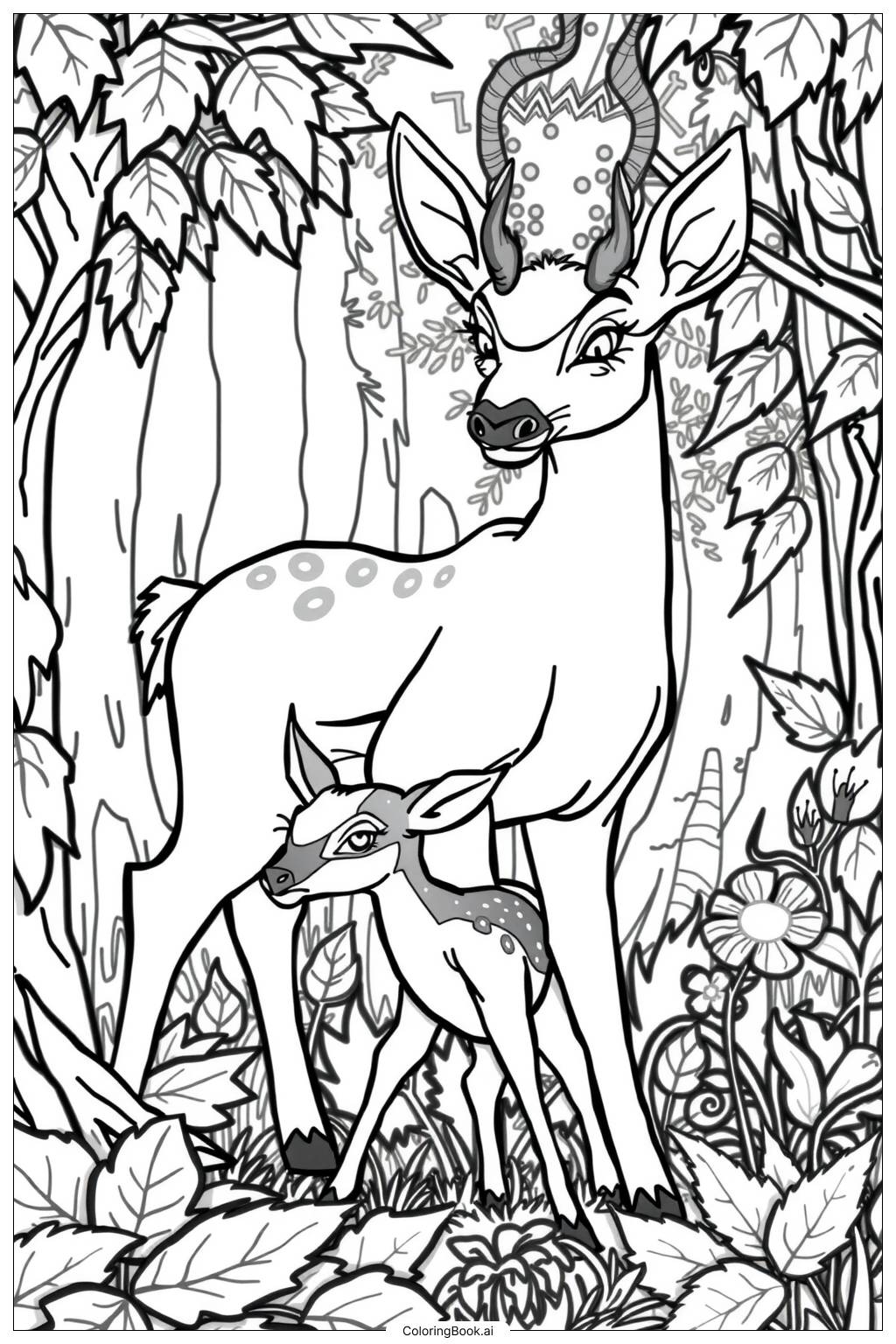
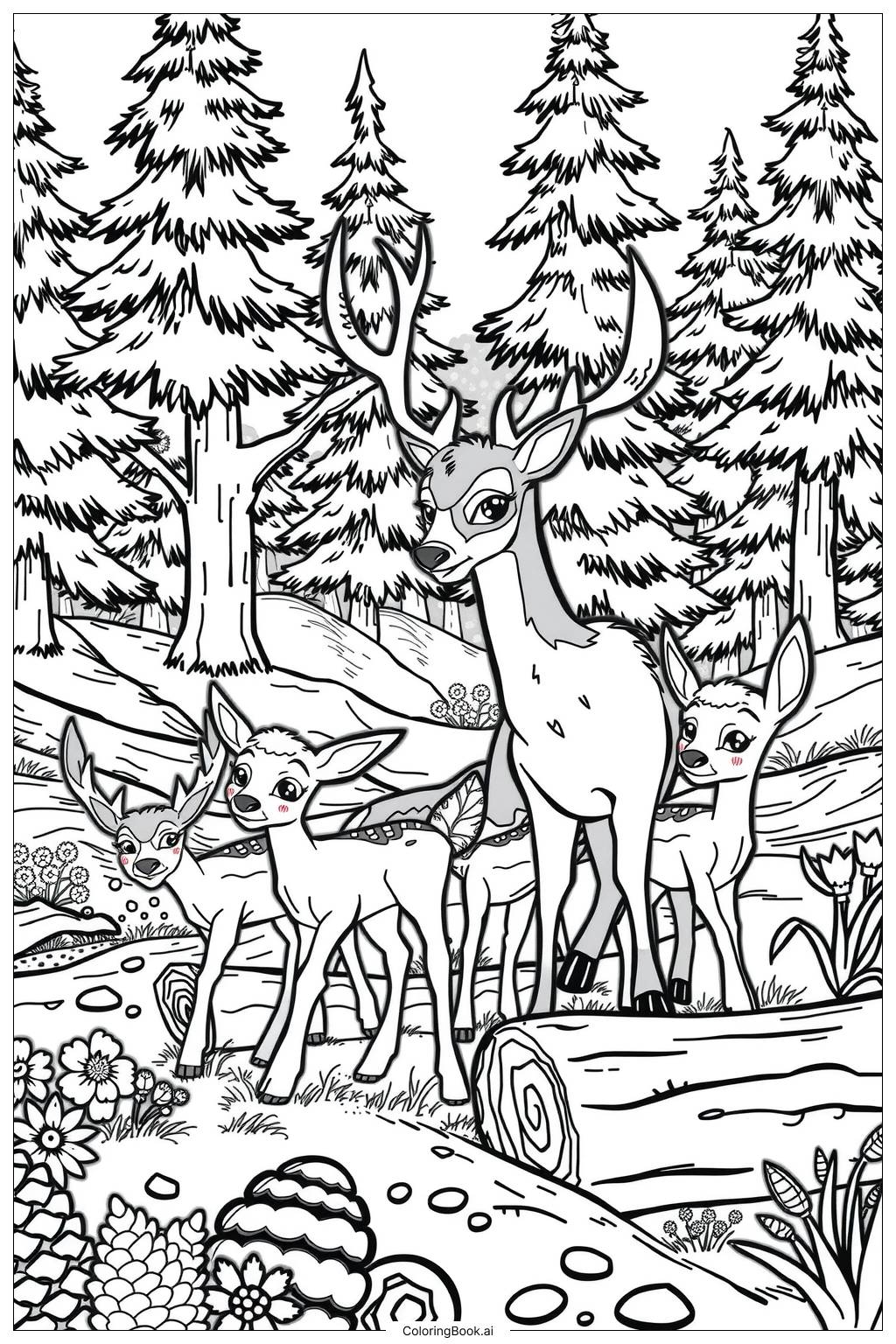
For this beautiful deer family, warm brown tones would bring the animals to life. Use soft shades of reddish brown or tan for the deer’s bodies. The antlers can be colored with light beige or pale gray to contrast. For the fawns, try lighter brown or cream colors with white spots to show their youth. The forest floor can be filled with different greens for grass and leaves, with bright colors for the flowers like yellows, pinks, or purples. The tree trunks can be various shades of gray and brown. Feel free to add subtle shading by layering colors lightly to give depth. Soft pastels or colored pencils work well to achieve the gentle, natural vibe of the scene.
Coloring challenges: Which parts are difficult to color and need attention for Forest Deer Family-2 coloring page?
• Detailed Fur Texture: The flowing lines on the deer’s bodies require careful coloring to keep the smooth look without making it appear blotchy. Gentle, even strokes are needed.
• Antlers Structure: The antlers have thin branches that require steady hand control to color neatly, avoiding overlap with surrounding areas.
• Small Spots on Fawns: The tiny white spots on the young deer must be preserved or carefully colored around, which can be tricky.
• Background Complexity: The mix of trees, bushes, and flowers means balancing multiple shades of green and other colors without overwhelming the main deer figures.
• Maintaining Contrast: Ensuring the deer stand out from the background requires thoughtful color choice and layering to prevent the animals from blending in with the forest.
Benefits of coloring books: Advantages of drawing Forest Deer Family-2 coloring page
Coloring this image encourages focus and patience as children carefully fill in the details of the deer and their surroundings. It helps develop fine motor skills and hand-eye coordination through drawing within borders and shading different textures. The natural forest scene sparks creativity by inviting choices about colors in nature, like different browns for fur and shades of green for plants. This activity also offers a calming experience, connecting children with wildlife imagery and encouraging appreciation for animals. Overall, it supports both artistic growth and relaxation, making it a valuable project for kids and adults alike.