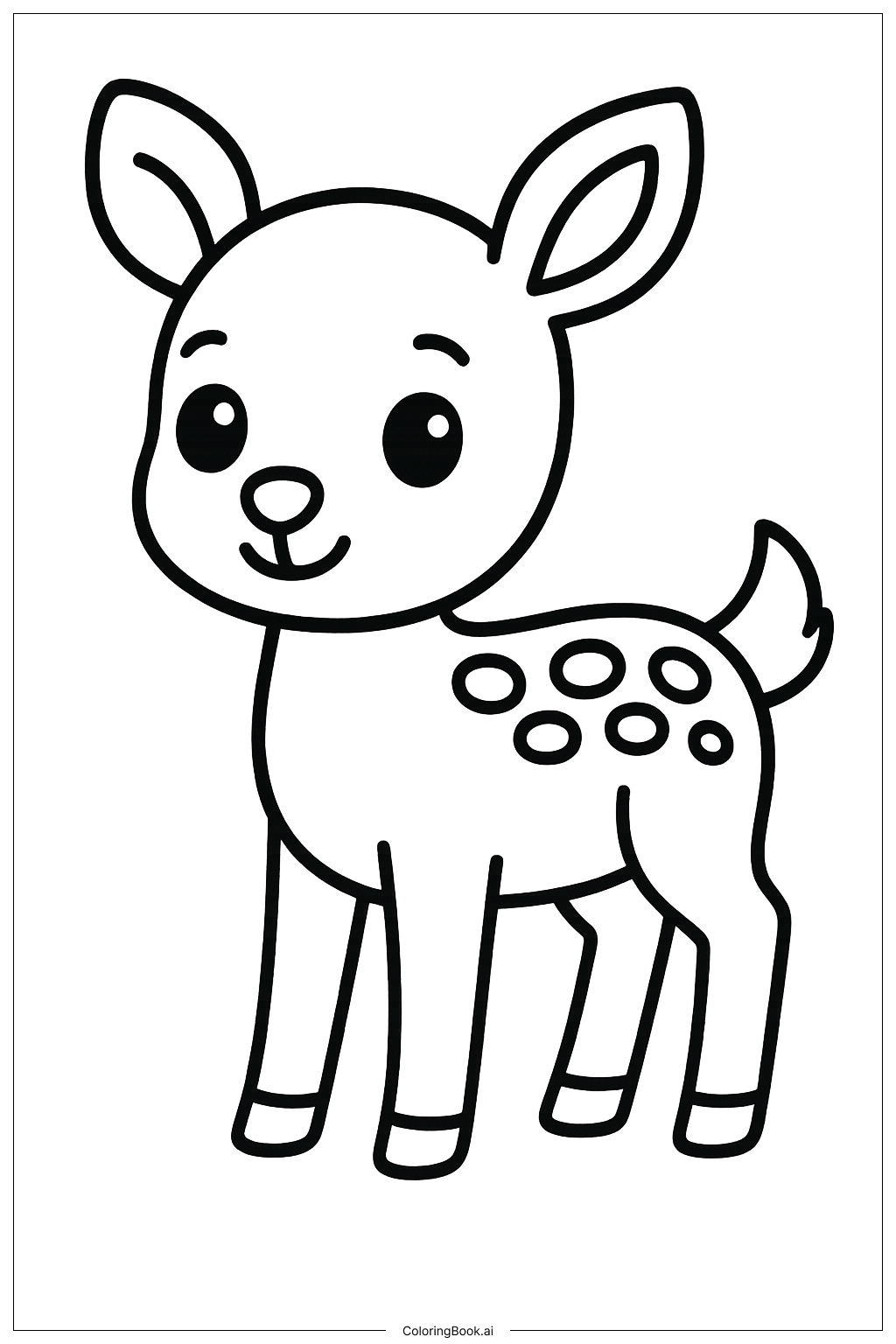
Coloring tips: How to color Fawn Baby Deer with Spots coloring page well?
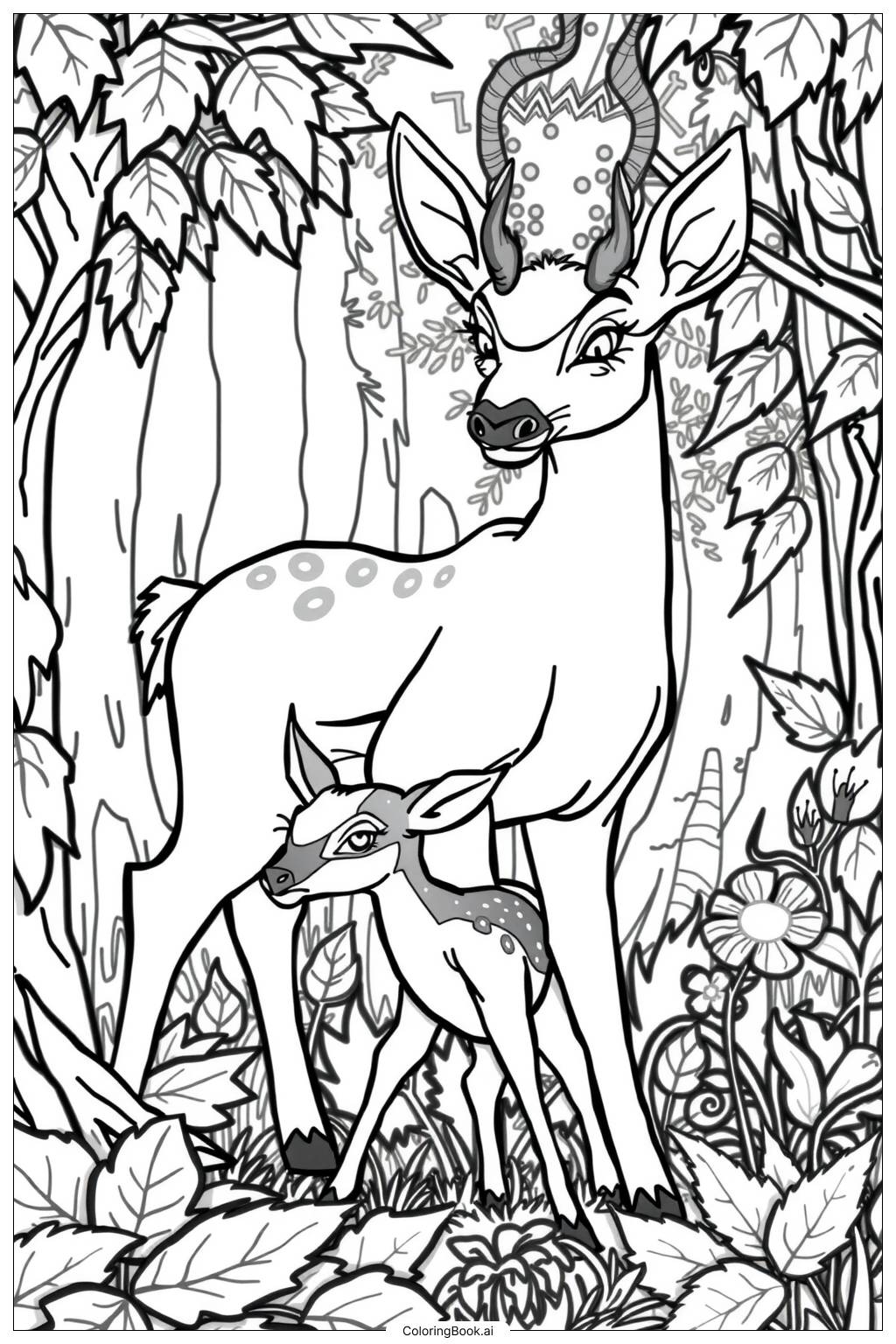
To color this Fawn Baby Deer with Spots, start by choosing a warm brown or light tan for the fawn’s body. Use a slightly darker brown for its legs and nose to add depth. The spots on its back can be colored white or a creamy shade to stand out nicely. For the eyes, pick a soft black or dark brown to make them look gentle and lively. Color the ears using a mix of pink and brown to show their softness. The grass and plants can be various shades of green, from light mint to deep forest green. Add small touches of yellow or purple for the flowers to make the scene cheerful. Feel free to mix colors softly to keep the look natural and calm.
Coloring challenges: Which parts are difficult to color and need attention for Fawn Baby Deer with Spots coloring page?
• Tiny Spots: The small spots on the fawn’s back require careful coloring to keep the shapes neat and clean, which can be tricky for younger children. Staying inside the lines is important to show the pattern clearly. • Fine Details: The fawn’s facial features like its eyes and nose are delicate and require precision to bring out its gentle expression. Coloring these parts evenly without smudging can be a challenge. • Thin Legs: The legs are slender and close together, so coloring evenly without overlapping outside the lines might be difficult. It takes steady hand control to color the legs smoothly. • Small Plants and Flowers: The grass and flowers surrounding the fawn have thin lines and small areas that need different shades. This requires patience and attention to detail. • Light and Shadow: To make the fawn appear more three-dimensional, blending light and shadow on the body is beneficial but can be complex for kids still learning shading techniques.
Benefits of coloring books: Advantages of drawing Fawn Baby Deer with Spots coloring page
Coloring this image helps children develop fine motor skills by practicing careful, controlled strokes needed for the small spots and fine details. It encourages attention to detail and patience while coloring the tiny plants and delicate legs. Choosing colors for the natural scene can stimulate creativity and an appreciation for wildlife. The gentle subject can have a calming effect, supporting emotional relaxation. Working on this fawn also introduces young artists to basic concepts of light and shadow, helping them learn how to add dimension to their work. Overall, it’s a fun and educational way to connect with nature through art.