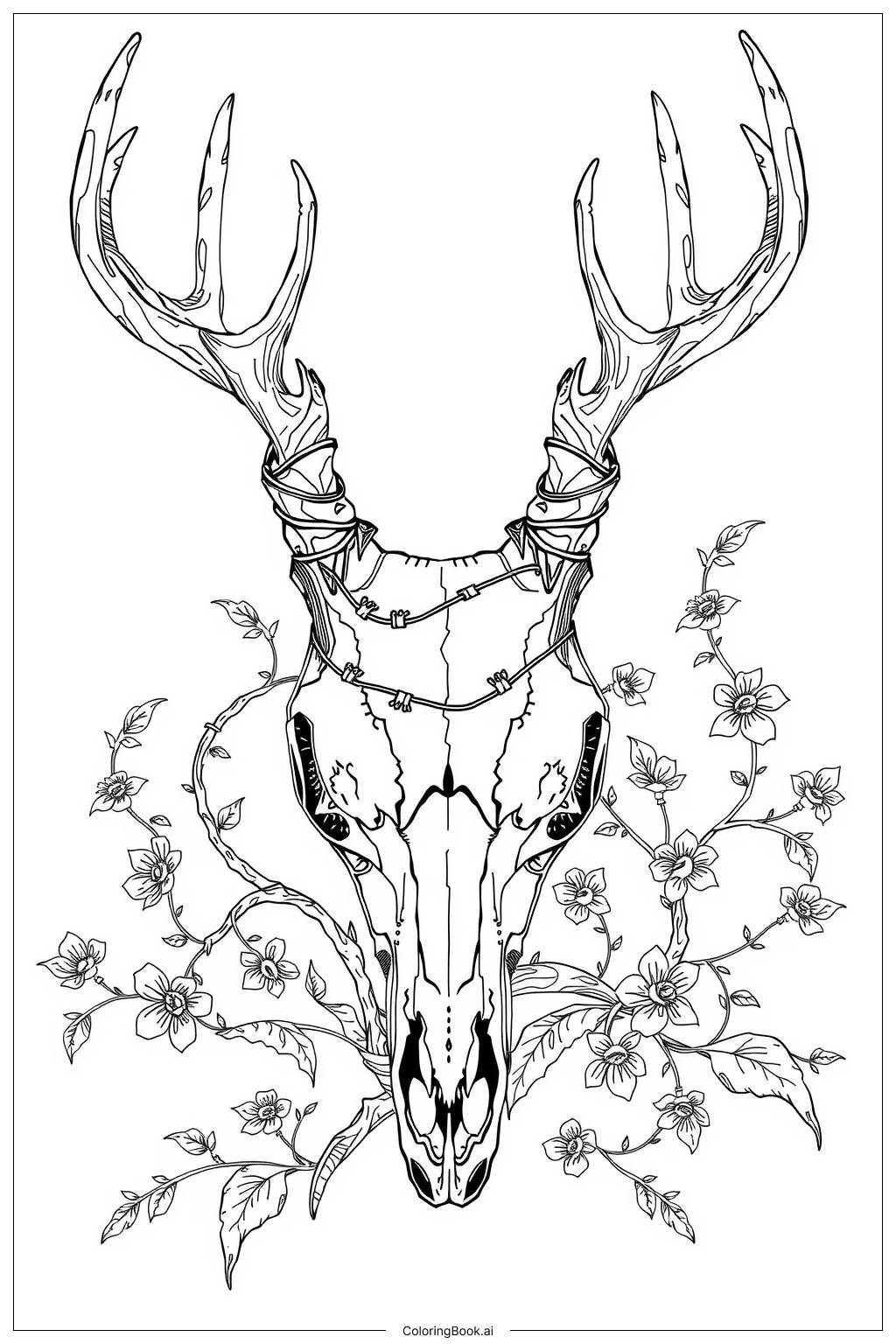
Coloring tips: How to color Detailed Deer Skull coloring page well?
For this picture, try using different shades of brown and beige for the skull to make it look realistic. You can add soft grays and whites to show the bone’s texture and shadows. Use various greens and browns to color leaves or branches if you want to create a natural background around the skull. For the antlers, consider darker browns or even warm tones like burnt orange to make them stand out. Feel free to experiment with blending colors to give depth and dimension to the skull and antlers. Light strokes and gentle color layering can create a beautiful effect.
Coloring challenges: Which parts are difficult to color and need attention for Detailed Deer Skull coloring page?
• Intricate Details: The deer skull has many small lines and fine textures that require careful coloring to avoid going outside the lines.
• Antler Branching: The antlers have multiple branches which can be tricky to color neatly without mixing different sections.
• Shading and Depth: Adding realistic shadows on the skull’s curves and holes takes attention to blending colors smoothly.
• Bone Texture: Capturing the rough and uneven surface of bone needs gentle color changes to look natural instead of flat.
• Symmetry Challenge: The antlers extend on both sides and maintaining color symmetry can be hard but important for a balanced look.
Benefits of coloring books: Advantages of drawing Detailed Deer Skull coloring page
Coloring this deer skull image helps improve focus and attention to detail due to its complex features and textures. It encourages the use of blending and shading techniques, fostering artistic skills for creating depth and realism. Working on symmetrical antlers promotes precision in coloring both sides evenly. This activity also provides a quiet, mindful experience that can help reduce stress. Exploring natural tones enhances understanding of nature’s colors and invites creativity while learning about animal anatomy in a fun way.