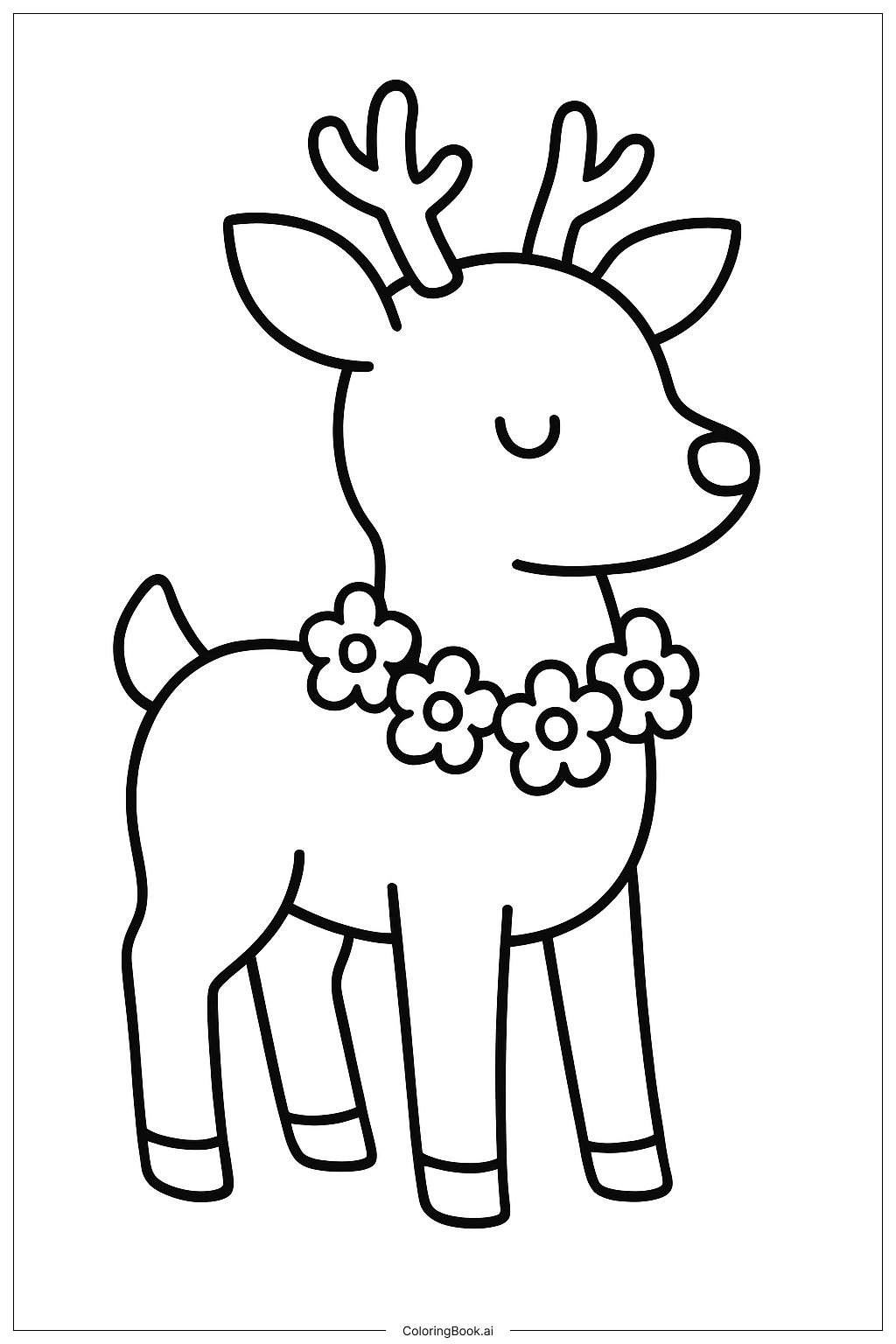
Coloring tips: How to color Deer with Flower Garland Neck coloring page well?
For this drawing, start by choosing soft browns, tans, or light oranges to color the deer’s fur. Use gentle shading to bring out the smooth texture of its body. For the flower garland, pick bright and cheerful colors like pink, purple, yellow, and white to make the flowers stand out. Add shades of green for the leaves to make them look fresh and lively. You can color the antlers in a light gray or beige, giving them a natural wood-like feel. Consider using light blue or soft pastel colors for the background to create a calm forest atmosphere that complements the deer. Remember to color inside the lines carefully for a neat finish.
Coloring challenges: Which parts are difficult to color and need attention for Deer with Flower Garland Neck coloring page?
• Fine Details on Garland: The flower garland has many small petals and leaves that require careful coloring. Young artists might find it tricky to stay within the tiny shapes without overlapping colors. • Antler Texture: The antlers have smooth but slender sections that need delicate coloring to reflect their natural look. Applying even color without making it too dark or blotchy can be challenging. • Shading the Fur: To bring the deer to life, it’s important to add shading and texture to the fur. Managing smooth blends between light and darker tones can be hard for beginners. • Background Elements: The grass and plants around the deer include fine lines and overlapping shapes. Coloring them neatly requires patience and attention to detail. • Maintaining Contrast: Balancing bright colors on the flower garland while keeping the deer’s natural tones realistic needs thoughtful color choices to avoid confusing the image.
Benefits of coloring books: Advantages of drawing Deer with Flower Garland Neck coloring page
Coloring this image helps develop hand-eye coordination and fine motor skills, especially through coloring the small flowers and antlers. It encourages children to observe nature closely and learn about animals and plants. Working on shading and color blending boosts creativity and understanding of light and color relationships. The image’s calm and gentle look can also promote relaxation and focus while coloring. For kids aged 4 to 16, this picture offers a satisfying challenge without being too complex, making it a fun way to build patience and enjoy artistic expression.