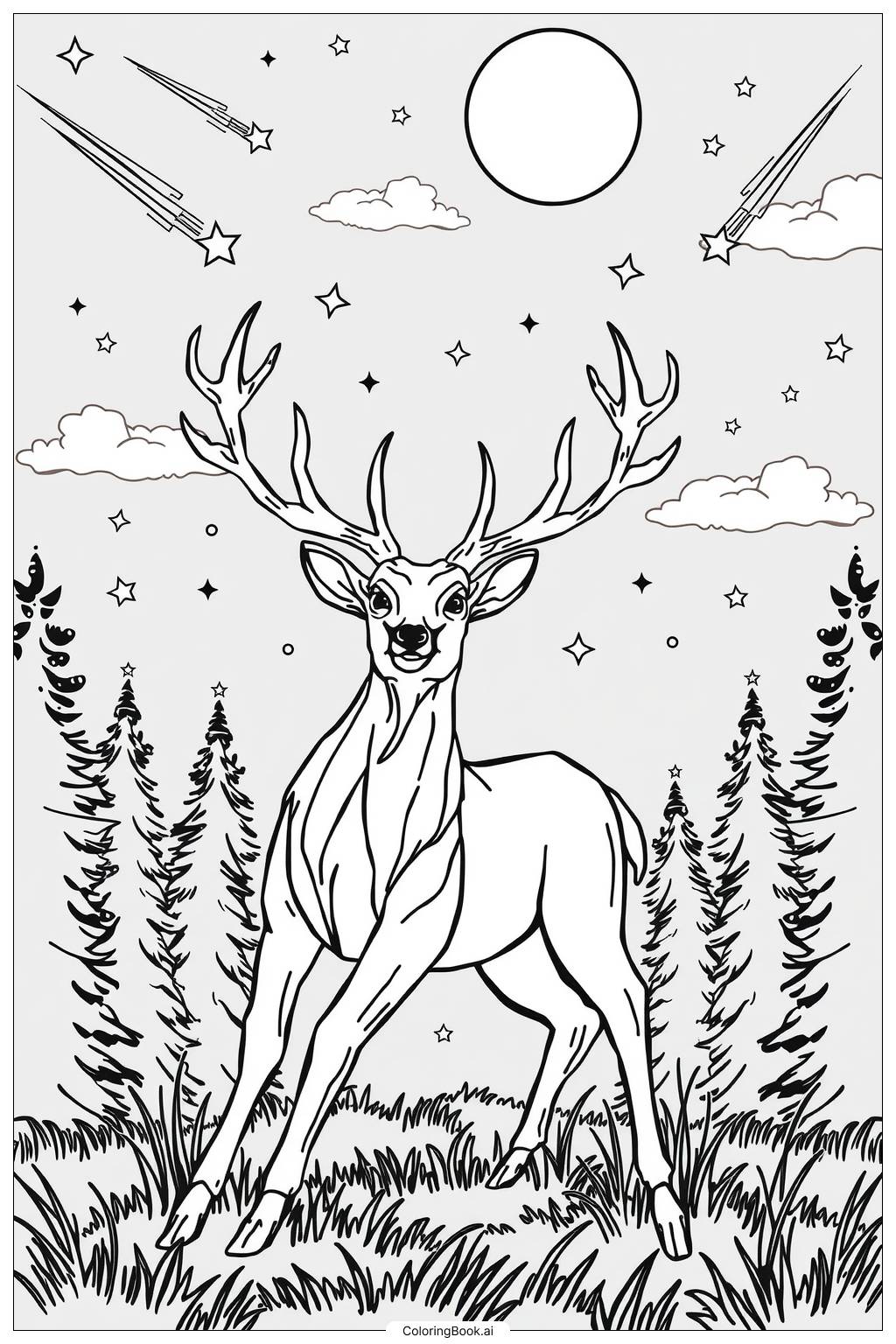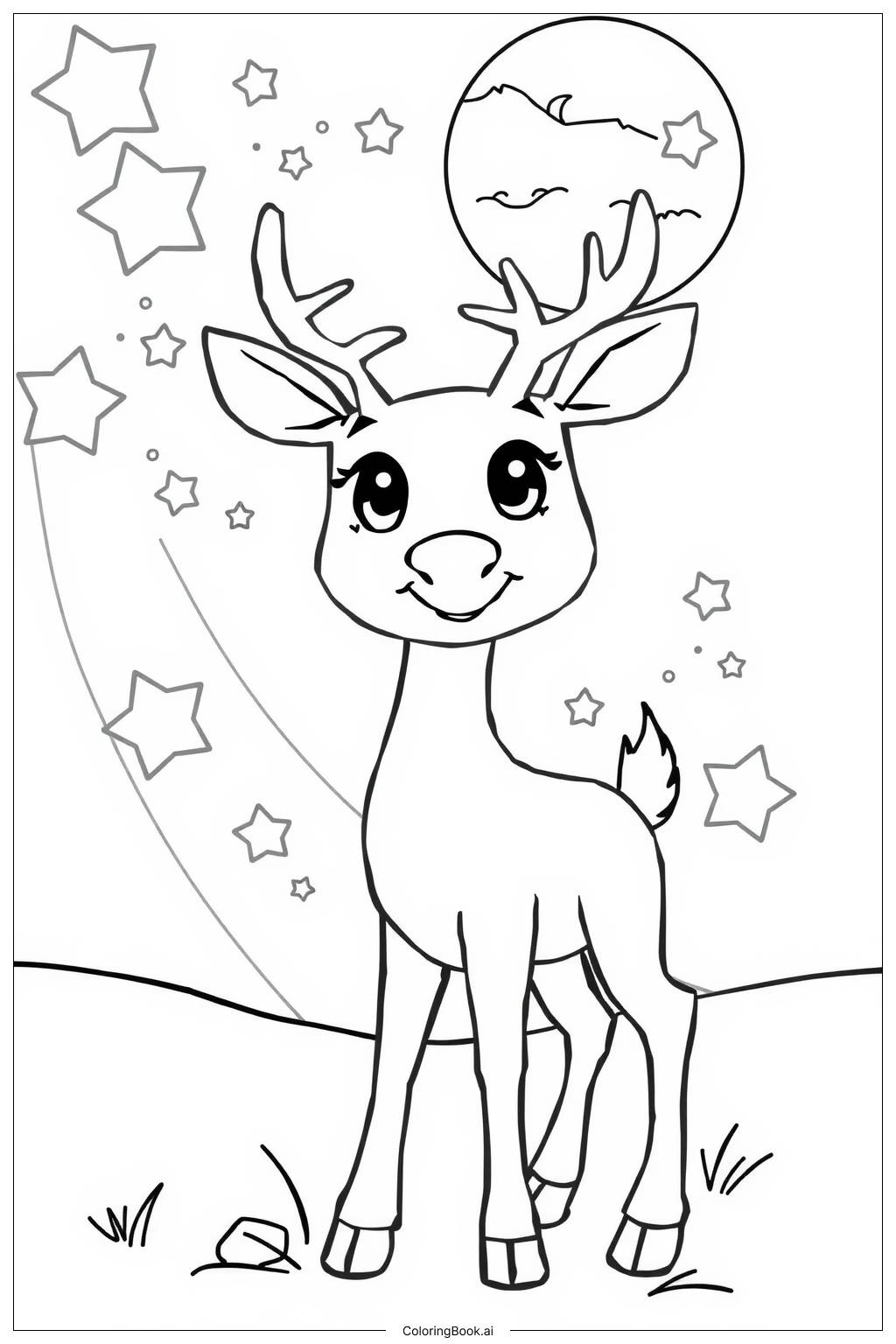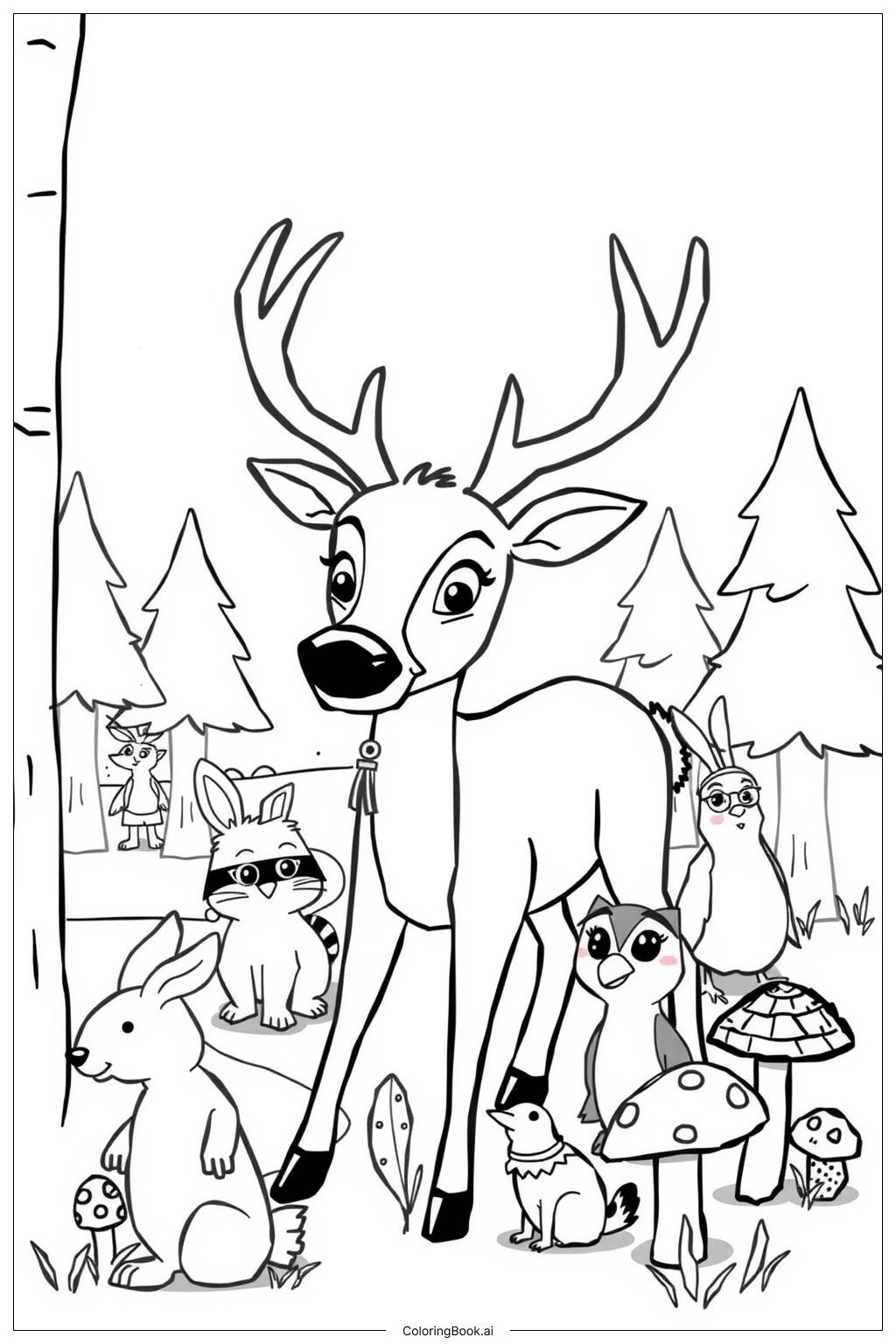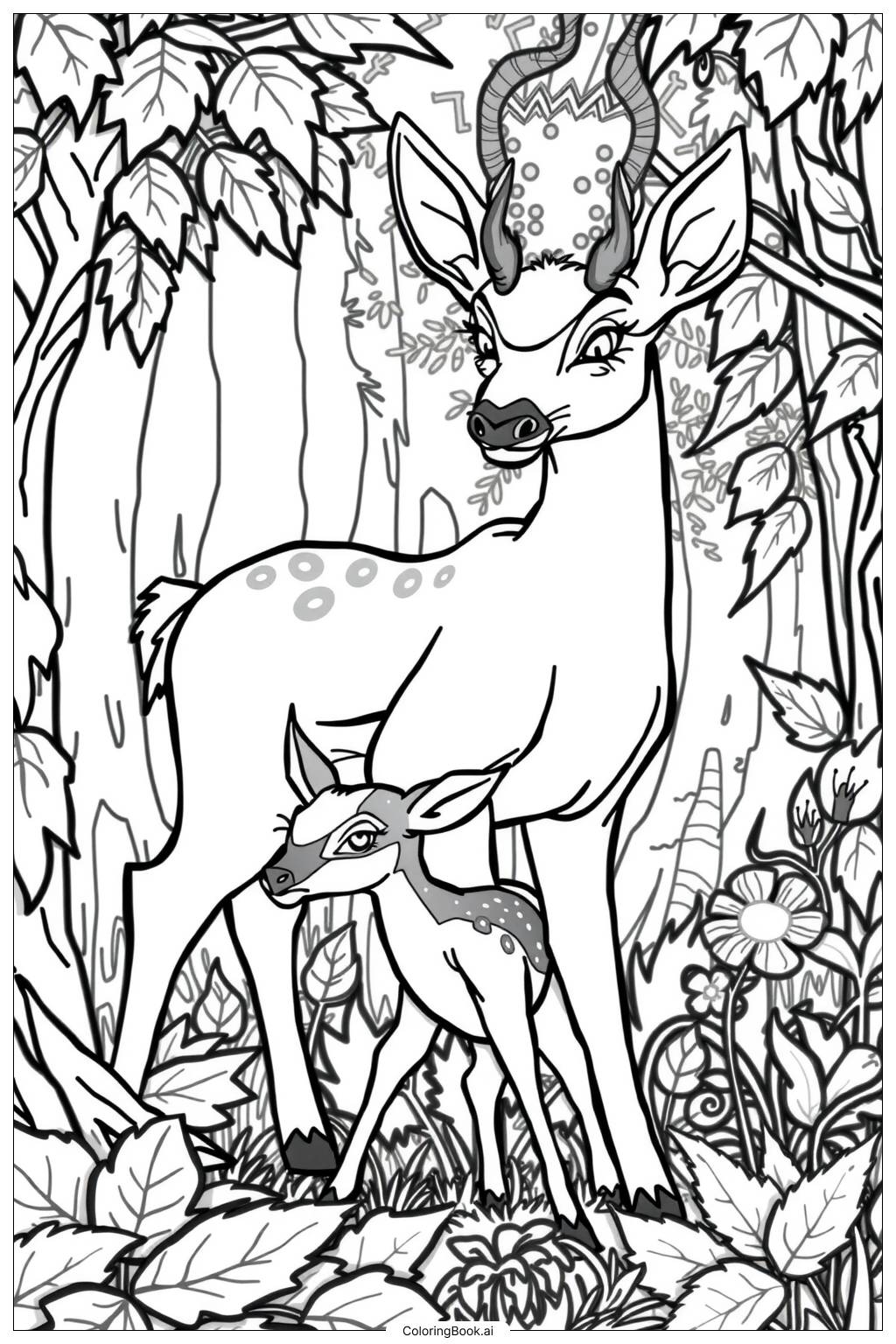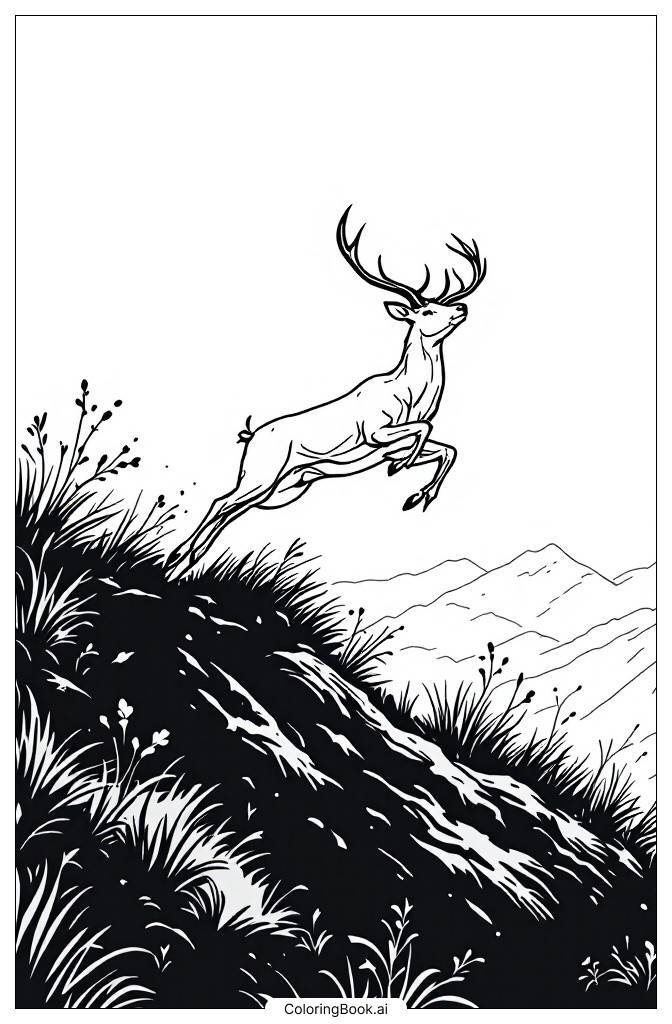
Coloring tips: How to color A Deer Leaping on a Hillside coloring page well?
Start with the deer's body. Use warm tan or golden brown for the main coat. Add a lighter cream or pale yellow on the belly and inner legs. You can add soft white spots on the back to give the deer a young, fawn-like look. Use a darker brown for the hooves and the tips of the ears. Color the eyes dark brown with a small white highlight to make them look lively. For the hillside, use bright green for the grass. Add pops of color with yellow, pink, or purple wildflowers. Use light gray or brown for the rocks. Paint the trees in deep green and the distant hills in a softer, lighter green to show depth. The sky, if included, looks lovely in soft blue with white or light gray clouds. Try blending colors gently to make the deer's coat look smooth and natural. Kids can keep colors simple and bold, while older colorists may enjoy adding shading and gradients for a more realistic feel.
Coloring challenges: Which parts are difficult to color and need attention for A Deer Leaping on a Hillside coloring page?
• Deer Body Shading: The deer's body is curved and in motion, which makes it tricky to add shading correctly. You need to think about where light would hit the back and sides, and where shadows would fall under the belly and legs. Smooth blending is important to avoid a flat look. Take your time layering light and dark tones.
• Leg and Hoof Details: The legs are thin and outstretched, showing the deer mid-jump. Staying within the narrow outlines of each leg can be difficult, especially for younger colorists. The hooves at the ends need darker, more precise coloring. A thin brush or fine-tipped colored pencil works best here.
• Fur Texture: Deer fur has a soft, short texture that is hard to capture with flat color. To make the coat look realistic, try using short, light strokes in the direction the fur would naturally grow. This is especially important around the neck, shoulders, and haunches.
• Background Depth: The hillside background includes grass, flowers, rocks, and distant trees. Creating a sense of depth means using lighter and cooler tones for far-away objects and richer, darker tones for things in the front. Balancing all these elements without making the background overpower the deer takes careful planning.
• Wildflower and Grass Details: The small flowers and grass blades in the foreground are tiny and closely packed. Coloring each one neatly without smudging nearby areas requires a steady hand and patience, particularly for children working with markers or thick crayons.
Benefits of coloring books: Advantages of drawing A Deer Leaping on a Hillside coloring page
Coloring this leaping deer scene offers many wonderful benefits for children and older colorists alike. Watching a deer jump freely through nature is an exciting and joyful image that sparks imagination and creativity. Choosing colors for the deer's coat, the green hillside, and the bright wildflowers encourages kids to think about the natural world and the animals that live in it.
The detailed outlines in this image help children practice hand control and fine motor skills. Carefully staying within the lines of the thin legs and small flowers builds patience and focus. These skills carry over into writing, drawing, and everyday tasks.
For older colorists, the challenge of adding realistic shading and texture to the deer's body makes this a satisfying and engaging activity. It encourages artistic thinking and problem-solving as you decide how light and shadow fall across a moving animal.
Spending quiet time coloring also reduces stress and promotes a calm, focused mind. It is a healthy screen-free activity that the whole family can enjoy together. Completing the page gives a strong sense of pride and accomplishment.
Overall, this deer coloring page combines the beauty of wildlife with the joy of art, making it a meaningful and fun experience for Boys, Girls, and Adults of all skill levels.