Coloring tips: How to color Sitting Cute Corgi coloring page well?
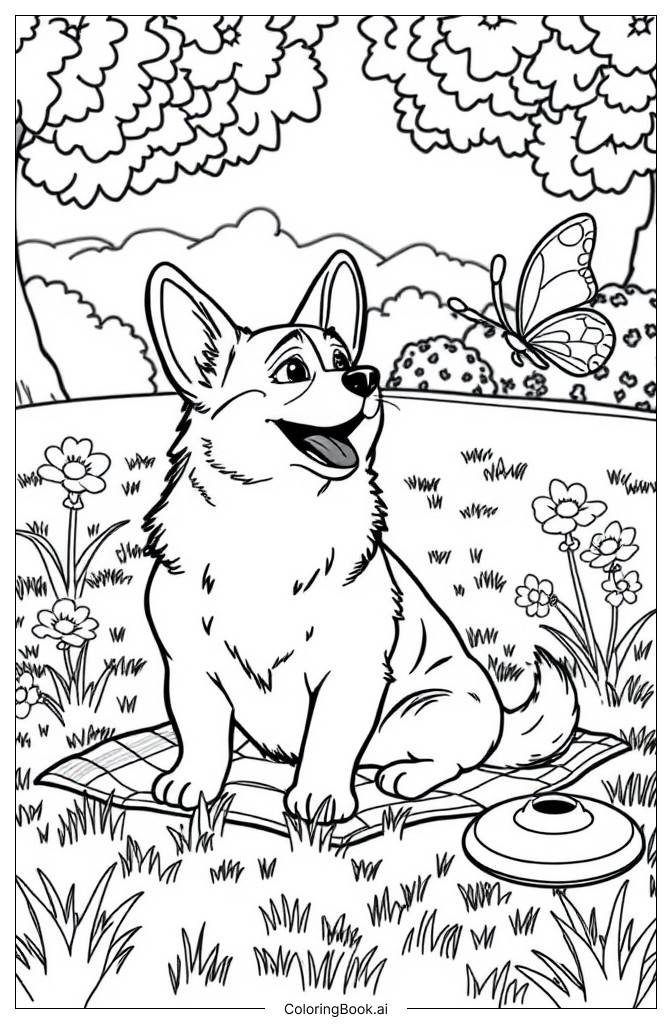
Start with the lightest colors first and work toward darker shades. Corgis are typically golden-orange or sable with white markings, so try warm shades like golden yellow, burnt orange, or tan for the main body. Use white or cream for the chest, belly, paws, and muzzle area. The ears can be a slightly darker shade of the body color to add depth. For the eyes, use rich brown with a tiny white highlight dot to make them look bright and alive. Add a soft pink for the inner ears and nose. Use short, feathery pencil strokes to mimic the look of real fur. Lightly blend colors along the edges where two shades meet to create smooth transitions. You can also try a red-and-white or black-and-tan color scheme for a fun variation. Keep the background simple — a light blue sky or soft green grass works nicely and keeps the focus on the Corgi.
Coloring challenges: Which parts are difficult to color and need attention for Sitting Cute Corgi coloring page?
Coloring this Sitting Cute Corgi image comes with several challenges that will test your patience and skill:
• Fur Texture Lines: The Corgi's coat is drawn with many short, overlapping lines to suggest fluffy fur. Staying within these fine lines while applying color is tricky, especially around the chest and ears. Using a sharp colored pencil tip or a fine-tipped marker will help you stay precise and avoid muddying the texture.
• Color Transitions and Blending: A real Corgi's coat features gradual shifts from deep orange or sable on the back to lighter cream on the belly and face. Recreating these smooth gradients requires careful layering and blending. Abrupt color changes can make the fur look flat and unnatural, so take your time blending at the boundary zones.
• Small Facial Details: The face holds the most expressive elements — the eyes, nose, and mouth are close together and relatively small on the page. Coloring these areas neatly without smearing or going outside the lines demands a steady hand and fine tools. The eyes in particular benefit from careful shading to give them a warm, lifelike glow.
• White Markings Preservation: Corgis have distinct white patches on their muzzle, chest, and paws. Since white is the base paper color, you must color carefully around these areas to preserve them. Accidentally coloring over them will require a white gel pen or correction tool to restore the clean look.
• Symmetry of the Ears: The two large ears should ideally be colored with matching shades and the same inner-ear pink tone. Keeping both sides balanced and consistent takes focus and a light touch.
Benefits of coloring books: Advantages of drawing Sitting Cute Corgi coloring page
Coloring this Sitting Cute Corgi page offers a wonderful range of benefits for kids and beginners alike. First, it helps build fine motor skills. Carefully filling in the fur lines and small facial details trains the hand muscles and improves pencil control, which supports handwriting development in younger children. Second, it encourages color awareness and creativity. Choosing the right shades for the fur, eyes, and markings teaches kids to observe real animals and think about how colors work together. Third, it supports focus and patience. A detailed image like this one asks colorists to slow down, pay attention, and work section by section — great practice for building concentration. Fourth, it provides a calming, relaxing experience. The repetitive motion of coloring is naturally soothing and can help reduce stress after a busy school day. Fifth, it sparks a love for animals. Spending time with a cute Corgi on paper can inspire curiosity about dogs and nature, opening the door to learning more about different breeds. Best of all, finishing the page gives a real sense of pride and accomplishment that boosts confidence in young artists.