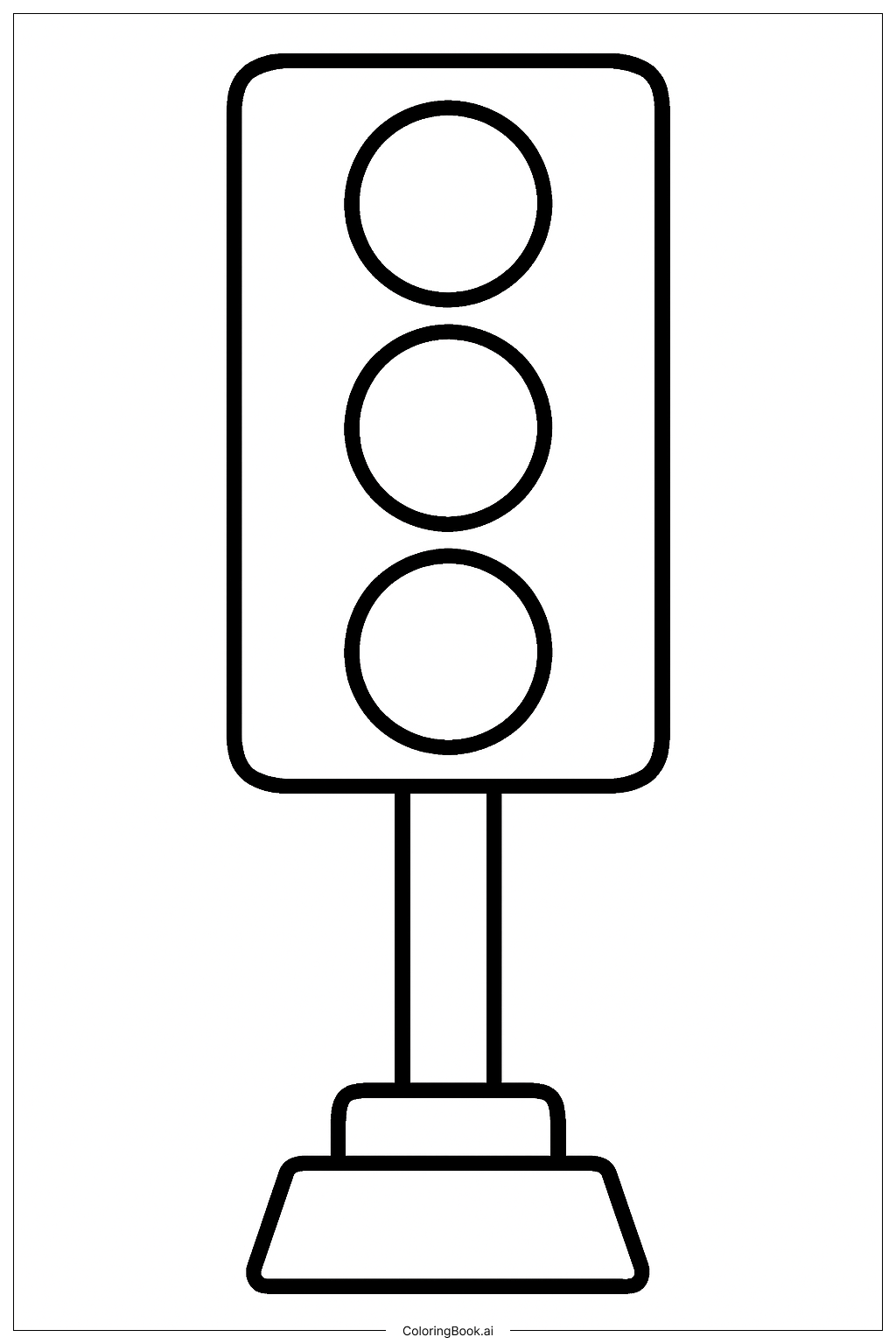
Coloring tips: How to color Construction Traffic Light coloring page well?
Start with the traffic light pole and base. Use a medium gray or dark charcoal for the metal pole. The base can be a slightly darker gray or black to show weight and solidity. For the three signal lights, use bright red at the top, a warm yellow or amber in the middle, and a vivid green at the bottom. You can make one light look "on" by coloring it brightly and the other two with a dull, muted tone. For the road cones nearby, go with bright orange and add white stripes. The ground can be done in sandy tan or concrete gray. Use yellow for any caution stripes or road markings. Keep your colors bold and clear — this is a scene all about getting attention, just like a real construction zone!
Coloring challenges: Which parts are difficult to color and need attention for Construction Traffic Light coloring page?
• Signal Light Circles: The three circular light housings are small and closely spaced on the signal head. Staying inside the round outlines without letting colors bleed into each other or into the surrounding housing frame takes a steady hand. Using a fine-tipped colored pencil or marker works best here.\n\n• Color Contrast Between Lights: Choosing the right shades for red, yellow, and green so they each look distinct and vivid is tricky. If the tones are too similar or too dull, the lights lose their meaning. Picking bright, saturated colors and leaving a slight highlight on each circle can make them pop.\n\n• Metal Pole and Base Shading: The pole and weighted base are made of metal, which reflects light and has subtle variations in tone. Recreating that metallic look means blending at least two or three shades of gray — light gray on one side, mid-gray in the middle, and dark gray or black along the edges and shadow areas.\n\n• Ground Texture: The construction-site ground is uneven and rough. Representing that texture with hatching, cross-hatching, or light color layering adds realism but requires patience and a light touch to avoid making the ground area look too dark or heavy.\n\n• Small Detail Elements: Road cones, caution markings, and edge details are small. Coloring them neatly without smudging the neighboring areas means working slowly and using tools with a fine tip, especially in tight corners and where two different colors meet.
Benefits of coloring books: Advantages of drawing Construction Traffic Light coloring page
Coloring this construction traffic light page brings a great mix of fun and learning for kids and beginners alike. Here is what makes it worthwhile:\n\nLearning real-world symbols: Kids get familiar with traffic light colors and what each one means — red for stop, yellow for caution, green for go. This builds early road-safety awareness in a hands-on, enjoyable way.\n\nBuilding color recognition: Matching the correct colors to the correct lights reinforces basic color knowledge and helps younger children practice identifying and naming colors with confidence.\n\nDeveloping fine motor skills: Coloring within the circular light housings, along the pole, and around small details strengthens hand-eye coordination and the precise muscle control needed for writing and drawing.\n\nPracticing focus and patience: A scene with multiple elements — the signal, the base, the cones, the ground — encourages kids to slow down, plan their colors, and work through the image section by section.\n\nSparking curiosity about construction: The construction-zone setting naturally gets young minds curious about how roads are built, how workers stay safe, and what all those signals and signs mean in real life. That curiosity is a great starting point for broader learning.