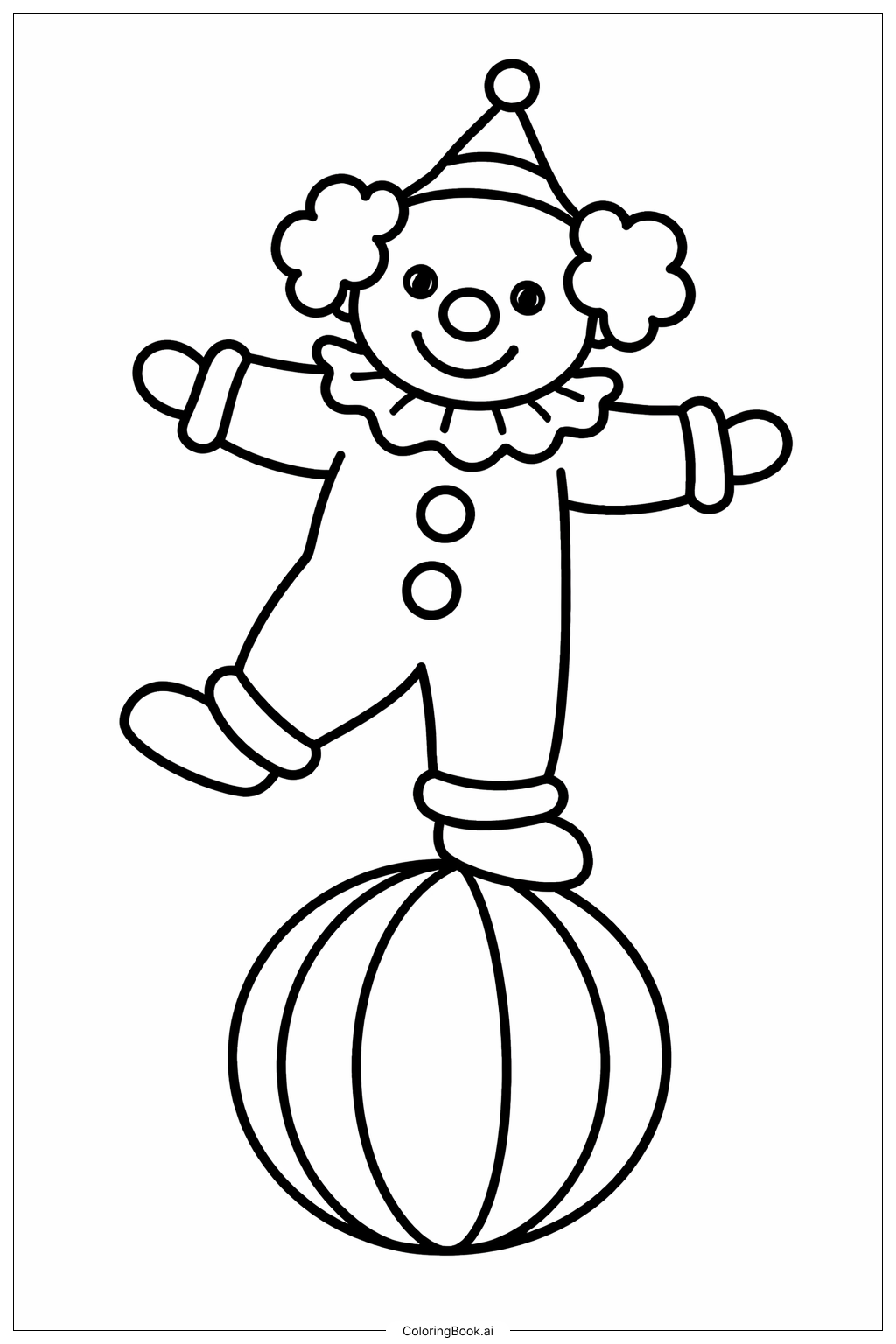
Coloring tips: How to color Clown Balancing Ball coloring page well?
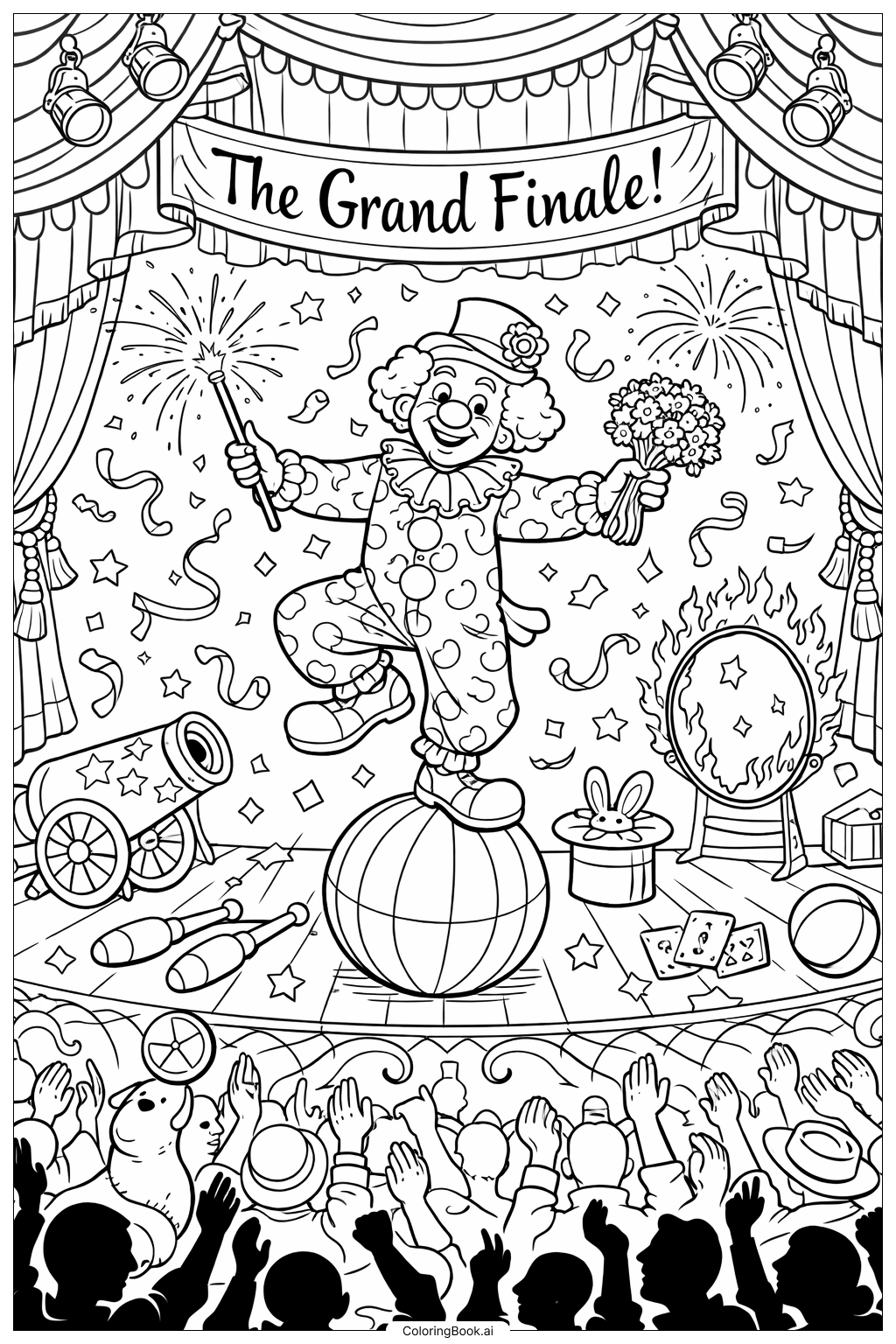
Try using bright and bold colors for the Clown’s costume to make it lively and fun. Red, blue, and yellow work well for classic clown outfits. You can color the bow tie a different color, like green or orange, to add more variety. For the ball, choose a bright solid color or use stripes or polka dots to make it playful. Don’t forget to color the Clown’s face with soft pink or peach for the skin, and red for the nose. The hat can be colored to match the outfit or in a contrasting shade. Use light colors for the background so the Clown stands out.
Coloring challenges: Which parts are difficult to color and need attention for Clown Balancing Ball coloring page?
• Balancing Act Details: Coloring the Clown’s arms and legs in dynamic positions while keeping smooth edges can be tricky. Make sure to stay inside the lines for a neat look.
• Facial Expressions: The Clown’s face has fine details such as the smile, eyes, and nose. Coloring small areas evenly without overlapping might require careful attention.
• Costume Patterns: If you choose to add patterns like stripes or polka dots on the costume or ball, maintaining uniform shapes and spacing can be challenging.
• Round Ball Surface: Shading the spherical ball to give it a rounded, 3D look involves blending colors subtly, which might be difficult for beginners.
• Small Accessories: Elements like the pom-pom on the hat and the bow tie have delicate edges that need precision coloring to avoid smudging onto nearby areas.
Benefits of coloring books: Advantages of drawing Clown Balancing Ball coloring page
Coloring this image helps improve fine motor skills by requiring careful attention to small details like the Clown’s face and costume. It encourages creativity as children decide which bright colors to use and how to mix patterns on the ball and outfit. Focusing on balancing shapes, such as the round ball and curved arms, enhances spatial awareness. Coloring the joyful Clown also promotes positive emotions by engaging kids in a fun and playful scene. This activity is great for developing patience and concentration, especially when completing the detailed parts of the picture.