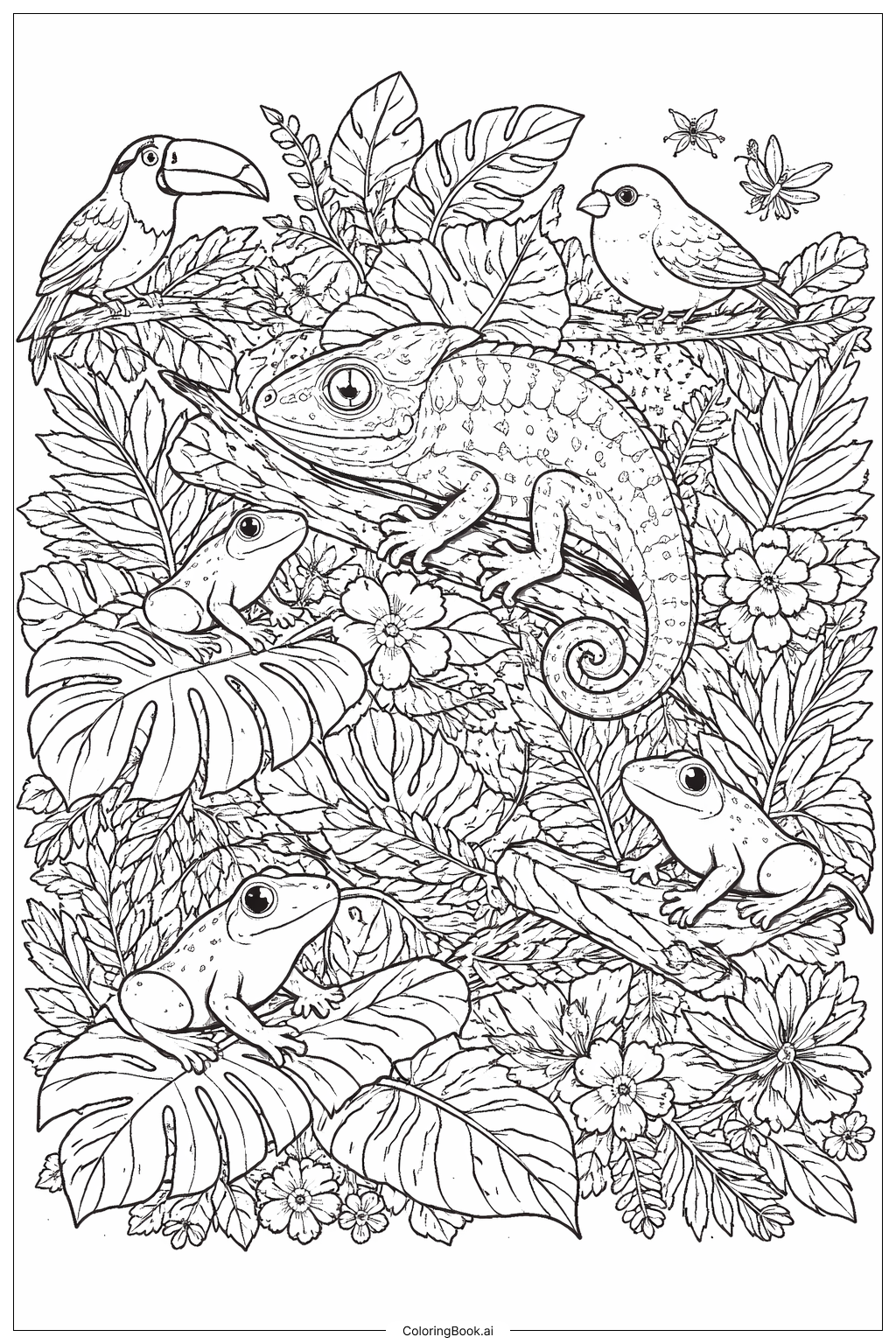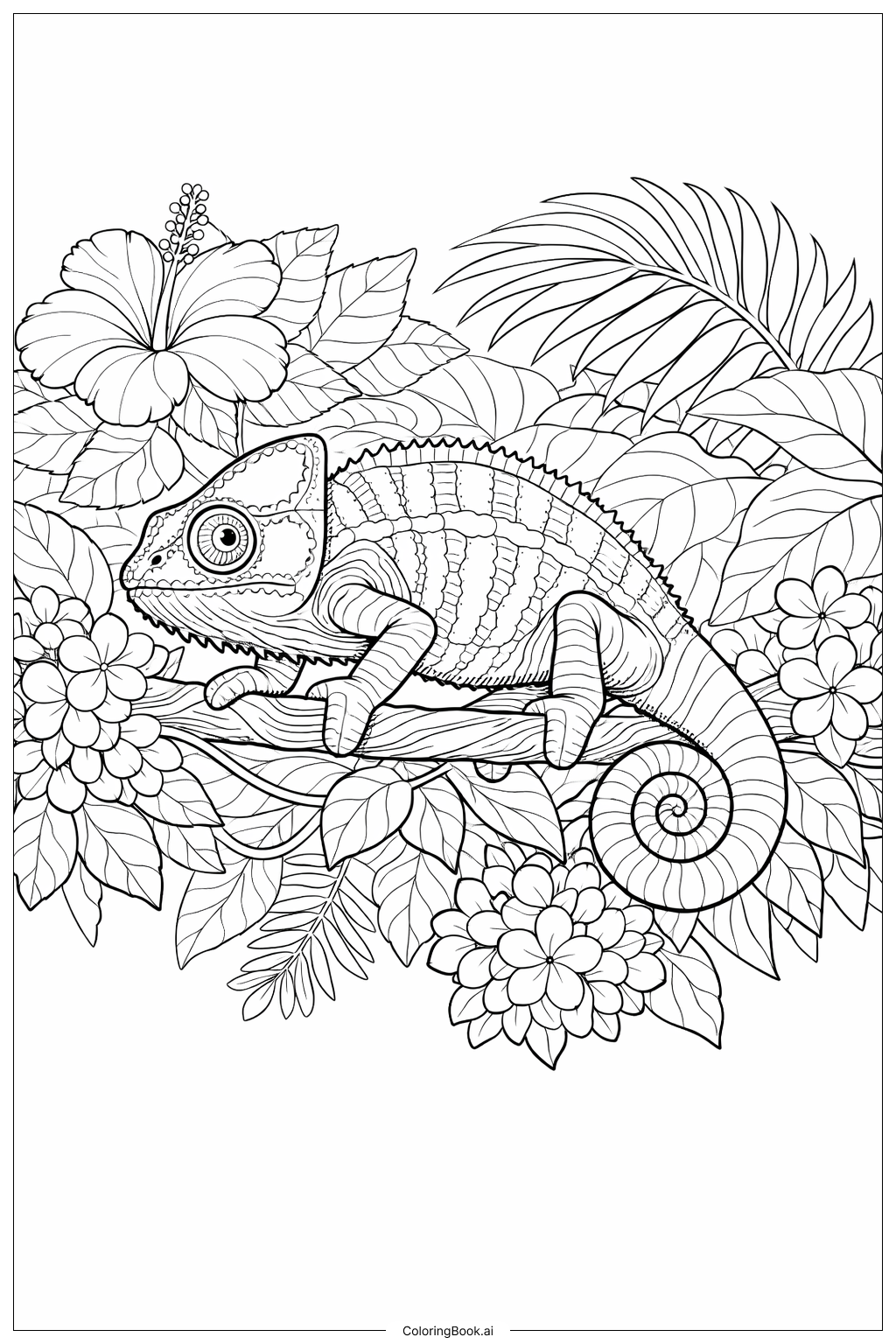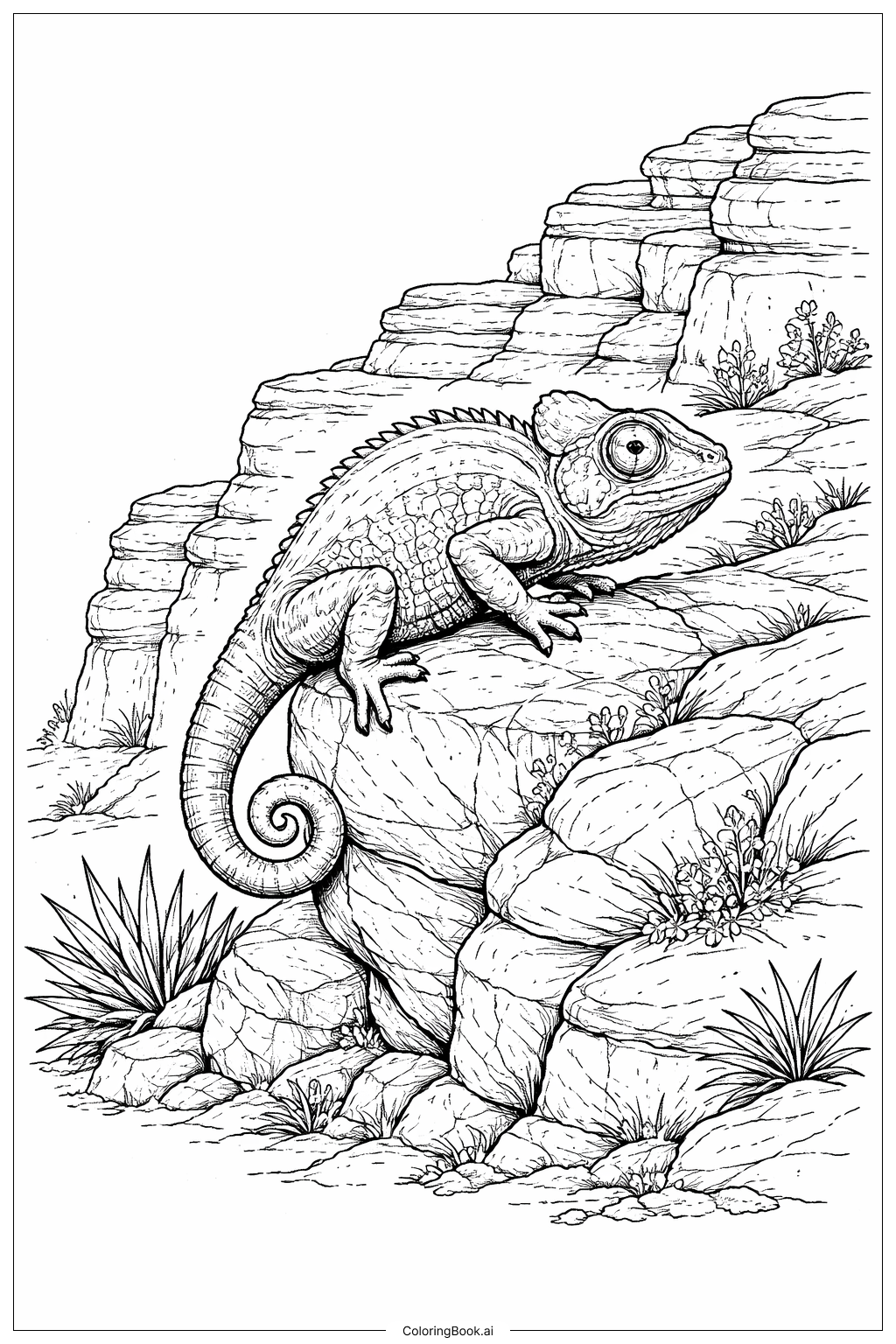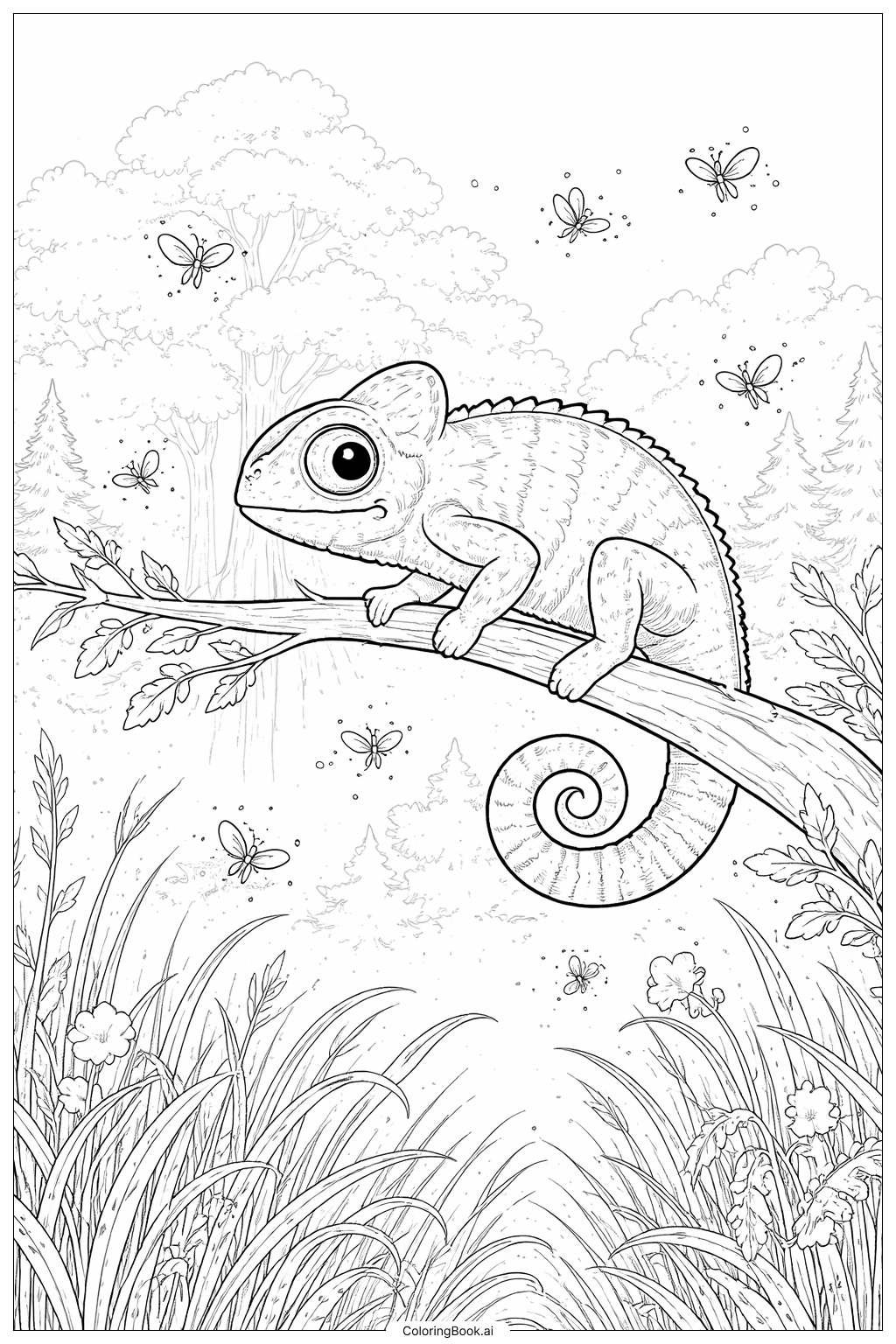
Coloring tips: How to color Standing Chameleon coloring page well?
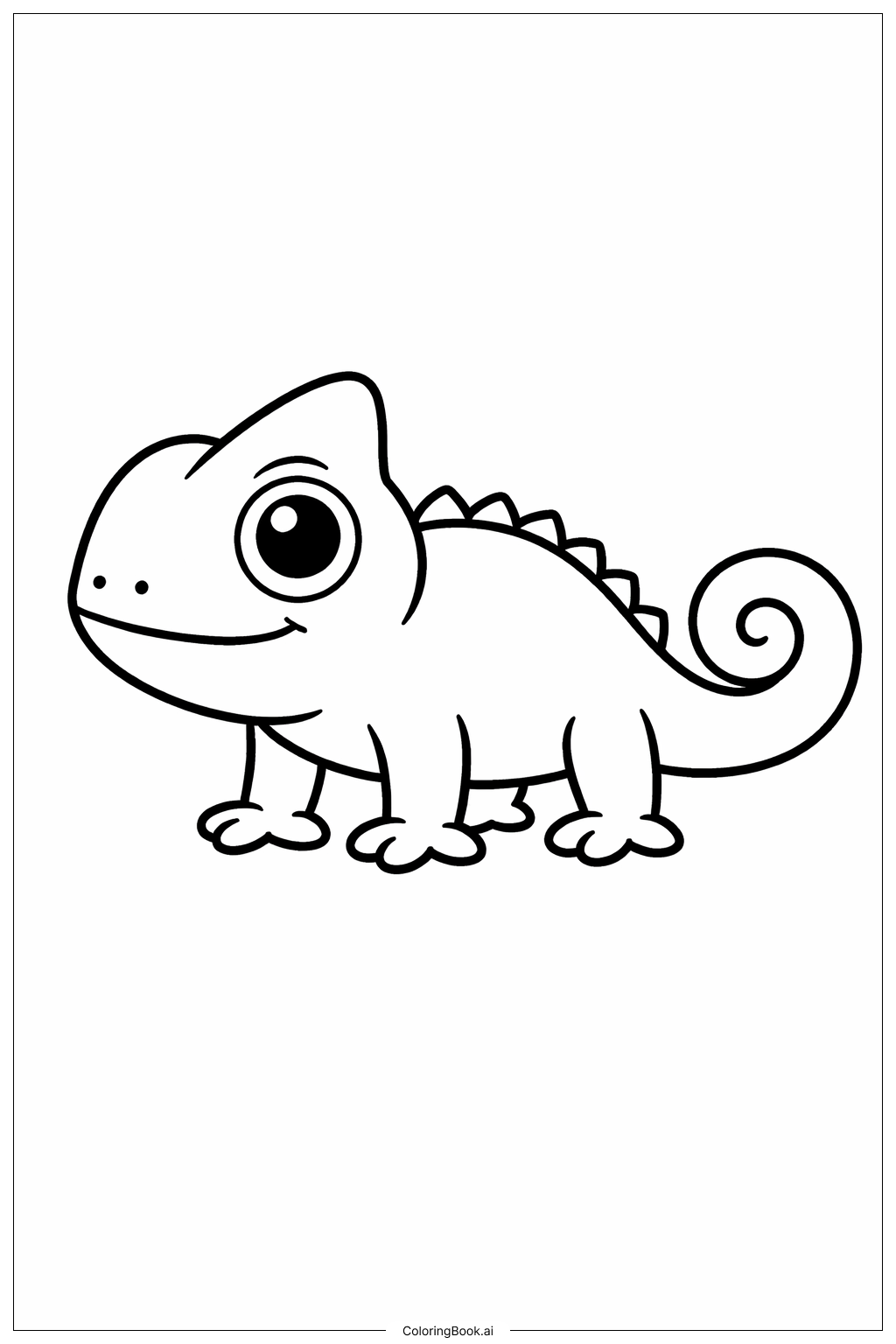
For this Standing Chameleon, try using bright green as the main color because many chameleons blend into leaves. You can add hints of yellow, light blue, or orange to show the subtle color changes chameleons often have. Use darker shades like brown or dark green along the edges for shadows and to make the scales stand out. Don’t forget to color the eyes with vibrant yellows or oranges to show their alertness. Feel free to add some colorful patterns, such as stripes or spots, to make your chameleon unique. Using different colors for the curled tail can also add fun, as it helps bring out the spiraling shape. Make sure to color around the toes carefully since they are small but important.
Coloring challenges: Which parts are difficult to color and need attention for Standing Chameleon coloring page?
• Scale Patterns: The body is covered in many overlapping scales which require careful coloring to stay within the lines and show texture.
• Eye Shape: The chameleon's eyes point in different directions, so coloring them evenly and realistically can be tricky, especially keeping the pupils round.
• Tail Curl: The tail has a spiral shape that needs continuous, smooth coloring to show its roundness and twist.
• Small Details: The toes and skin folds have fine lines that may be challenging to color without smudging or going outside the lines.
• Color Transitions: Since chameleons change colors gradually, blending multiple colors smoothly on one body part requires patience and skill.
Benefits of coloring books: Advantages of drawing Standing Chameleon coloring page
Coloring this Standing Chameleon helps improve fine motor skills because of the detailed scales and small areas like toes. It also encourages focus and patience, especially when blending colors to achieve natural-looking transitions. Children learn about colors in nature, exploring how animals adapt and change for camouflage. This activity can also spark creativity by letting artists invent their own patterns and color schemes. Finally, coloring this image promotes eye-hand coordination as artists carefully fill in complex shapes while keeping lines neat and colors vivid.