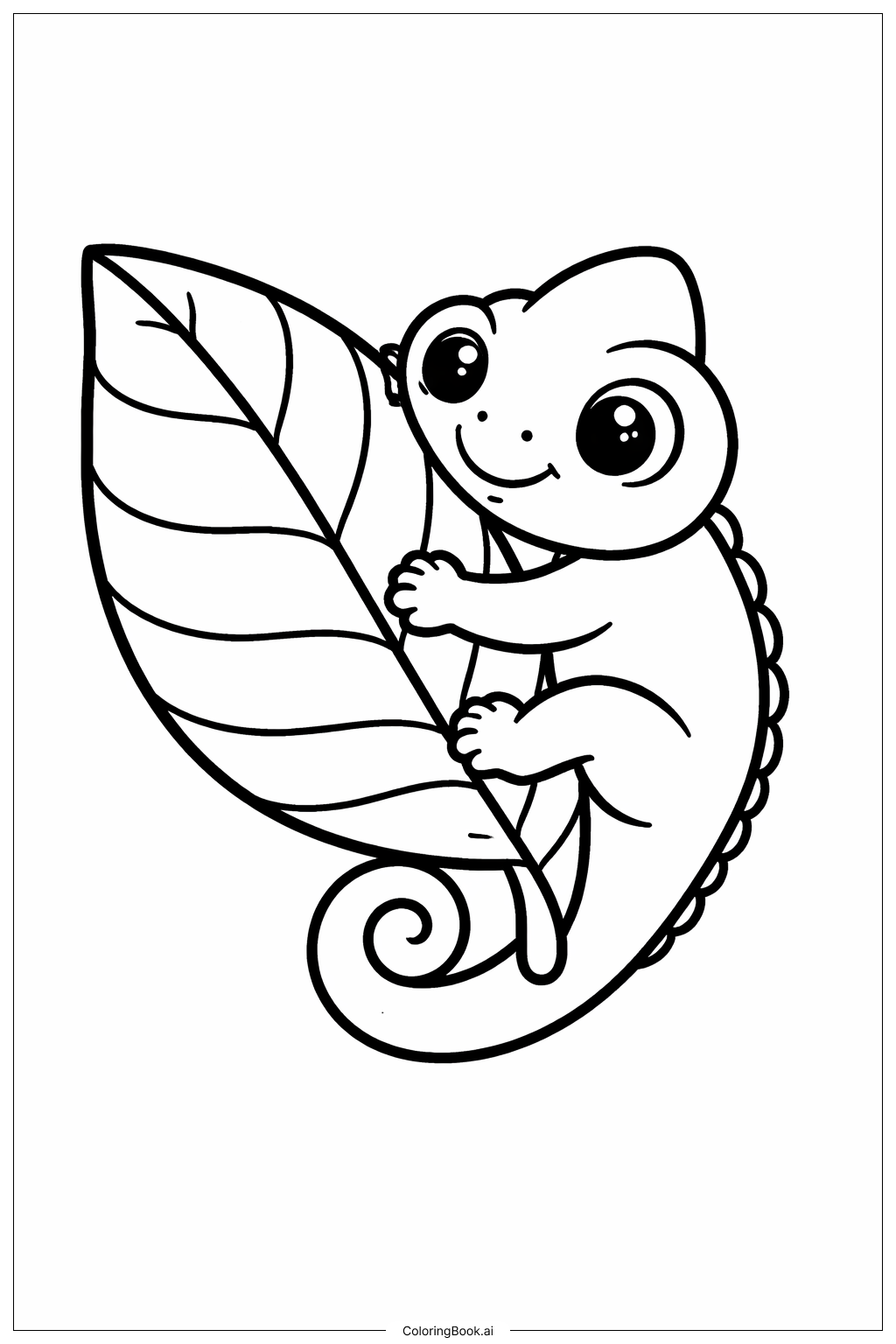
Coloring tips: How to color Chameleon Hugging Leaf coloring page well?
You can use bright and natural colors for this picture. Try green shades for the leaf to make it look real and lively. The chameleon can be colored in different vibrant colors like green, blue, or orange to show its unique look. You can make the eyes shiny using white to highlight the sparkle. Use darker colors for the shadows and lighter colors for the parts where light hits. Feel free to add fun patterns on the chameleon’s body to make it more interesting and creative.
Coloring challenges: Which parts are difficult to color and need attention for Chameleon Hugging Leaf coloring page?
1. The small claws holding the leaf can be tricky to color neatly because they are tiny and close to the leaf edges.
2. Coloring the veins on the leaf requires careful attention to keep them clear and distinct from the leaf itself.
3. The chameleon's curled tail has a spiral shape that might be challenging to outline and fill evenly without overlapping.
4. Adding shadows and highlights to show the three-dimensional shapes could be hard for younger children just learning shading techniques.
5. Keeping the eyes shiny and expressive while coloring inside the lines can be difficult because eyes are small and detailed.
Benefits of coloring books: Advantages of drawing Chameleon Hugging Leaf coloring page
Coloring this picture helps kids develop fine motor skills by practicing staying inside small spaces like the chameleon’s claws and leaf veins. It encourages creativity in choosing different colors for the chameleon and leaf. It also teaches attention to detail when coloring the small parts carefully. This activity can improve focus and patience as children work on making the picture beautiful. Additionally, coloring an animal like a chameleon can spark interest in nature and learning about animals.