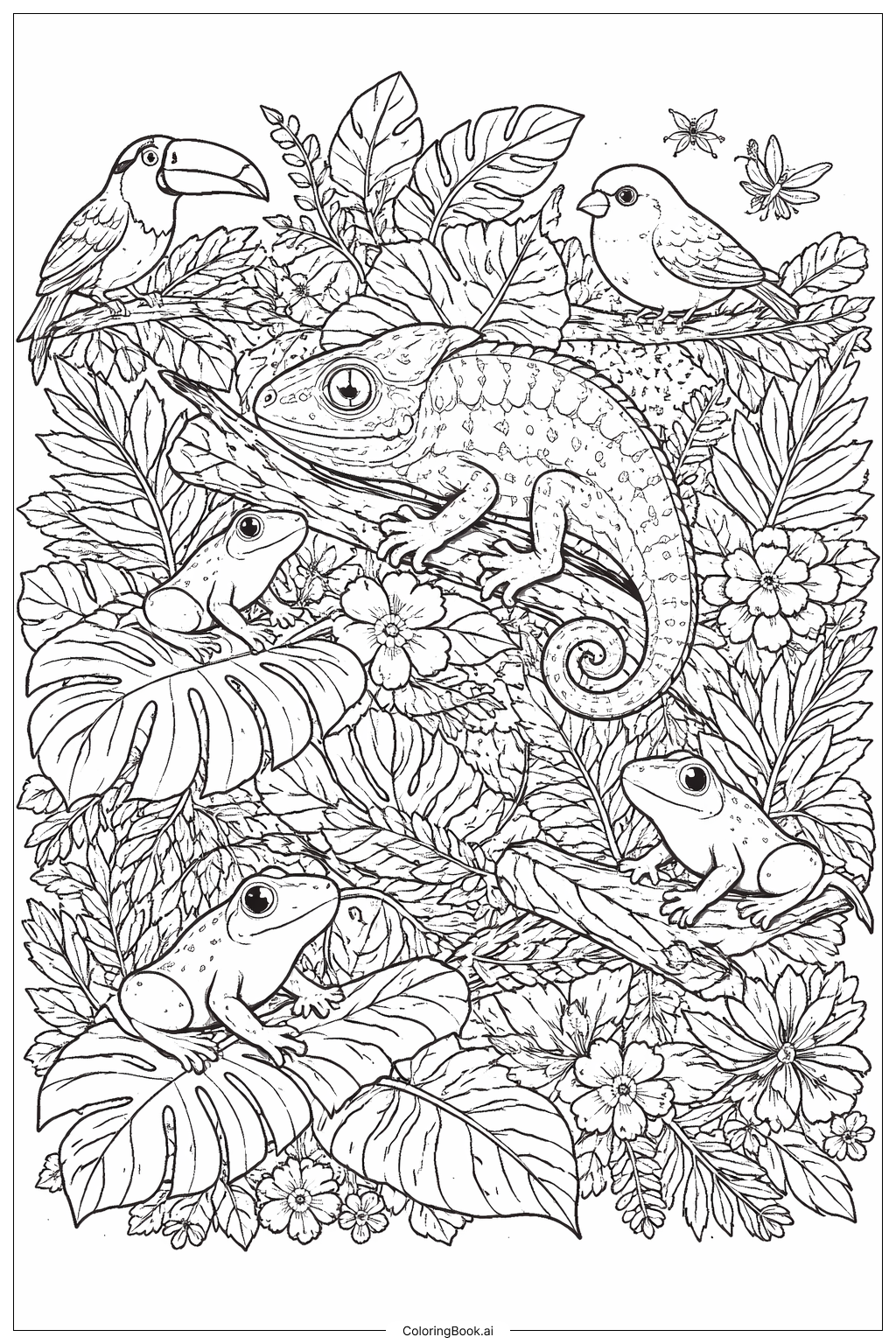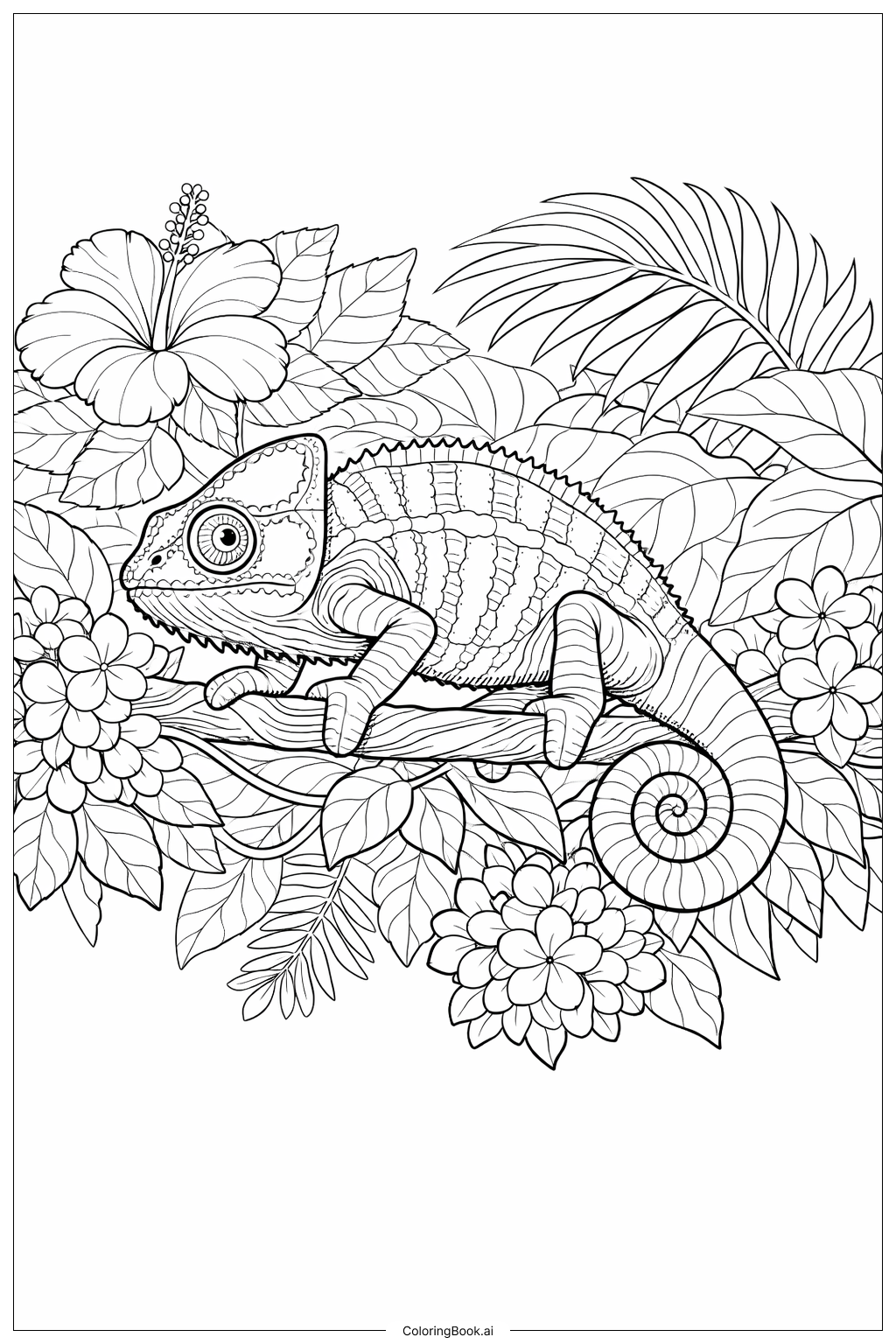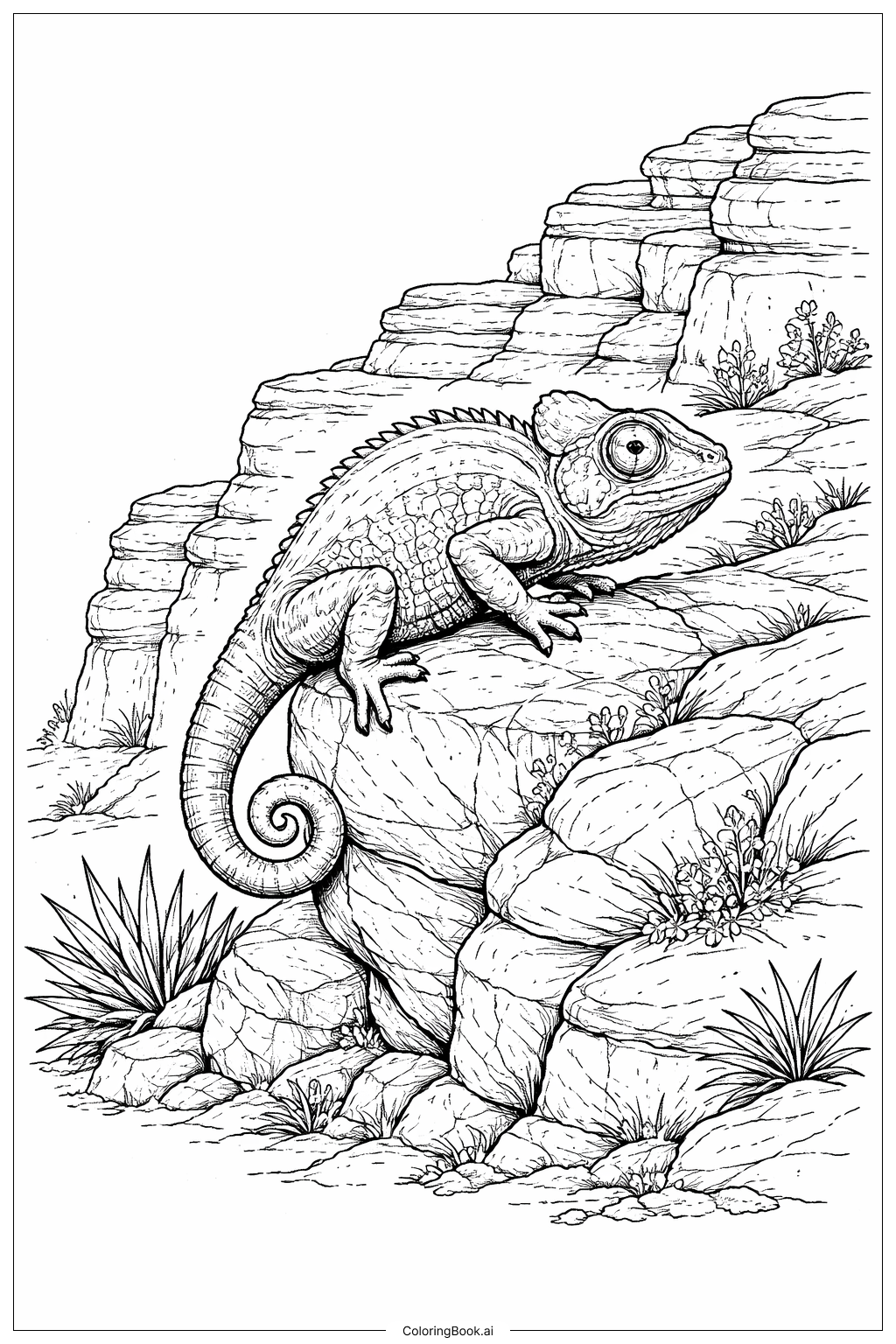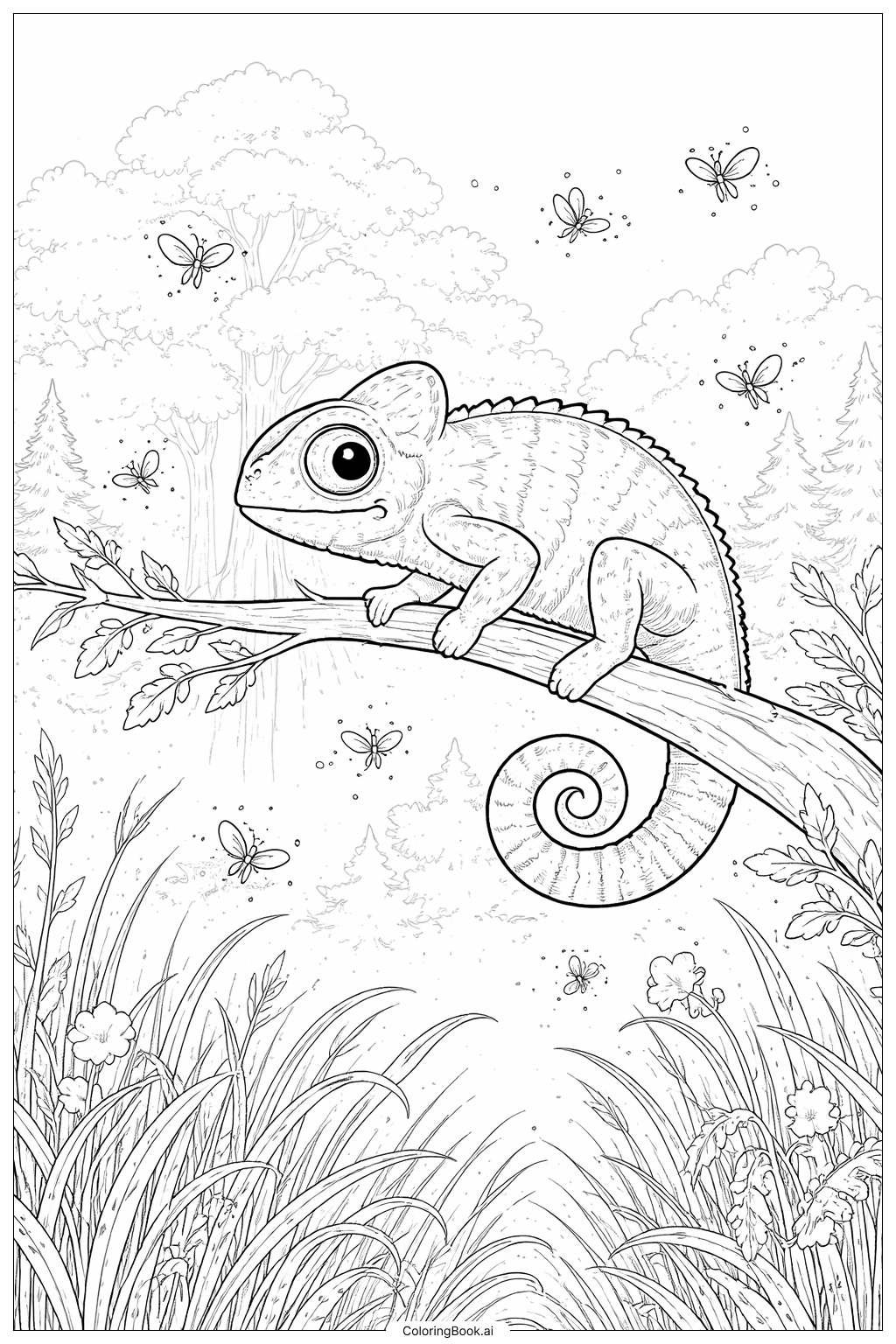
Coloring tips: How to color Chameleon And A Snail coloring page well?
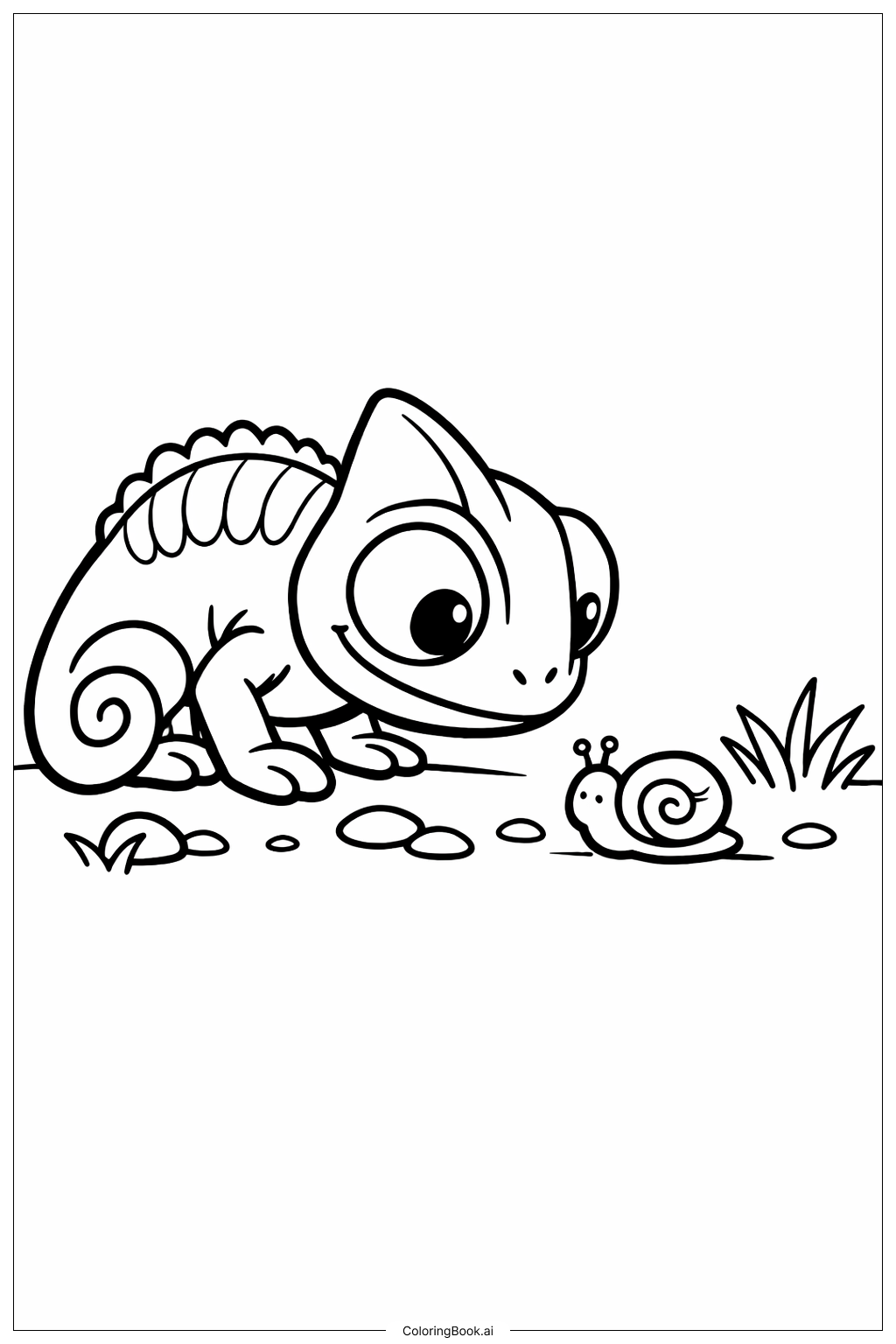
You can use bright green or shades of green for the chameleon’s body to show its natural color. For the bumps on its back, try using a slightly different green or even a yellow shade. The snail’s shell can be colored brown, beige, or even a soft orange. Use light pink or cream for the snail’s body to make it look soft. The grass and the plants around can be different greens to make the scene lively. Add some gray or brown to the rocks for realism. You can also use light blue or soft colors for the ground to make the animals stand out.
Coloring challenges: Which parts are difficult to color and need attention for Chameleon And A Snail coloring page?
1. Small details on the chameleon’s back require careful coloring to show texture without going outside the lines.
2. The chameleon’s big eyes need precise coloring to keep them clean and expressive.
3. The snail’s shell has spiral lines that may be hard to color neatly within.
4. The small rocks and grass need fine coloring work to bring out the natural look.
5. Coloring the different parts of the animals with appropriate shading can be a challenge for beginners.
Benefits of coloring books: Advantages of drawing Chameleon And A Snail coloring page
Coloring this picture helps improve attention to detail as kids focus on small parts like the snail’s shell and the chameleon’s back. It encourages creativity by allowing choice of colors for animals and nature. It also develops fine motor skills through careful coloring within small spaces. Kids can learn about animals and their textures, boosting their curiosity about nature. Overall, it’s a fun and educational activity fostering both skill and imagination.