Coloring tips: How to color Catnap with Blanket coloring page well?
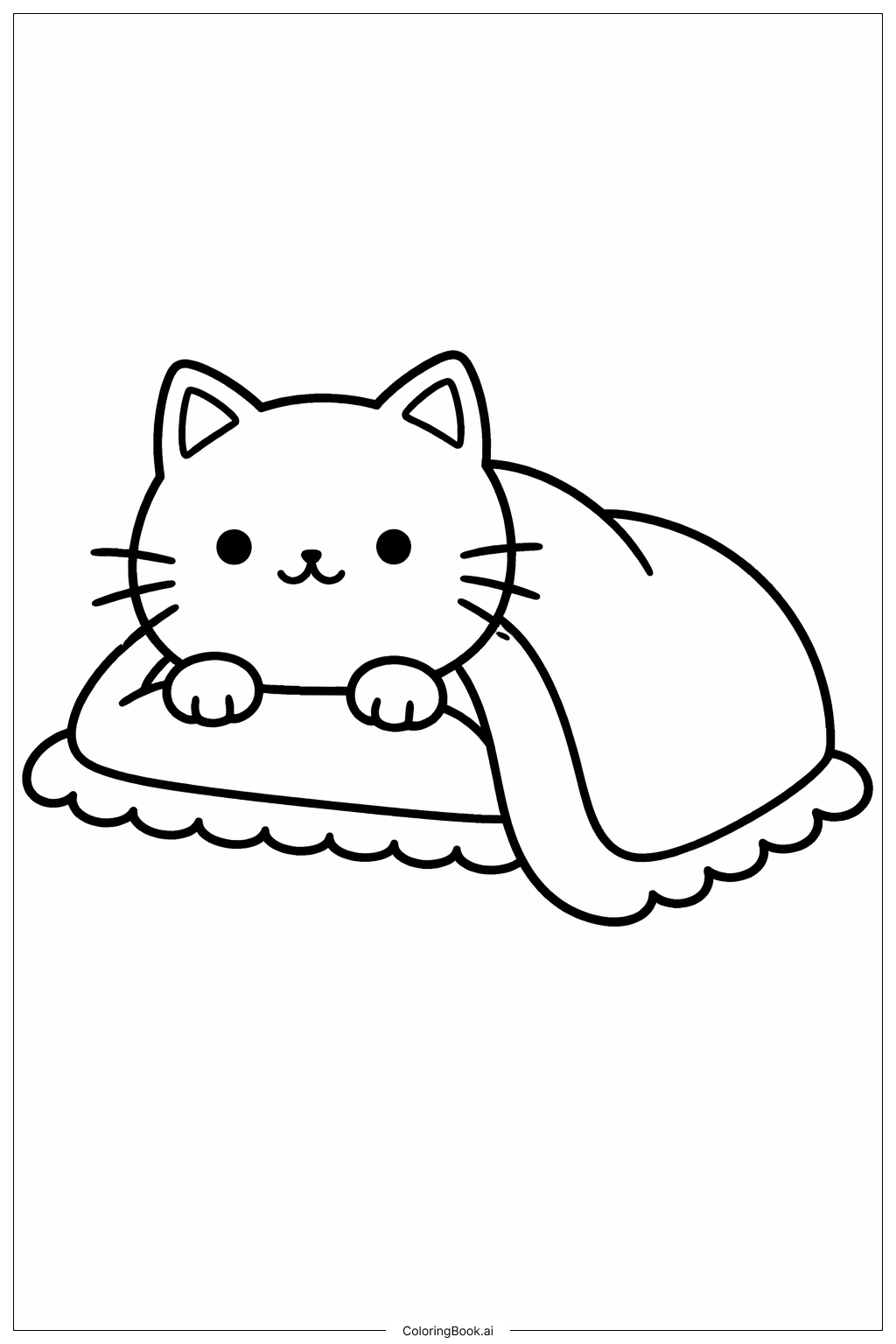
You can use warm colors like orange, brown, or gray for the cat to give it a cozy feel. The pillow can be bright and colorful, such as yellow, pink, or green, making the scene lively. For the blanket, choose soft pastel colors like light blue, lavender, or pale pink to make it look warm and gentle. You can also add shading by using a darker shade of the color along the folds of the blanket to create depth. The scalloped edge of the pillow can be colored in a darker or contrasting color to highlight it nicely.
Coloring challenges: Which parts are difficult to color and need attention for Catnap with Blanket coloring page?
1. Coloring the small areas inside the cat's ears needs careful attention to stay within the lines.
2. The blanket’s curves and folds require shading to look natural, which can be tricky for beginners.
3. The scalloped edge of the pillow has many small curves, so staying neat while coloring them is important.
4. Coloring the cat's paws evenly without overflowing into the pillow area can be a challenge.
5. Making the cat's face look cute by not coloring over the eyes or whiskers requires precision.
Benefits of coloring books: Advantages of drawing Catnap with Blanket coloring page
Coloring this picture helps children improve fine motor skills by practicing staying inside lines, especially on small details like the ears and pillow edges. It encourages creativity in choosing colors that make the scene warm and cozy. Shading the blanket teaches them about light and shadow, developing observation skills. Coloring a calm, peaceful cat promotes relaxation and focus, making the activity both fun and soothing.