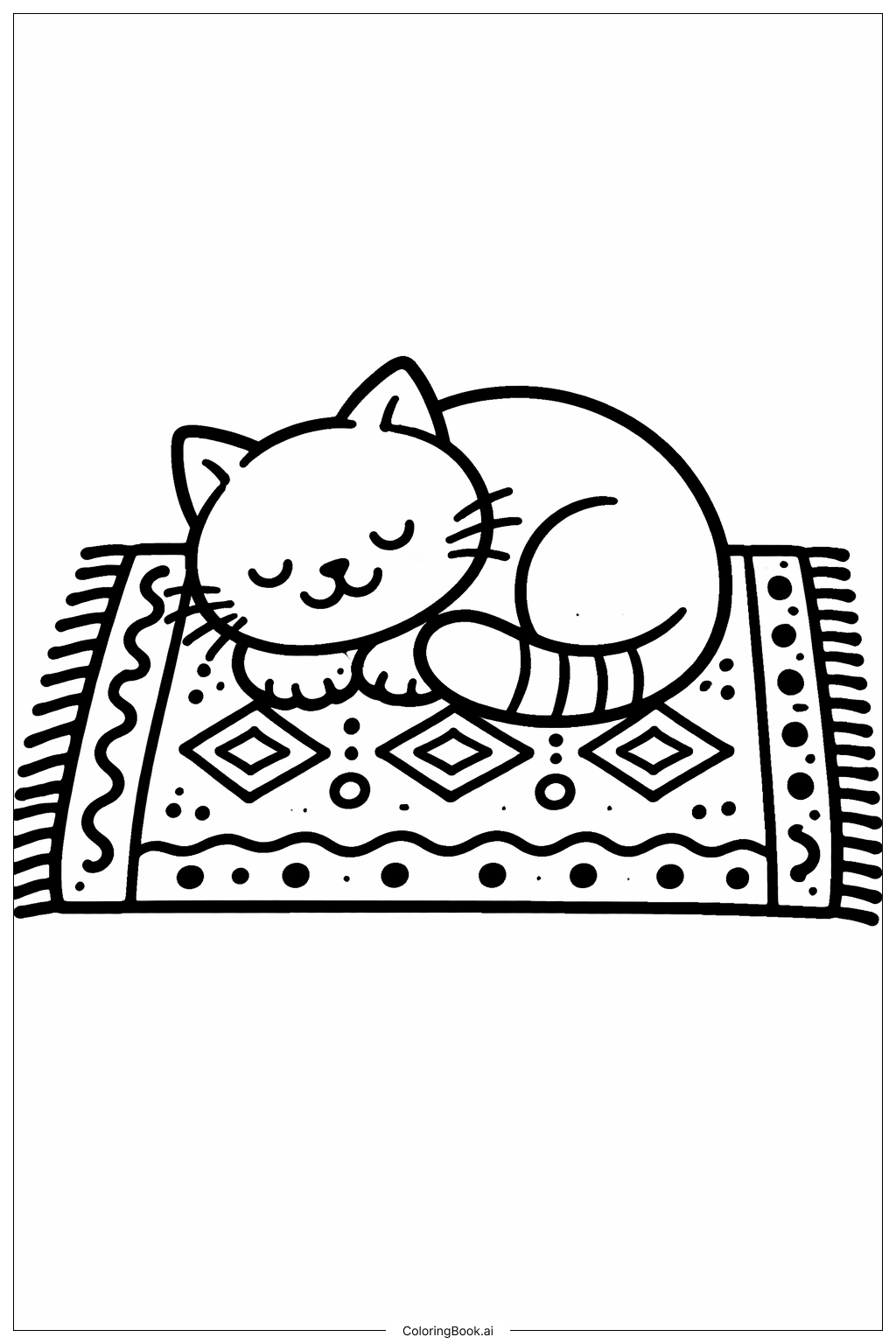
Coloring tips: How to color Catnap on a Rug coloring page well?
Start with the cat using warm, natural tones like orange, brown, gray, or cream for the fur. Add subtle shading around the edges to create depth and dimension. The whiskers can remain white or be lightly colored. For the rug, choose rich, vibrant colors that complement your cat choice. Consider using deep reds, blues, or purples for the main pattern areas. Make the geometric diamonds stand out by alternating two contrasting colors. Use a darker shade for the outer borders to frame the design. The background rug color could be a warm beige or soft cream to balance the pattern. Try using colored pencils for smooth blending on the cat's fur and markers for bold, clean sections in the rug's geometric pattern.
Coloring challenges: Which parts are difficult to color and need attention for Catnap on a Rug coloring page?
• Intricate Rug Pattern: The geometric design features multiple repeating diamond shapes and detailed borders that require careful attention to maintain symmetry. Staying within the small pattern lines demands precision and patience, especially in the tightly spaced areas. Choosing a consistent color scheme that enhances rather than overwhelms the pattern takes planning.
• Fur Texture and Shading: Creating realistic fur texture on the cat requires layering colors and using directional strokes that follow the natural flow of the fur. Achieving smooth color transitions for depth and dimension can be challenging, particularly around curved areas like the body and tail. Blending multiple shades convincingly takes practice and the right coloring tools.
• Small Detail Areas: The cat's facial features, including eyes, nose, and whiskers, are delicate elements that need steady hands and fine-tipped coloring tools. The narrow spaces between rug pattern elements can be difficult to fill without accidentally coloring outside the lines. These tiny sections test control and concentration.
• Color Coordination: Balancing colors between the cat and the ornate rug requires thoughtful planning to ensure both elements stand out without clashing. The busy pattern can easily compete with the cat for visual attention if colors are not chosen carefully.
Benefits of coloring books: Advantages of drawing Catnap on a Rug coloring page
Coloring this peaceful scene offers wonderful relaxation benefits, much like the catnap itself. The repetitive geometric patterns on the rug provide a meditative quality that helps calm the mind and reduce stress. Working on the intricate details improves fine motor skills and hand-eye coordination, especially for younger colorists. The combination of organic curves in the cat and structured patterns in the rug exercises different coloring techniques and builds versatility. This page encourages color theory exploration as you coordinate between the animal and decorative elements. The adorable subject matter brings joy and comfort, making the coloring experience emotionally rewarding. Completing the detailed rug pattern builds patience and concentration skills while providing a satisfying sense of accomplishment. This image is suitable for various age groups and skill levels, offering simple larger areas alongside more challenging detailed sections.