Coloring tips: How to color Catnap in a Box coloring page well?
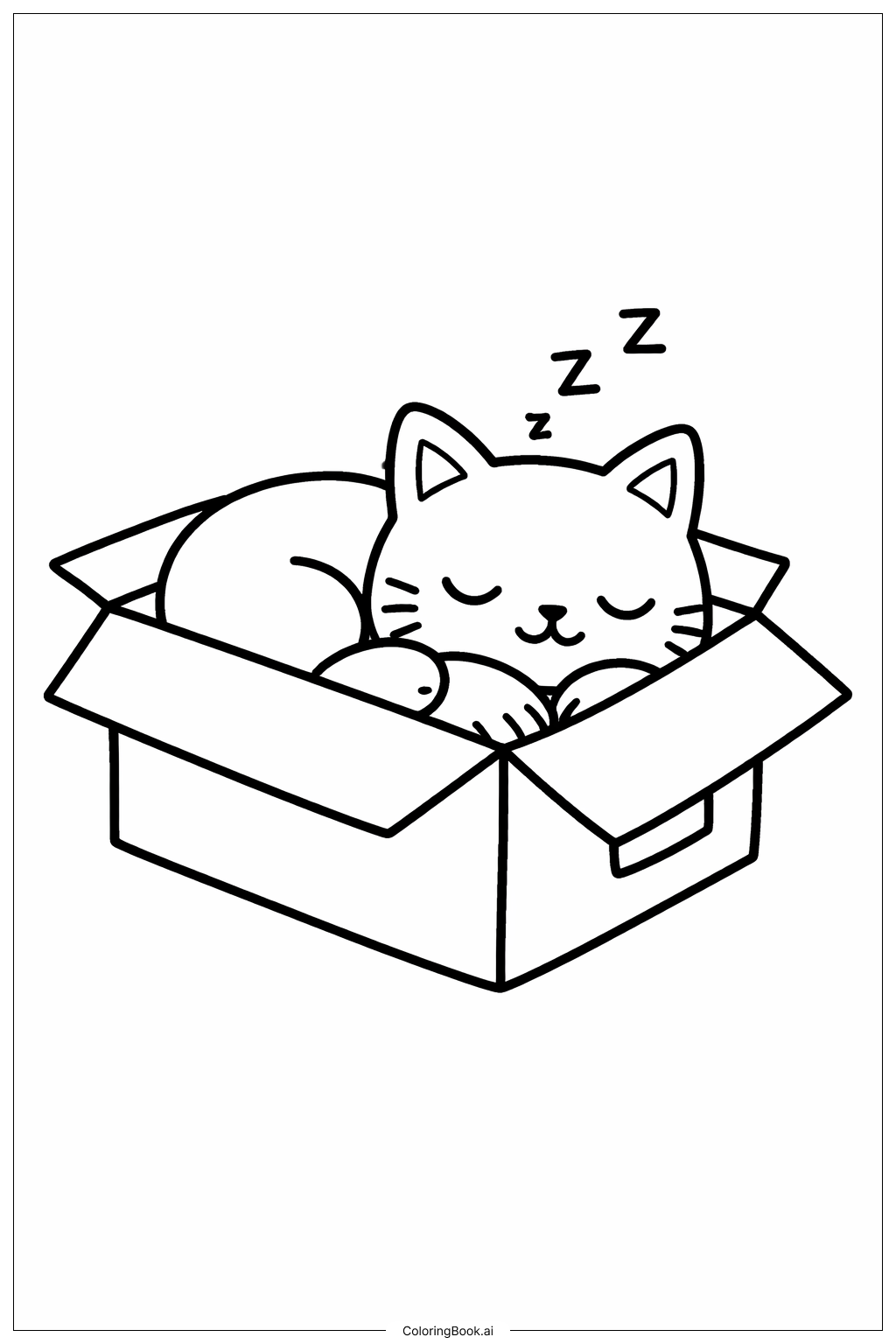
For coloring this picture, start by choosing soft colors for the cat, like light brown, gray, or orange. You can add stripes or spots to make the cat look special. Use a light color for the inside of the cat’s ears. The box can be colored in shades of brown or tan to look like a real cardboard box. Adding shadows with a darker color on the edges of the box will help make it look 3D. The 'Z' signs can be colored in blue or purple to show the sleeping effect. Keep the background white or add light pastel colors to make the cat and box stand out.
Coloring challenges: Which parts are difficult to color and need attention for Catnap in a Box coloring page?
1. Coloring the small details on the cat’s face, like the whiskers and closed eyes, without going outside the lines can be tricky for younger children.
2. The edges of the box have many straight lines and angles. Staying inside these lines needs careful hand control.
3. Making the overlapping flaps of the box look different with shading might be challenging to show depth.
4. Choosing the right colors to make the cat look realistic but still fun can take some thinking.
5. Coloring the small 'Z' letters neatly might require patience and a steady hand.
Benefits of coloring books: Advantages of drawing Catnap in a Box coloring page
Coloring this picture helps kids improve their fine motor skills as they carefully color inside the lines of the cat and box. It also encourages creativity by allowing them to choose colors for the cat’s fur and box. The calm scene of the napping cat can promote relaxation and focus. Children can learn about shading and depth when they add shadows to the box. Overall, coloring this picture is a fun way to practice patience and hand-eye coordination.