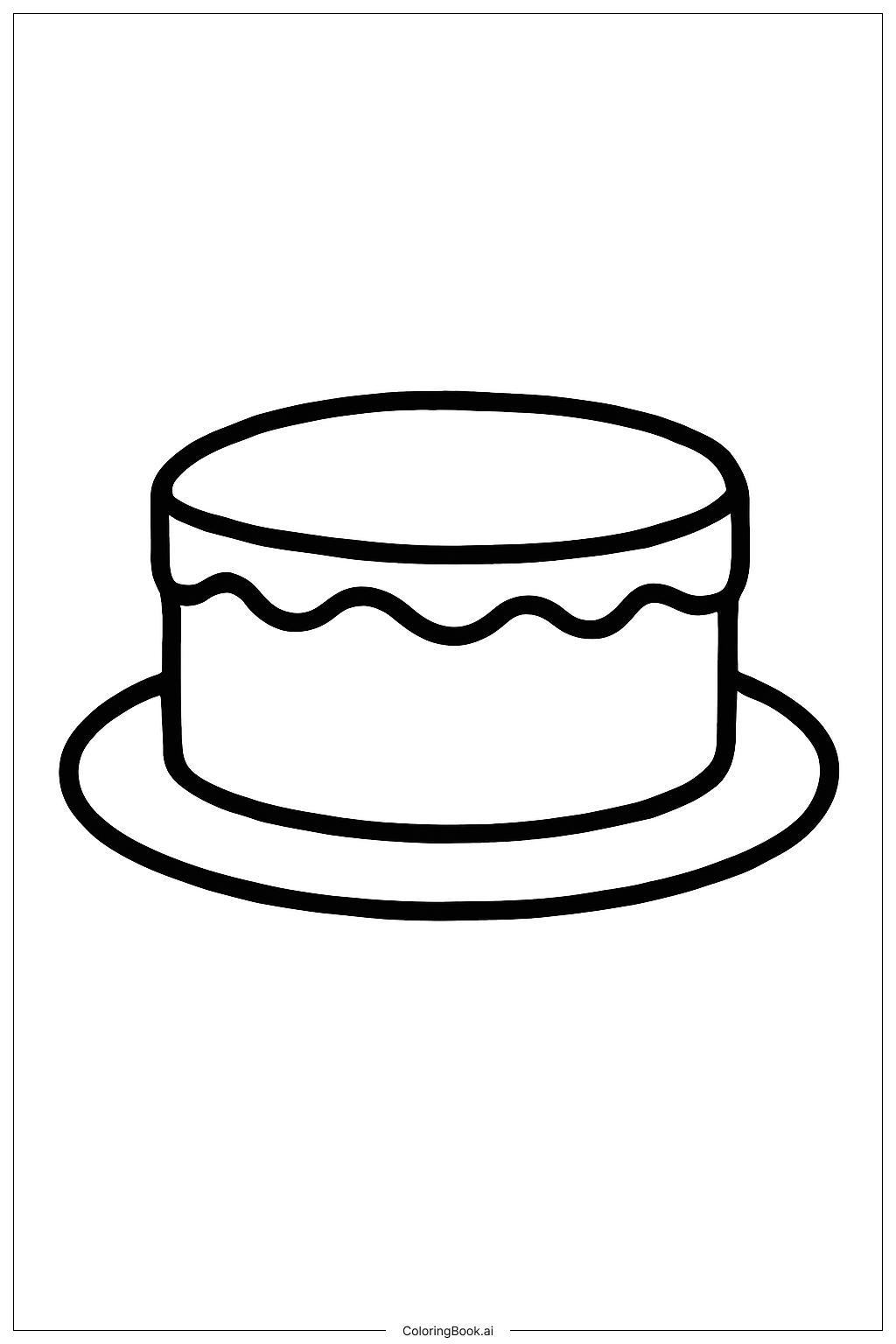
Coloring tips: How to color Single Layer Cake coloring page well?
Start with the cake base using warm, soft tones like pale yellow or cream to suggest a freshly baked sponge. For the frosting, try white or pastel shades such as light pink, lavender, or mint green to give it a sweet, fluffy look. Use a slightly darker version of your frosting color for the drips along the sides to add depth. Color the rosette decorations on top with a contrasting but harmonious color, like rose pink or lilac. The candle can be bright and fun — try red, blue, or rainbow stripes. The flame should be yellow at the base fading to orange at the tip. Use a soft beige or warm gray for the plate. Add gentle shading under the frosting drips and around the base of the rosettes to make the cake look three-dimensional and delicious.
Coloring challenges: Which parts are difficult to color and need attention for Single Layer Cake coloring page?
• Frosting Drips: The drips along the sides of the cake require careful attention. Each drip has a slightly different shape and size. Coloring them with a smooth gradient — lighter at the top and slightly darker at the bottom — can be tricky for beginners. Take your time and use gentle strokes to avoid harsh lines.
• Rosette Details on Top: The swirled rosettes on top of the cake are made up of many small curved lines. Staying within the tight spiral boundaries without smudging is challenging. Using colored pencils with a fine tip or thin markers will help you follow the curves neatly and add realistic dimension.
• Candle and Flame: The candle is a small, narrow area surrounded by other decorations. Coloring it precisely without bleeding into the frosting around it takes a steady hand. The flame is even smaller and requires two or three colors blended smoothly — yellow, orange, and a hint of red — to look realistic and glowing.
• Cake Texture and Layers: Suggesting the soft, spongy texture of the cake where it peeks through the frosting is a subtle challenge. Using very light, short strokes in a warm yellow or golden-brown tone can create this effect without overpowering the overall design.
• Plate and Base Decorations: The decorative plate and floral accents around the base have fine ornamental lines. Keeping these details clean and consistent while still making them visually interesting requires patience and a light touch, especially for younger colorists.
Benefits of coloring books: Advantages of drawing Single Layer Cake coloring page
Coloring this Single Layer Cake page offers a wide range of fun and meaningful benefits for kids and adults alike. For younger children, it helps develop fine motor skills as they practice staying within the lines of the frosting drips, rosettes, and small decorative details. This kind of focused hand movement builds the coordination and pencil control needed for writing and drawing. Choosing colors for the cake, frosting, and candle encourages creative thinking and personal expression. Kids learn that there are no wrong color choices — a purple cake with a green candle is just as wonderful as a classic white one. For older kids and adults, the detailed rosettes and layered decorations provide a satisfying challenge that supports concentration and mindfulness. Focusing on a detailed task like this can help reduce stress and create a calming, meditative experience. Completing the page also builds a sense of accomplishment and pride. The cake theme adds an extra layer of joy, as it connects coloring to happy memories of birthdays and celebrations. Overall, this page makes coloring both a creative outlet and a relaxing, rewarding activity for everyone.