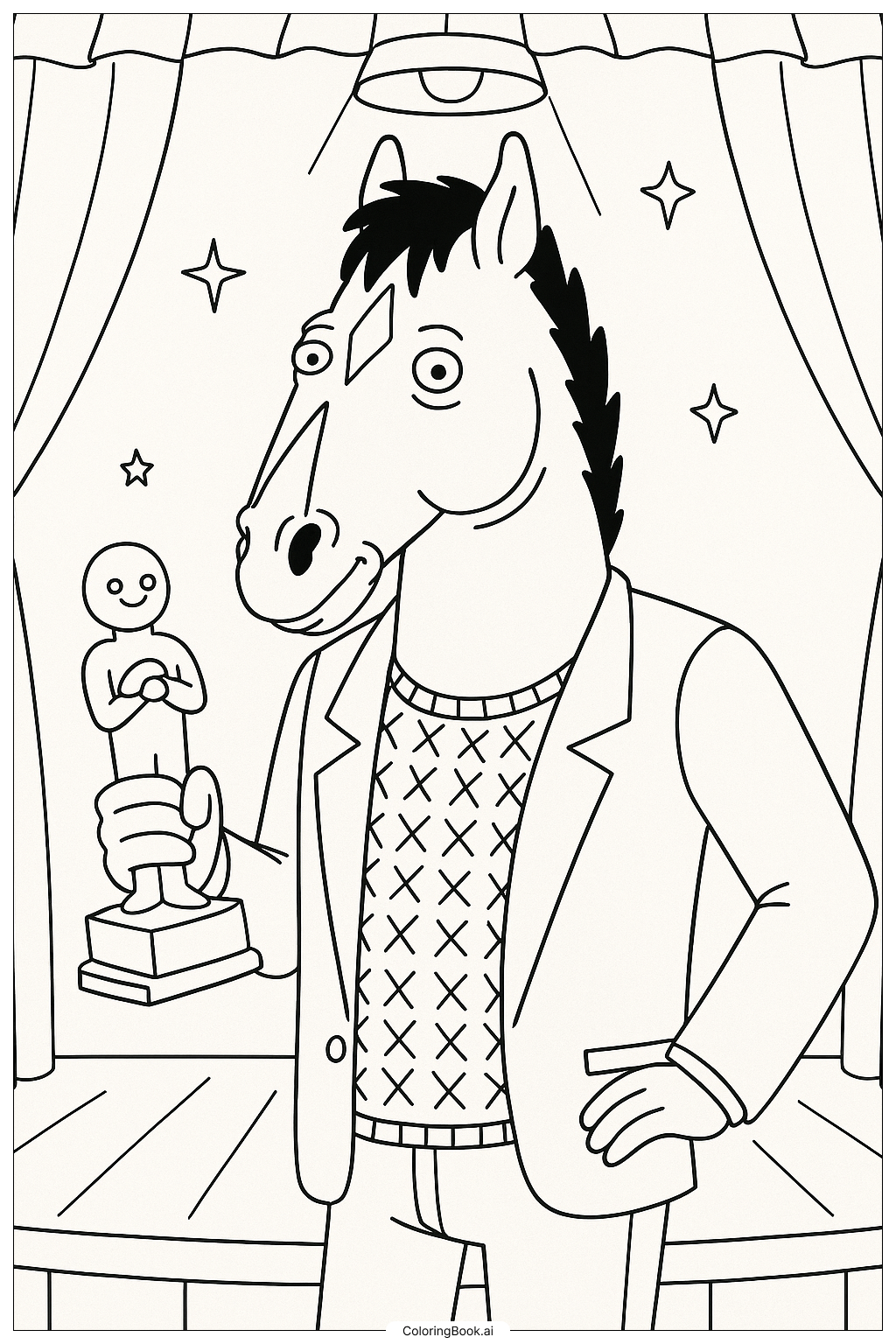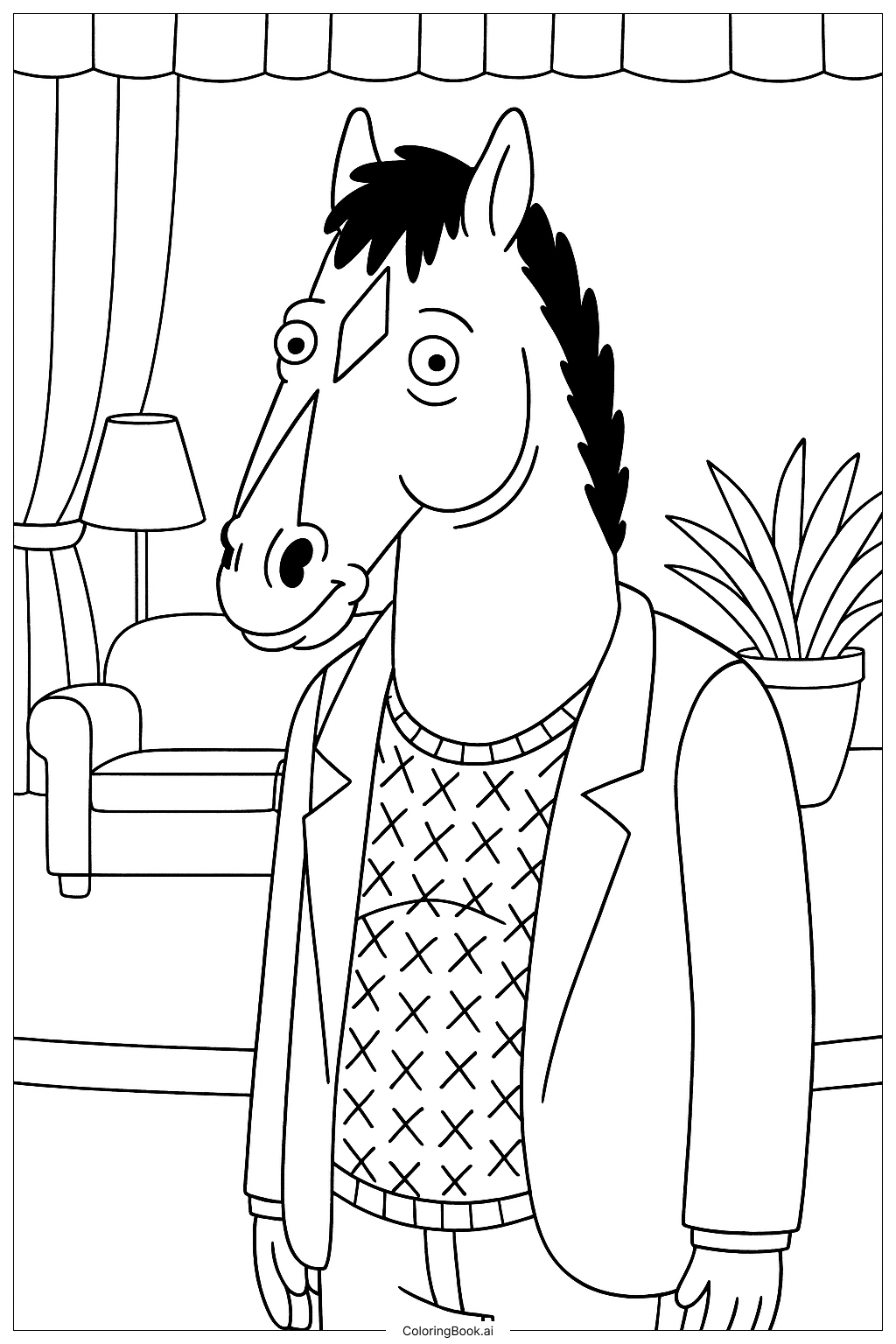
Coloring tips: How to color Bojack Horseman On The Set Of Horsin Around coloring page well?
You can use warm browns and tans for Bojack's horse coat to keep him looking natural. His sweater is often greenish-gray, so consider soft muted greens or grays for that. The jacket can be a darker color like navy blue or black to contrast nicely. For the background, bright studio lights can be colored in yellows or whites to show their glow. The set pieces might be classic TV colors—browns for wooden furniture and some colorful accents to highlight props. Try using shading with colored pencils or markers to show light and shadow from the stage lights, which adds depth and makes the image lively. Don’t forget small details like the camera lenses and director’s chair to bring the set to life!
Coloring challenges: Which parts are difficult to color and need attention for Bojack Horseman On The Set Of Horsin Around coloring page?
• Textured Fur: Adding texture to Bojack's horse coat can be tricky without making the coloring look flat or messy. Using gentle strokes to mimic the fur’s flow might take practice. • Lighting Effects: The studio lights cast shadows and highlights that require careful shading to look realistic. Capturing this contrast correctly can be challenging for younger artists. • Small Details: The set includes smaller elements like cameras, cables, and chairs which have intricate parts. Coloring these precisely while staying within the lines demands focus and patience. • Color Choices: Balancing natural coat colors with the more artificial tones of the set means deciding which colors to prioritize and how to blend them well. • Overlapping Objects: Some items overlap, such as Bojack standing in front of chairs and equipment, requiring good control to keep outline clarity and avoid color mixing.
Benefits of coloring books: Advantages of drawing Bojack Horseman On The Set Of Horsin Around coloring page
Coloring this image helps improve fine motor skills by practicing careful strokes on detailed sections like Bojack’s face and the filming equipment. It encourages observation of light and shadow, which builds understanding of depth and space in art. Working on texture for the horse coat develops hand-eye coordination and patience. Choosing colors for realistic and set elements enhances creativity and decision-making as kids think about mood and atmosphere. Finally, this scene offers a fun behind-the-scenes look that invites storytelling and imagination, making coloring both a relaxing and mentally engaging activity for children and teens.