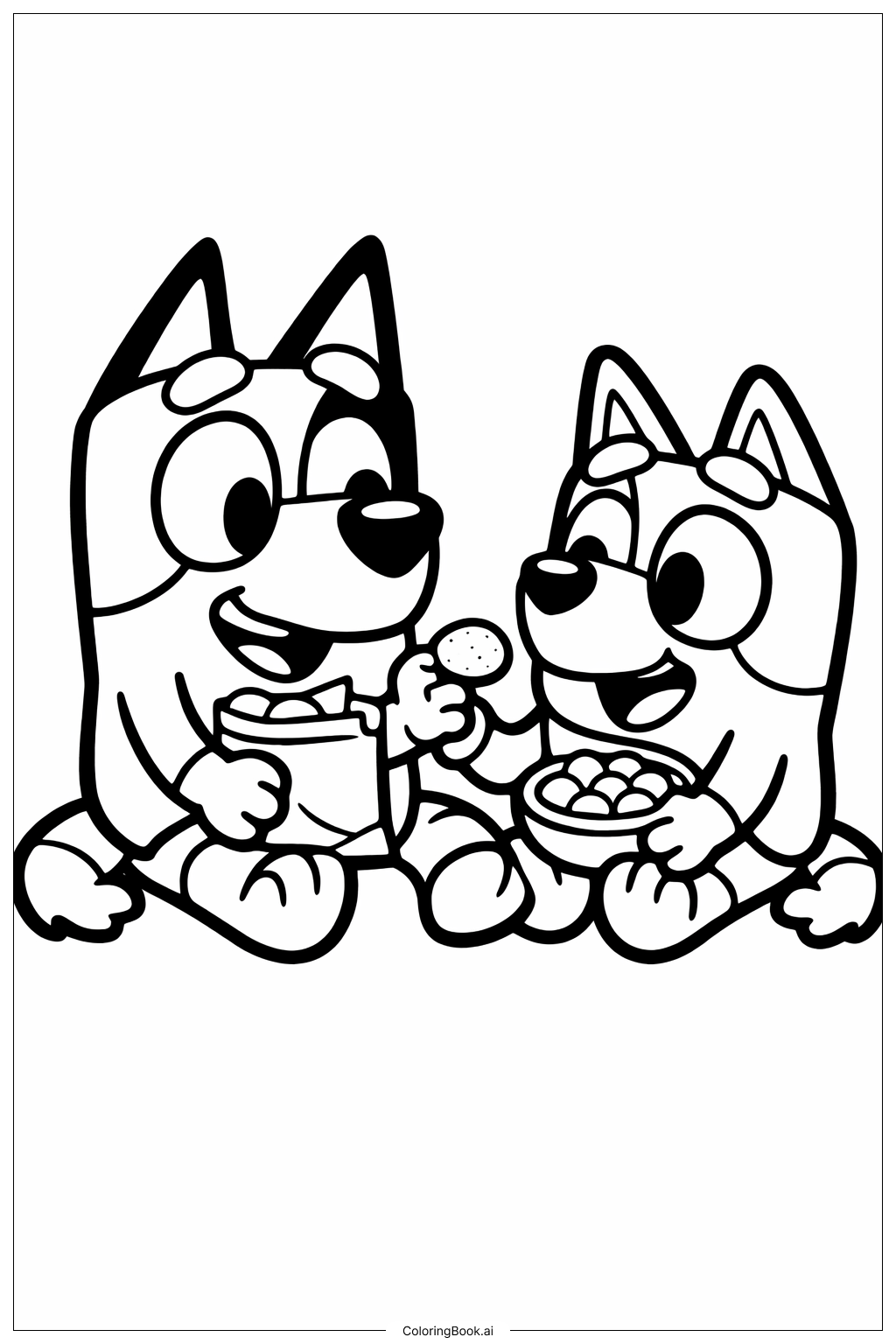
Coloring tips: How to color Bluey And Bingo Sharing Snack coloring page well?
For this picture, use soft and bright colors to bring Bluey and Bingo to life. Bluey’s fur is a vibrant blue mixed with light beige on her face and tummy. Bingo’s fur is mostly orange-brown with creamy patches. Use warm tones for the snack they share, like yellow or light brown, to make it look tasty. The background can be colored in pale greens or pastel shades to keep the focus on the two sisters. Don’t forget to add shading around their paws and faces to give depth. You may choose to color their eyes brown and add tiny pink to their cheeks to make them appear joyful and cuddly.
Coloring challenges: Which parts are difficult to color and need attention for Bluey And Bingo Sharing Snack coloring page?
• Small Details: Bluey and Bingo’s faces have fine lines showing their eyes, nose, and mouth. Staying within the small spaces can be tricky and requires steady hand control.
• Fur Pattern: Bluey’s and Bingo’s fur have distinct patterns and color sections that need careful coloring to keep the character recognizable and neat.
• Overlapping Elements: Their paws overlap as they share the snack. Coloring around these areas without mixing lines can be challenging.
• Shading and Depth: Adding light and shadow effects to the characters’ faces and bodies helps create a three-dimensional look, but this requires some skill.
• Background Simplicity: While simple, the background needs a balanced color choice so it doesn’t overpower Bluey and Bingo, needing a good eye for color harmony.
Benefits of coloring books: Advantages of drawing Bluey And Bingo Sharing Snack coloring page
Coloring this image helps develop fine motor skills as children learn to control their coloring tools within the details. It encourages attention to patterns and colors, stimulating cognitive abilities related to observation and creativity. Sharing scenes like this also teach empathy and kindness by highlighting positive relationships. The friendly characters make coloring fun and engaging, motivating children to spend focused time on their art. Overall, it supports emotional expression, hand-eye coordination, and recognition of color harmony, making it an excellent activity for kids aged 4 to 16.