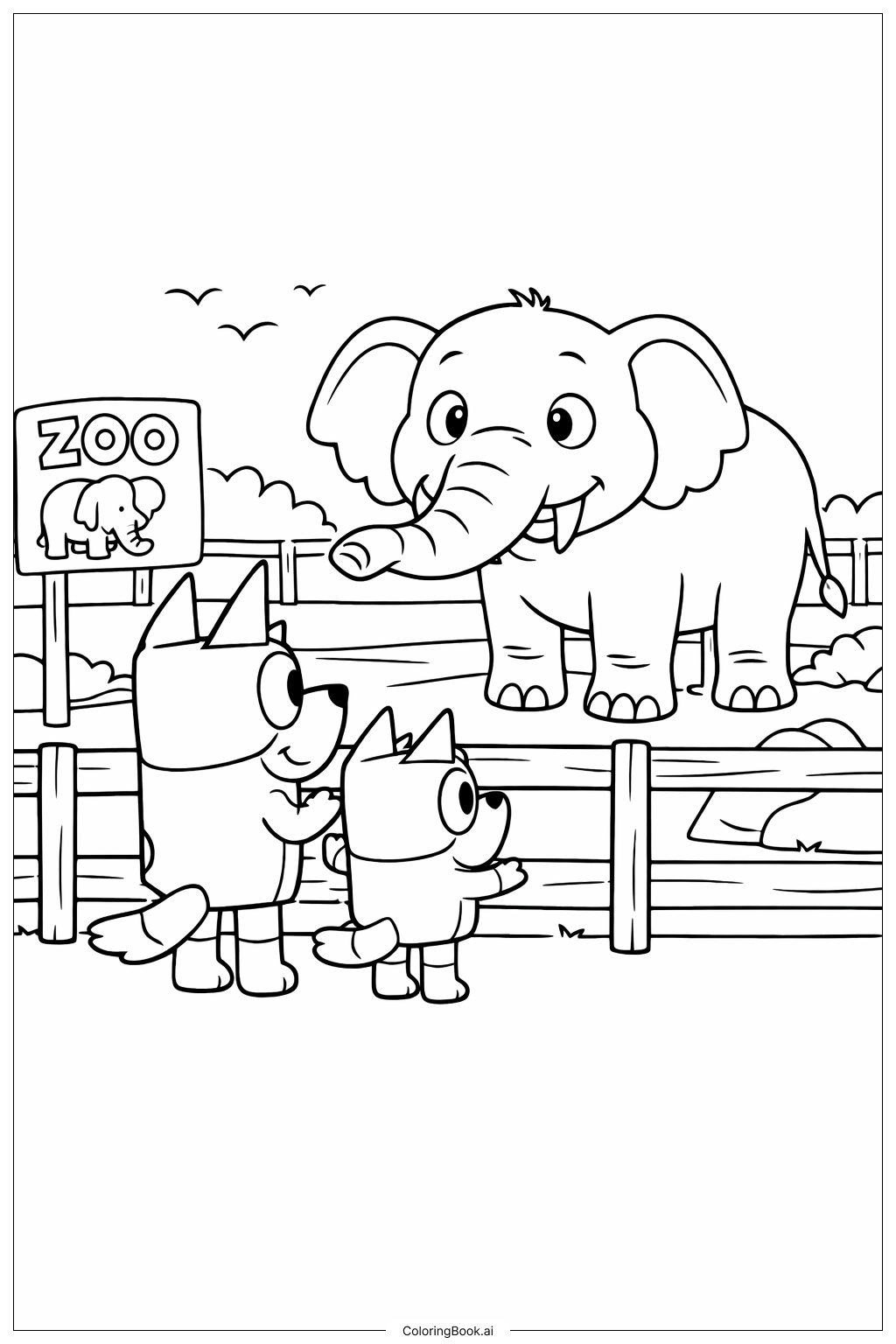
Coloring tips: How to color Bluey And Bingo At Zoo coloring page well?
Start with Bluey's iconic blue fur — use a medium sky blue for her body and a slightly darker blue for outlines and shading. Her ears can have a soft inner pink. For Bingo, use a warm reddish-orange for her fur, with a lighter peach or cream tone on her belly and face. Give both sisters bright, cheerful eyes using dark brown or black pupils with a small white highlight to make them pop. Their clothes, if visible, can be colored in fun, bold shades like red, yellow, or green. For the zoo background, use lush greens for trees and bushes, sandy browns for pathways, and soft grays or tans for stone walls. Animals in the scene can be colored in their natural tones — earthy browns, grays, and blacks. Keep the sky a soft, cheerful blue with white fluffy clouds. Use bright, saturated colors throughout to keep the mood fun and energetic, matching the spirit of the show.
Coloring challenges: Which parts are difficult to color and need attention for Bluey And Bingo At Zoo coloring page?
• Bluey's Fur Shading: Getting Bluey's blue fur to look natural is tricky. Her body uses multiple shades of blue, and young colorists may find it challenging to blend the lighter and darker tones smoothly without making the fur look flat or muddy. Using at least two shades of blue — one for the base and a darker tone for depth — will help bring her to life.
• Bingo's Warm Color Tones: Bingo's reddish-orange fur requires careful color choices. The orange, red, and cream tones must work together harmoniously. Staying within a warm color palette and avoiding overly bright reds that clash with the orange base can be a challenge, especially for younger colorists.
• Fine Character Details: Both characters have small facial features — eyes, noses, and expressions — that require a steady hand and fine-tipped tools. Coloring within these tiny areas without going over the outlines takes patience and good control, which may be difficult for younger children.
• Zoo Background Elements: The background is filled with many details, including animal enclosures, trees, paths, and signage. Deciding which colors to use for each element without making the scene feel too busy or chaotic requires planning. Keeping background colors softer than the foreground characters helps maintain visual balance.
• Consistent Color Harmony: Balancing all the colors across both characters and the detailed zoo setting so everything looks unified is one of the biggest overall challenges. Choosing a consistent color palette before starting and sticking to it will help the finished page look polished and cohesive.
Benefits of coloring books: Advantages of drawing Bluey And Bingo At Zoo coloring page
Coloring this Bluey And Bingo At Zoo page offers a wide range of fun and developmental benefits for children of all ages. First, it helps build fine motor skills. Carefully coloring within the lines of Bluey and Bingo's fur and facial features strengthens hand and finger muscles, which supports handwriting and other daily tasks. Second, it encourages creativity. Choosing colors for the zoo animals, backgrounds, and characters lets kids express themselves and make the scene uniquely their own. There are no wrong choices — every version is special. Third, it promotes focus and patience. Working through the many details of the zoo setting teaches children to slow down, concentrate, and complete a task from start to finish, building attention span in a relaxed and enjoyable way. Fourth, it sparks imagination and storytelling. Since Bluey and Bingo are beloved characters, coloring their zoo adventure can inspire kids to invent their own stories about what the sisters discover and experience that day. Finally, it provides a calming, screen-free activity that reduces stress and supports emotional well-being. Sharing the finished page with family or friends also builds confidence and a sense of pride in their creative work.